One of the most common things we talk about after being out under a dark sky is the feeling of awe. Standing there, with that huge view of the stars, and trying to find a way for whoever looks at our photos to understand that feeling.
While much of astrophotography has its roots in traditional astronomy, the genre has come a long way. Those early days were often more about observing the sky than anything else. As a result, many photographs would tend to leave out landscapes, often utilizing a circular fisheye lens, to show off as many of the stars as possible.
From fisheye to wide-angle
As gear and the genre evolved, so did the way we capture the stars. Wide-angle lenses with fast apertures have been both the go-to and the standard for much of the astro community. Which makes logical sense. The wide field of view does its best to pay homage to both those fisheye lenses and the sweeping view of the night sky we love so much. Imagine standing at the edge of a lake under incredible dark skies with the Milky Way glowing. It starts at the horizon and so far above you that you need to tilt your head while arching your back just to follow its glow. If you can picture yourself standing there, you can probably understand why the widest angle lens in your bag might be the first lens that you reach for.
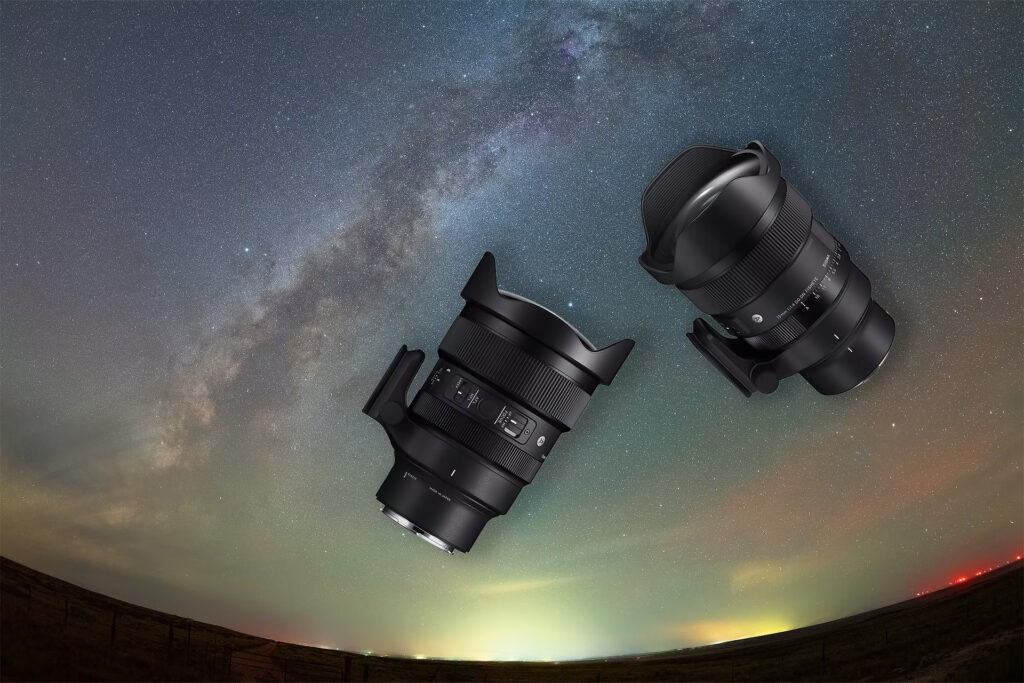
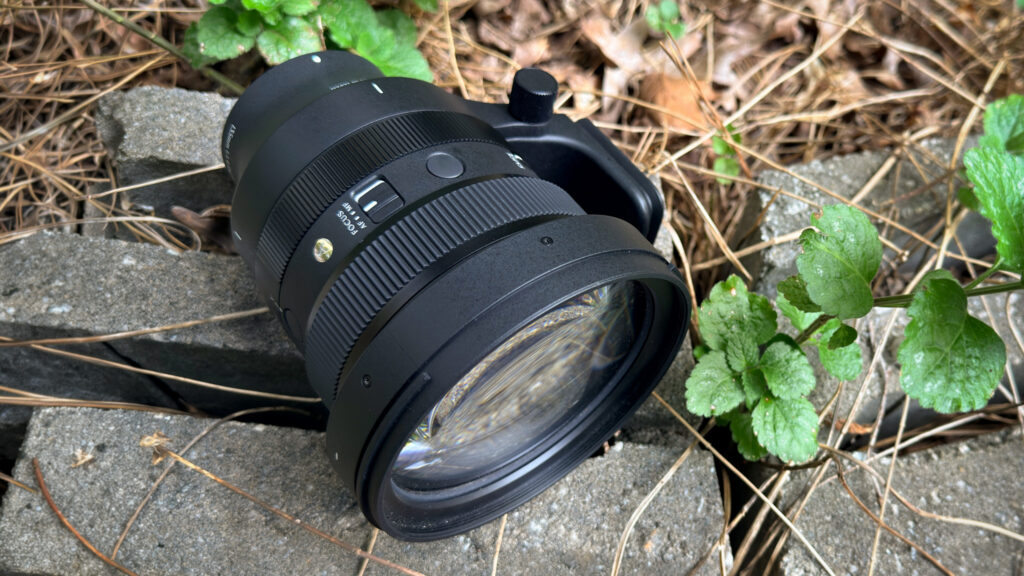
I can say reaching for the Sigma 14mm F1.4 DG | Art – or in most cases just taking my camera out with the 14mm already attached – is the first thing I do as well. There’s a reason that lens is the king for astrophotography. Huge field of view, incredibly fast F1.4 aperture, and it does so while keeping your stars on the edges of your frame actually looking like stars instead of distorted smears. So being able to press the shutter and capture such a big portion of what we’re looking at as we stand there, instinctually feels like accomplishing our goal.
Moving forward from tradition
While I don’t think the use of those ultra-wide lenses will change, something that I often advocate for, and have found myself doing more and more, is reaching for a lens with a longer focal length. While initially it may have been an attempt to differentiate images, the impact of a longer focal length at night is undeniable.
While longer focal lengths in astrophotography have always had their place, we’d often be talking about telephoto lenses or telescopes attached to tracking mounts for deep sky imaging.
For this moment, the focal lengths I’m referencing fall somewhere in the 20-50mm range. These focal lengths allow for capturing the landscape while placing the night sky above.
The impact of longer focal lengths – 20mm to 24mm
Even just the jump to 14mm from 20mm can have a drastic impact on the image we capture. We start to lose a little bit of that diminished feeling the landscape might have and the Milky Way core begins to play a much bigger role as our subject in the sky. But at 20mm, we still manage to capture enough of that sweeping view that it feels true to our original intentions.
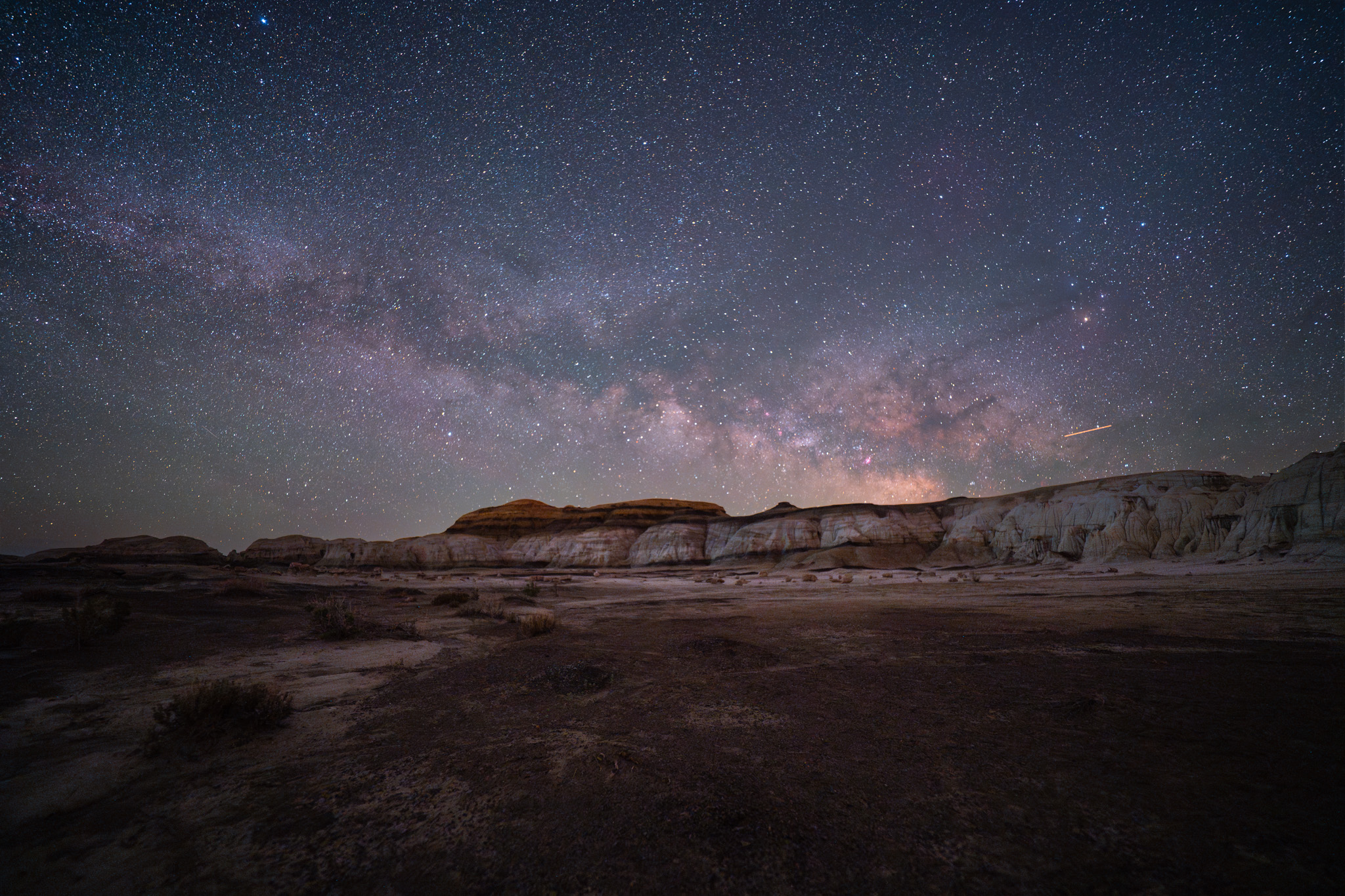
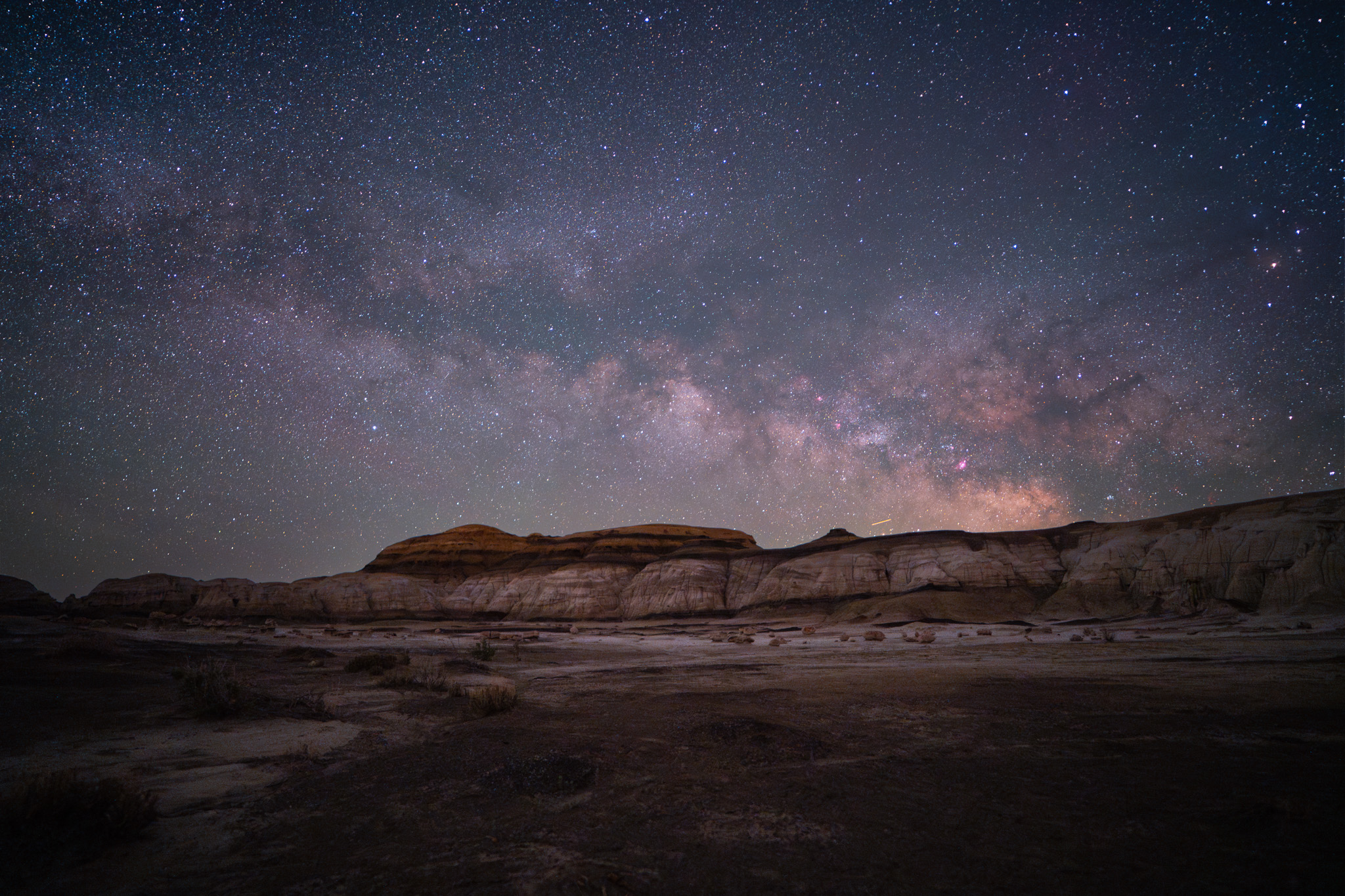
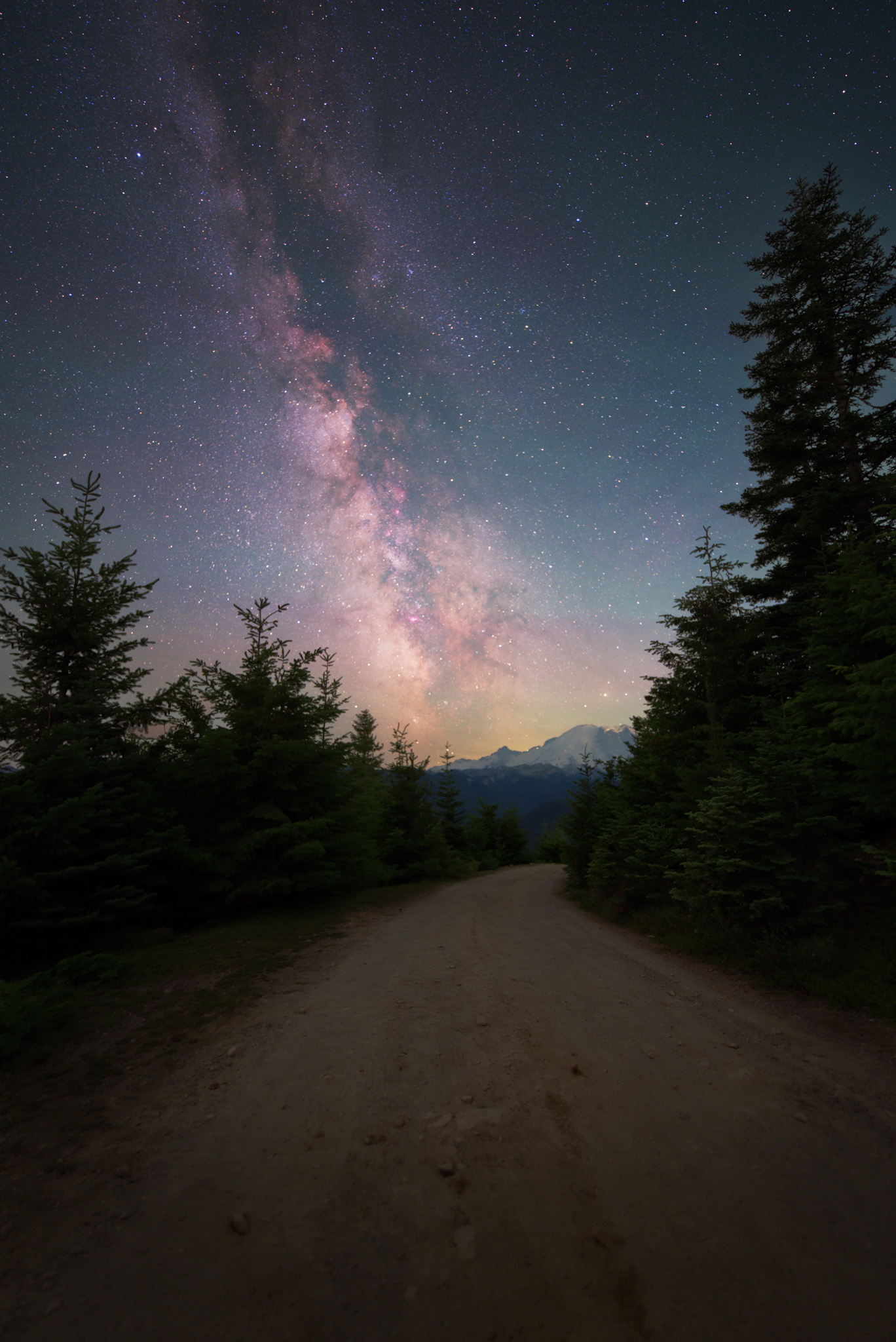
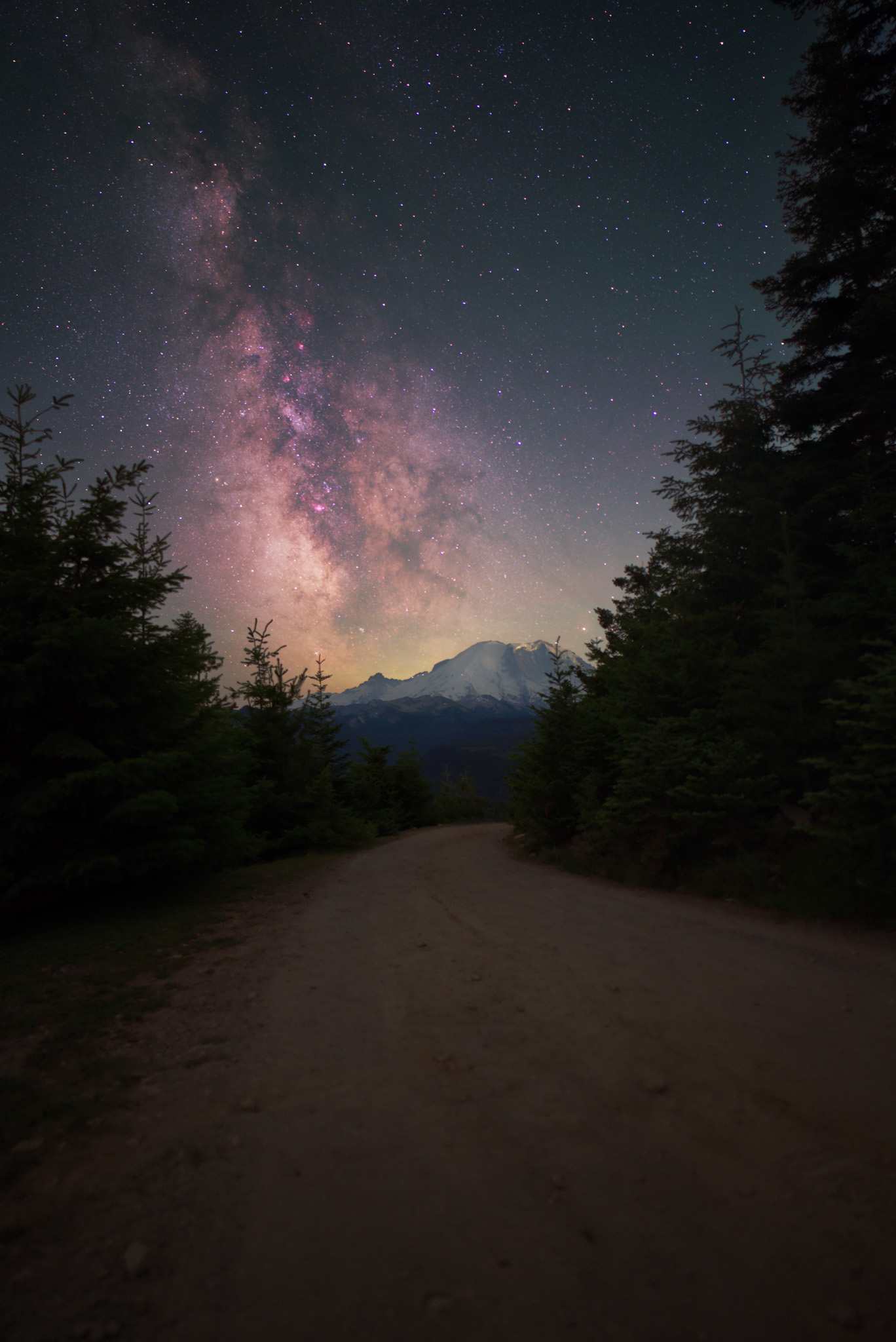
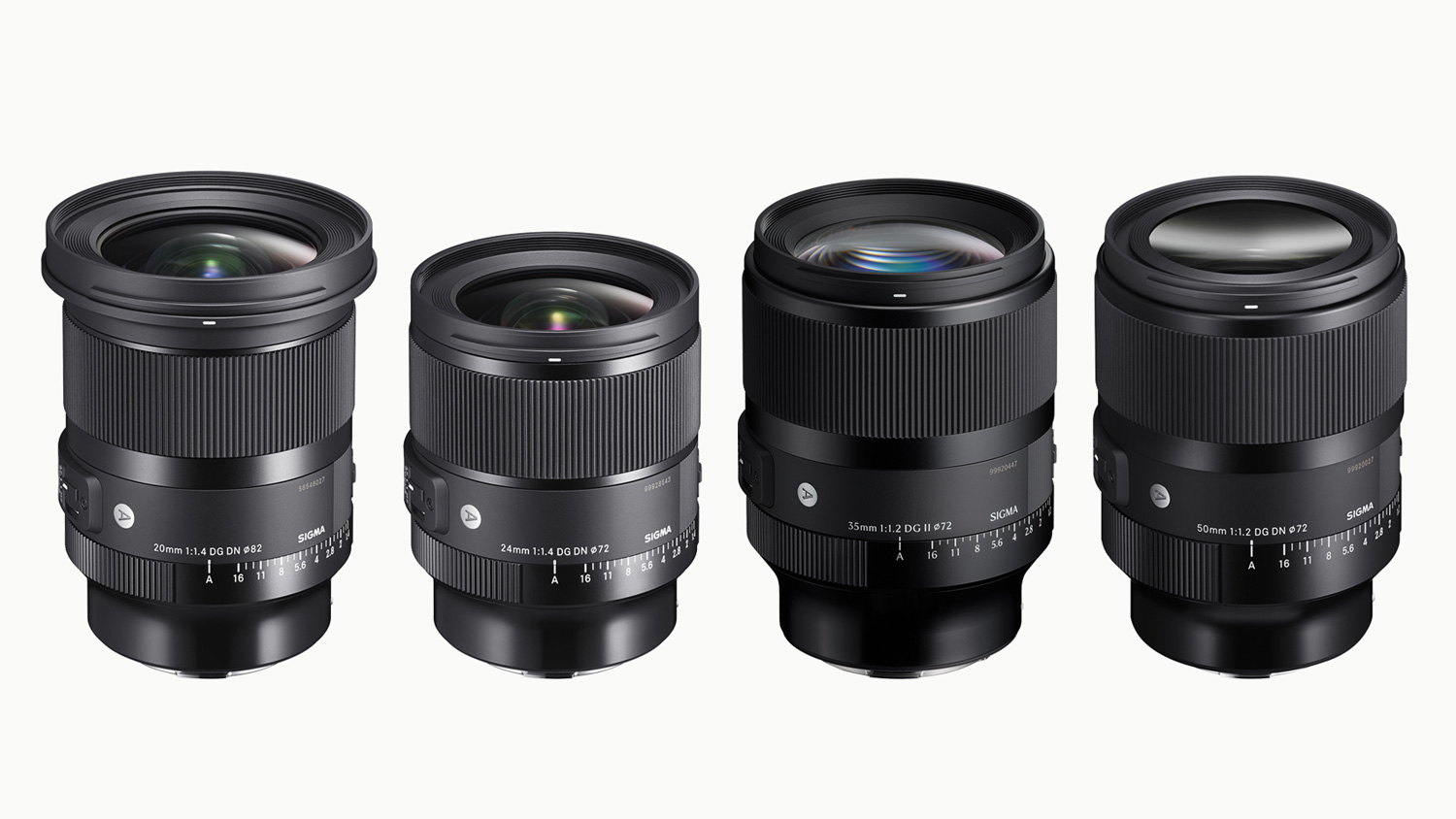
The Sigma 20mm F1.4 DG DN | Art shares many qualities of the 14mm, including the Manual Focus Lock switch, but that added reach of the 20mm can have a surprising impact on how our image is viewed.
And I think that’s the key. It isn’t just about capturing an image that feels different, it’s about isolating a different feeling entirely. Whether it’s an emotion somewhere within that feeling of awe, or just an attempt to specify exactly how our image is seen; using a different focal length under the stars gives us a lot more control than we might initially realize.
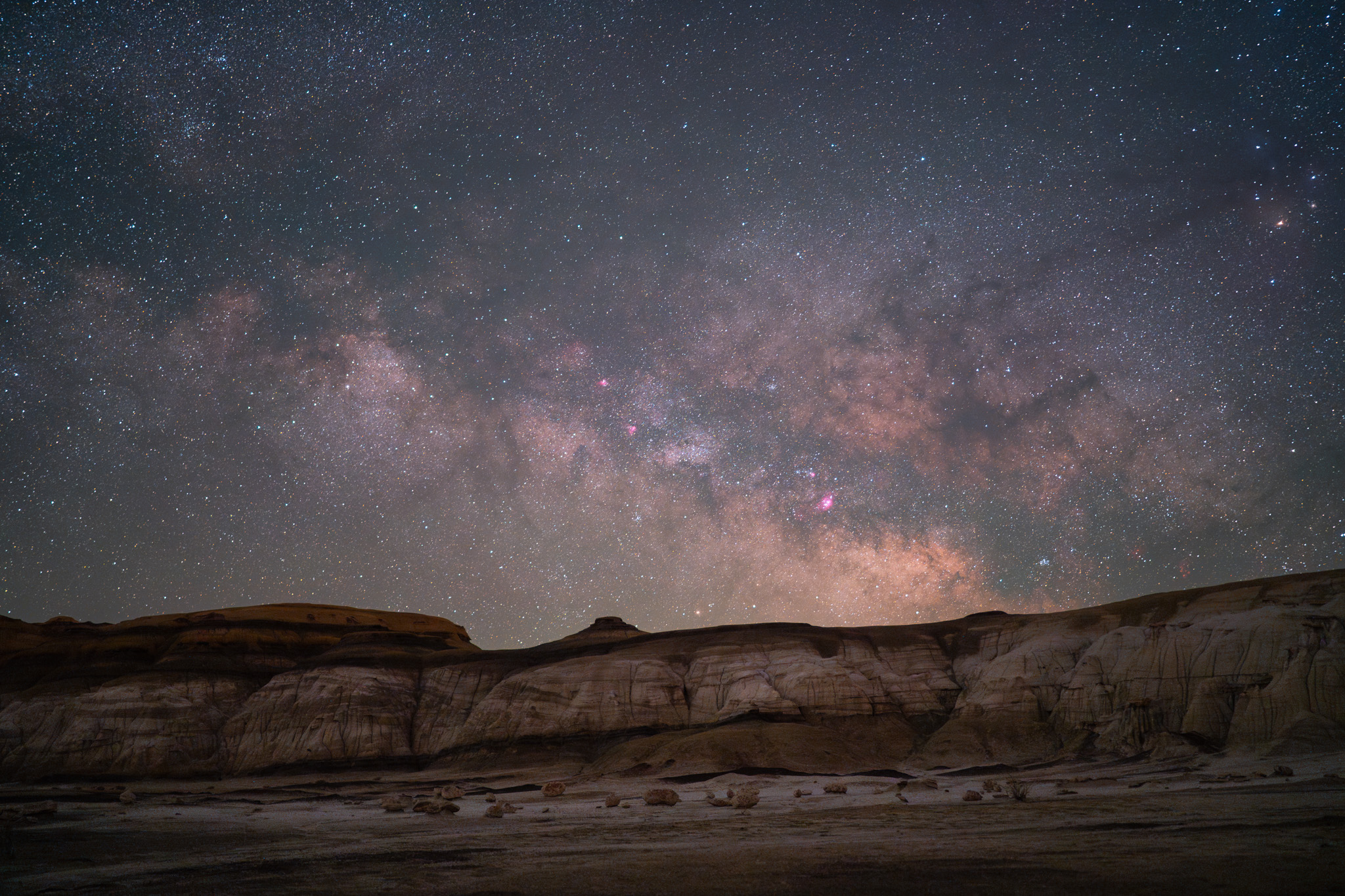
Beyond 20mm, I’ve always felt a shift happens around 24mm. A big part of that shift comes from how you frame your image, but it’s around that focal length that the impact and size of the Milky Way core can really become the subject and anchor of the image. In an image framed with a 2/3 of the frame consisting of the sky, the galactic core starts to dominate the frame. The foreground can still feel on the wider side, and with the ratio flipped or the framing a bit more intentional, it can provide a different feel entirely.
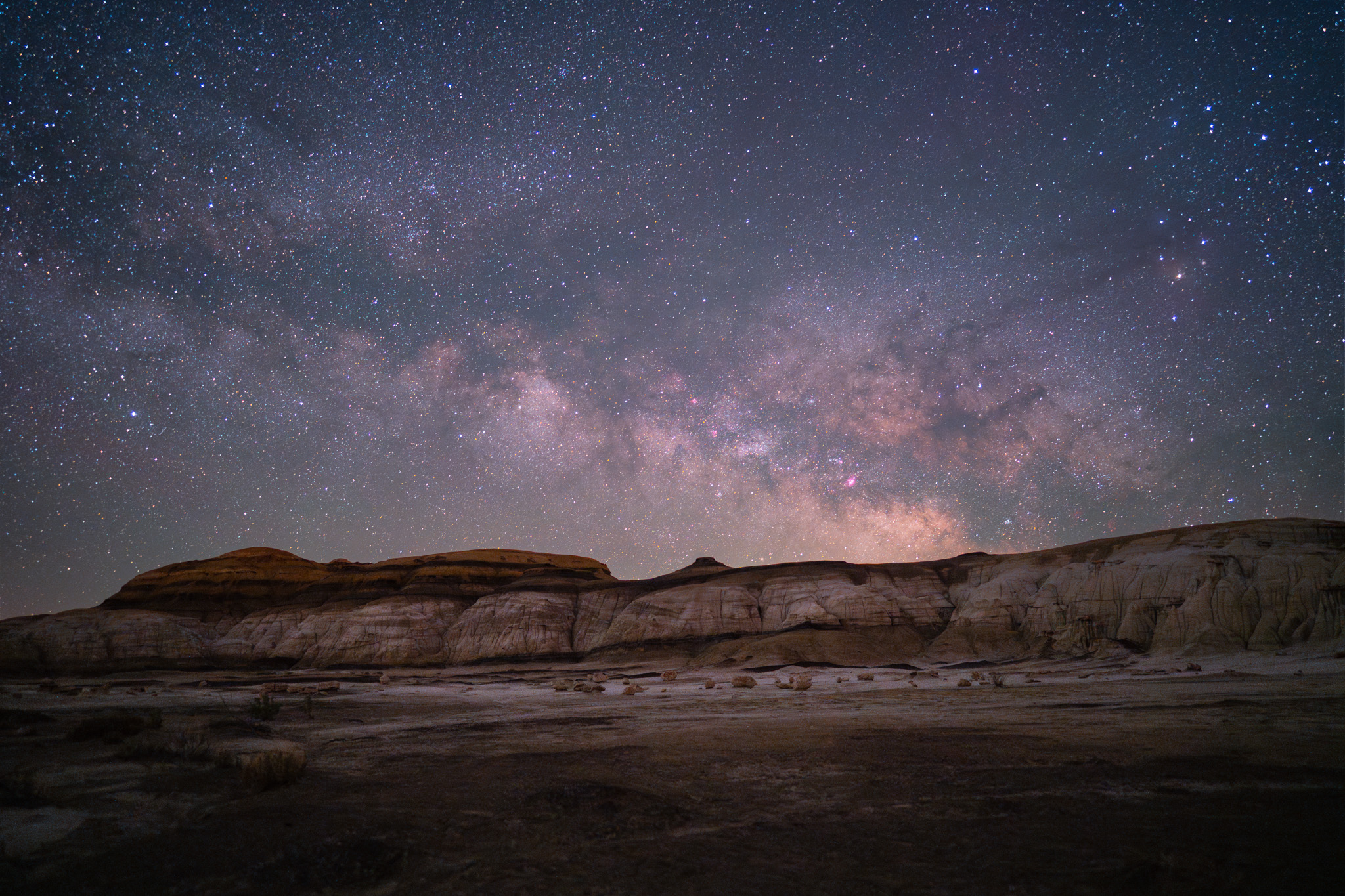
With the proper framing, our image can become less about the night sky and more about a location under the night sky. A somewhat more traditional landscape image that just happens to be taken under the stars.
Finding familiarity through change – 35mm
This shift in focus continues as we reach for lenses with local focal lengths bringing us to one of my favorite and most often used focal lengths at night, 35mm.
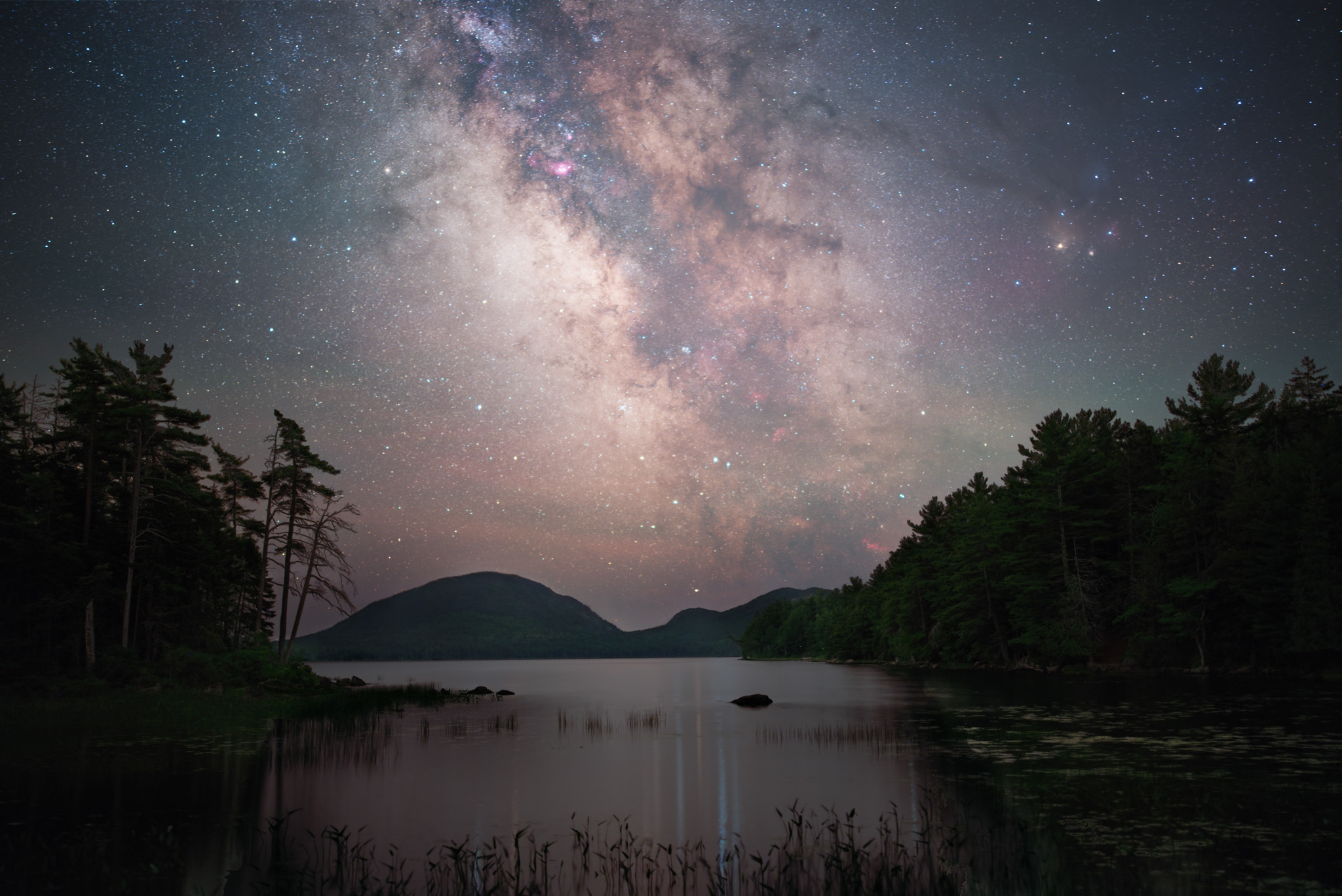
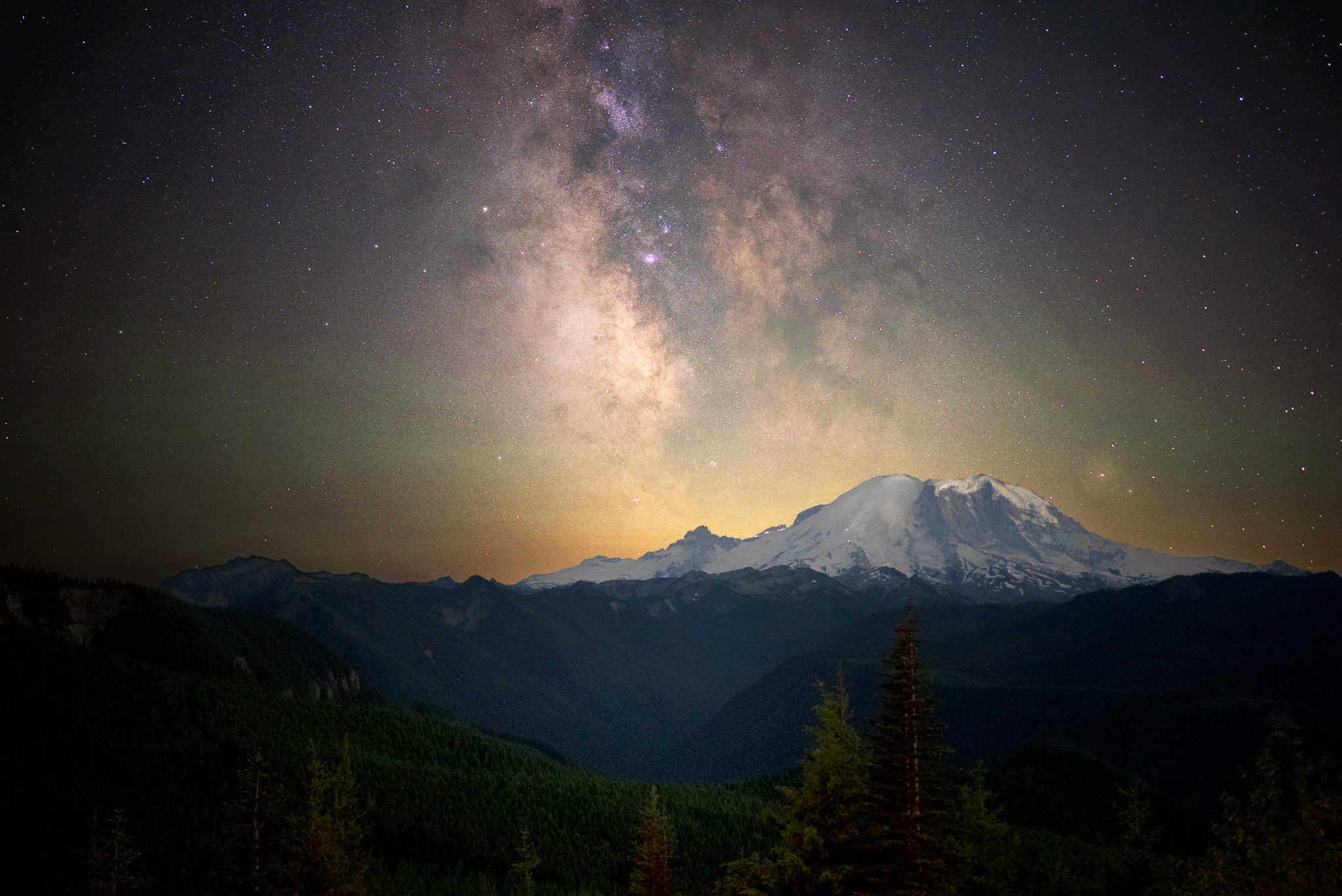
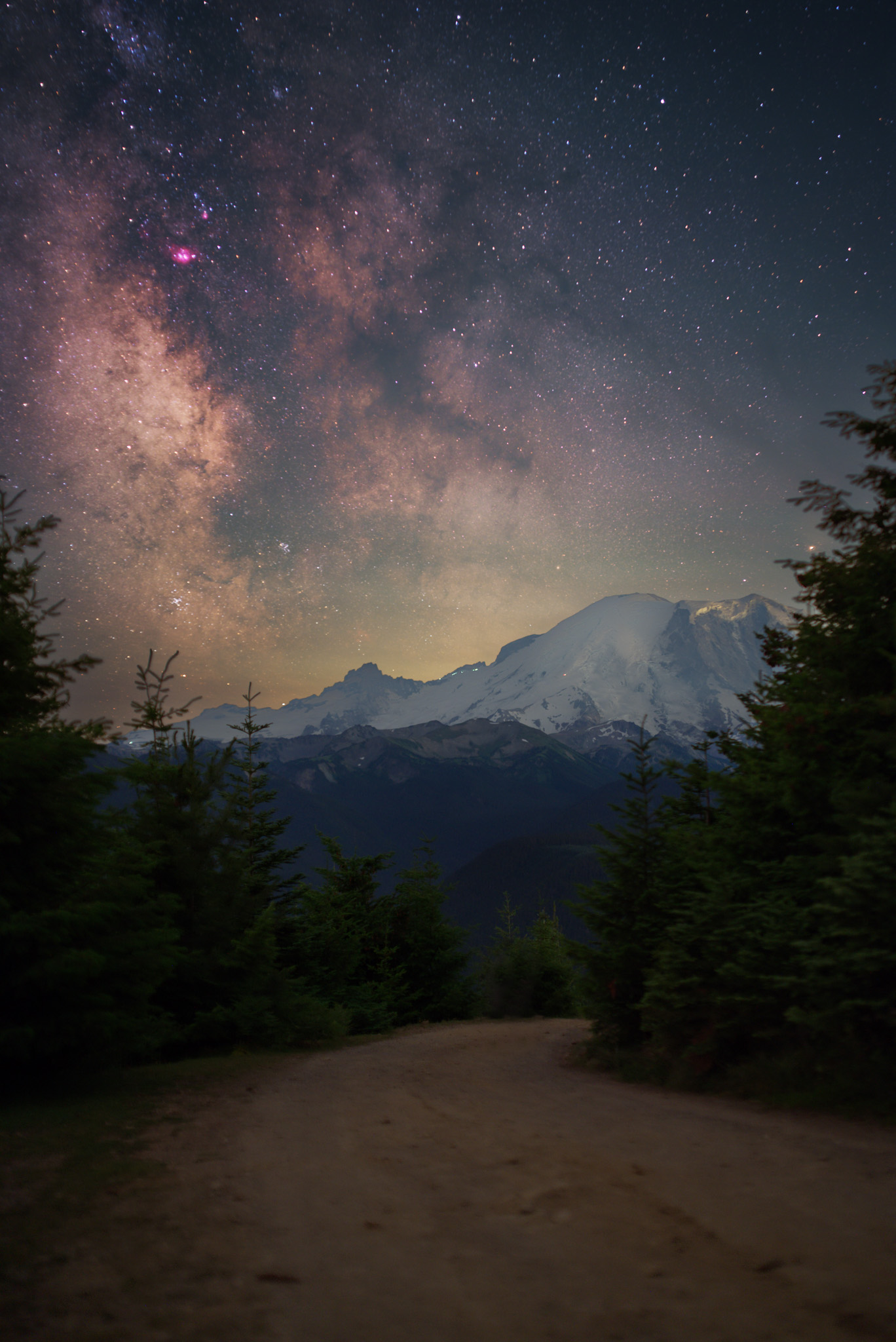
The Sigma 35mm F1.2 DG II | Art is not a traditional astrophotography lens, but certainly a mainstay in my bag (there is a more compact 35mm F1.4 DG II | Art as well). Utilizing this focal length has allowed me to isolate subjects for a blend of how we might typically look at a scene while presenting it in the unique manner of being under the night sky. Framing the Milky Way core along or above mountains leaves both subjects appearing impressive in size, and can actually help with that feeling of grandeur. While a different look entirely, I find that it does an incredible job of capturing that feeling we started chasing with the wide-angle lenses.
The big advantage of using these longer focal lengths is that our foreground tends to feel more familiar in scale. That familiarity can give the viewer something to relate the scene to, and despite capturing a smaller amount of sky, increase the impressiveness.
All in the details – 50mm
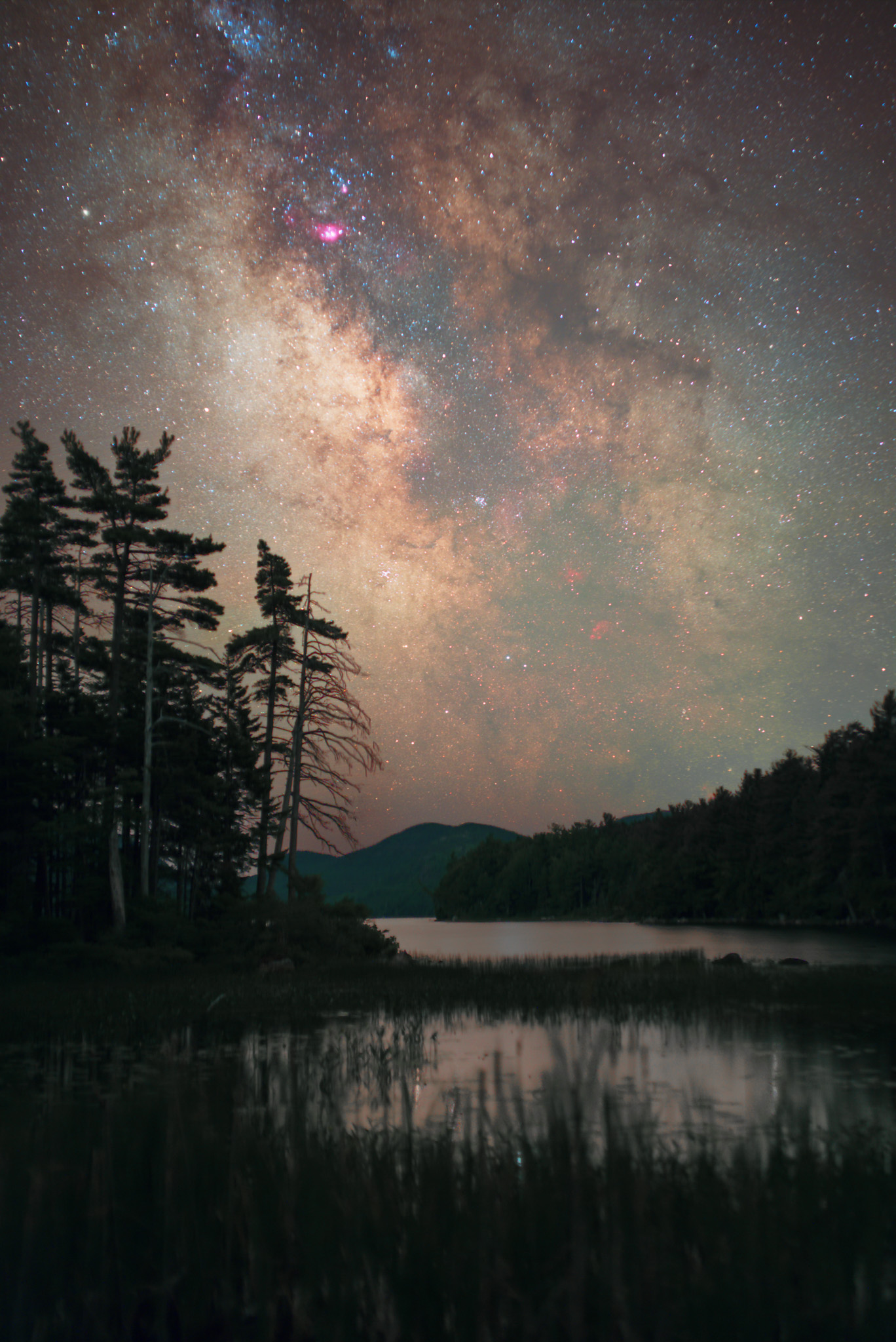
As we increase our focal length, although we’re capturing smaller portions of the sky, the visible detail in more subtle areas of the Milky Way becomes more impressive. This is a really exciting part of using these longer focal lengths for astrophotography. All of a sudden, those dark dust lanes and the lagoon nebula have enough structure at a glance to merit a closer look. It might still be there in those wide shots, but closer inspection almost needs to be led by curiosity instead of the visible detail being the driving factor for the deeper dive. Framing the Milky Way core or Orion with a lens like the Sigma 50mm F1.2 DG DN | Art while including the foreground can require a lot of careful composition planning, but can create a really impactful image.
Finding connection
These longer focal lengths and trying to find ways to help relate to the images I capture have also been some of the motivation behind capturing people under the stars in a different way.
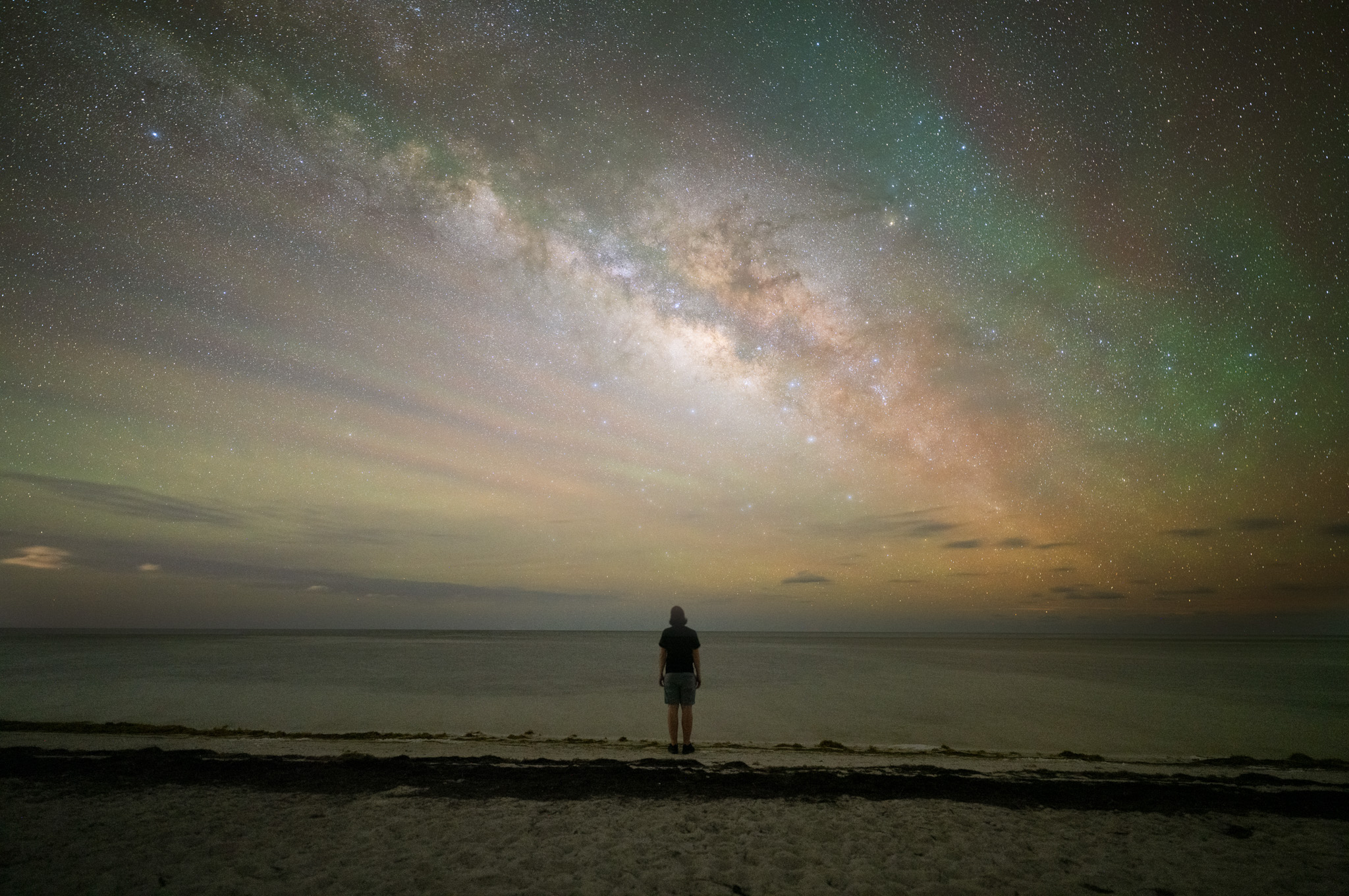
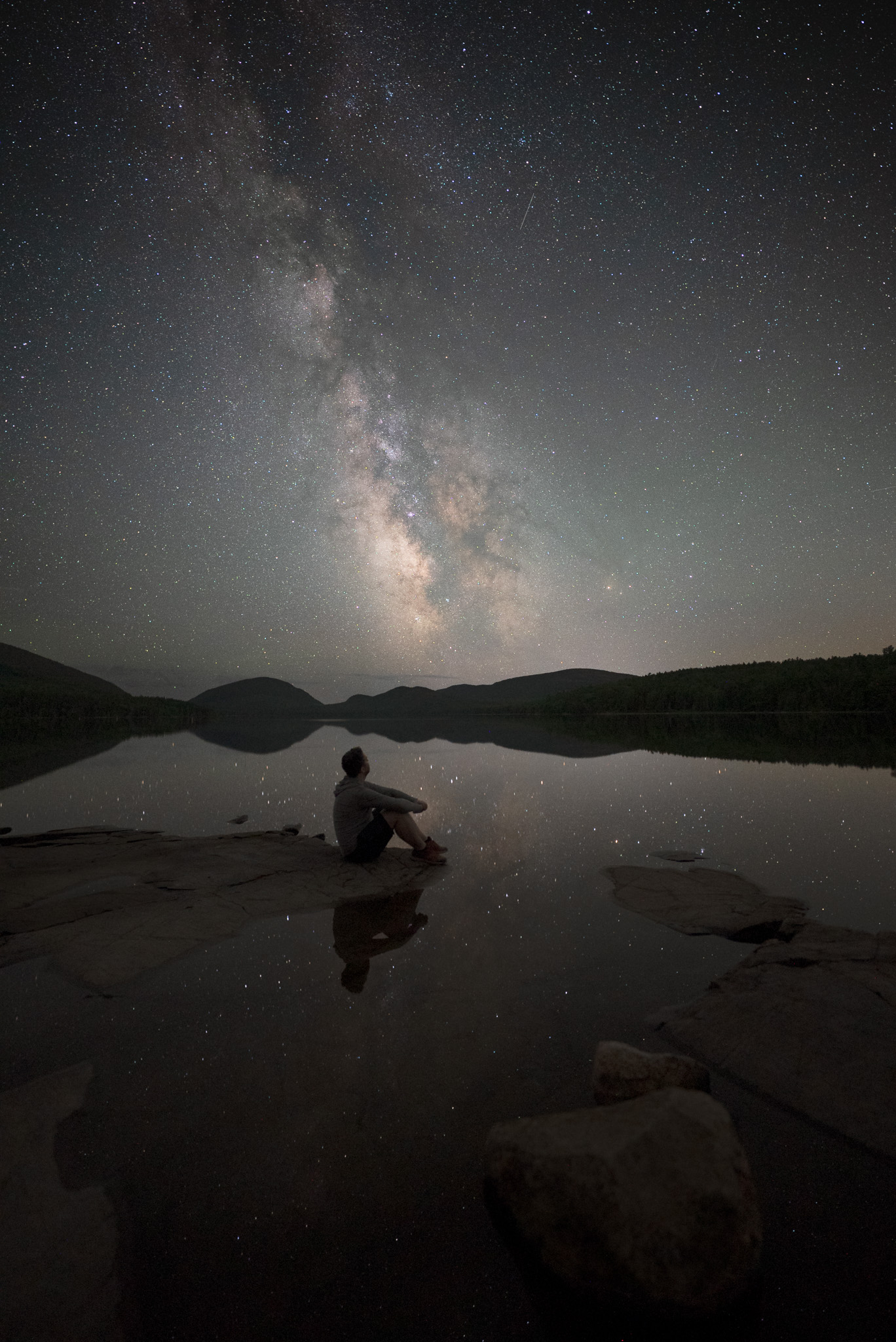
While shooting at some of those wider focal lengths, I’m most often placing a person as a smaller silhouette to help give a sense of scale to the image and help build the feeling of wonder. The perspective of a mountain range captured at 14mm may be hard to translate, but a human silhouette is instantly relatable. So, when placed correctly, that huge view can truly feel huge and endless.
Like the shift in subject, placing a person in the frame, especially closer to the camera, at a longer focal length requires planning. At a certain size or distance, the expectation of visible detail of the person in frame becomes a major consideration. This is another one of the places that those fast F1.4 or F1.2 apertures become critical.
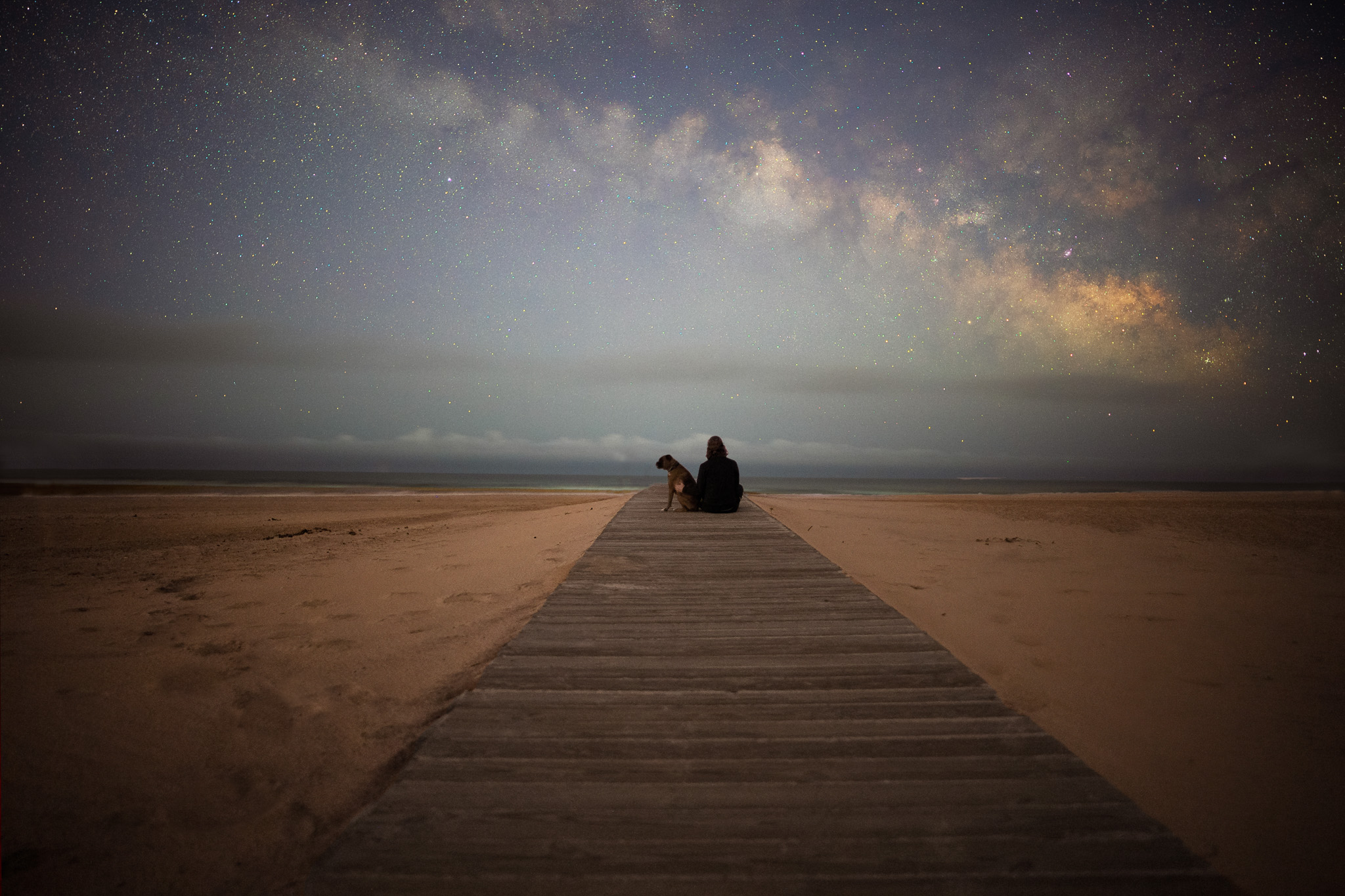
Shorter exposure times while capturing enough light and detail, allows for our subject to be recognizable and become the true focus of the image. While I’ve never had the desire to capture portraits during the day, doing so at night has become a challenge I’ve really enjoyed. The photograph becomes both an artifact and a shared moment under the stars.
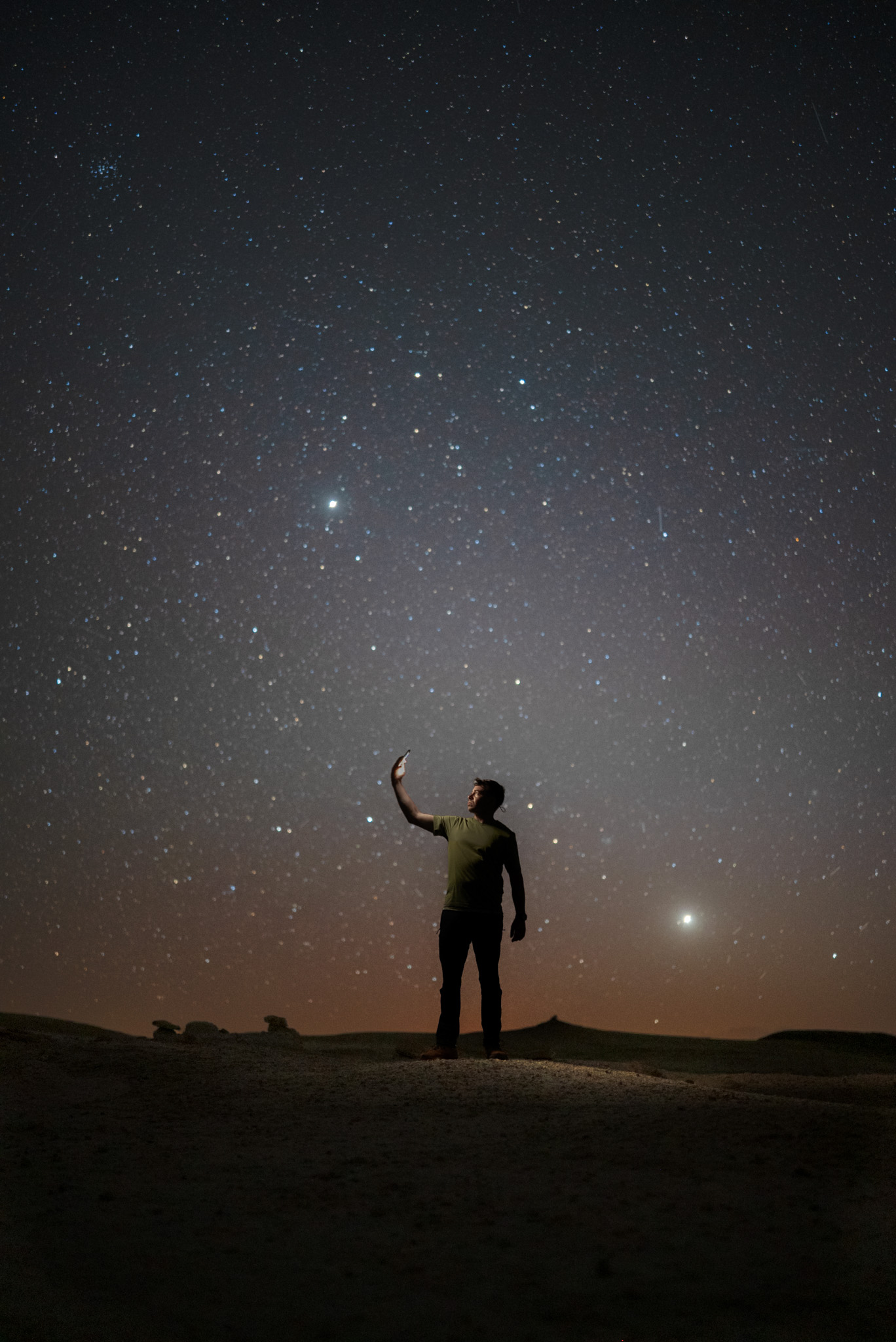
I think through considering all of this, those two pillars are always there holding up an image; capturing a moment in time and hoping to share it with as many people as possible. Being out under the night sky can be a truly incredible feeling, and the desire in sharing those important moments can be a huge driving force. I love getting to spend time under the stars and most often my favorite moments are those I get to share. And if I can’t share the same night, hearing that someone ventured out after seeing a photo is a very close second.
So, I am always very deliberate where I position my camera, and I think carefully about which focal length will do the best job at capturing each specific scene. And while you’ll rarely find me without the 14mm in my bag, I promise it’s going to be paired with a lens or two between 20mm and 50mm. Having the flexibility to choose the focal length that best suits that scenario, that particular moment, is crucial to my work and its ability to inspire others.
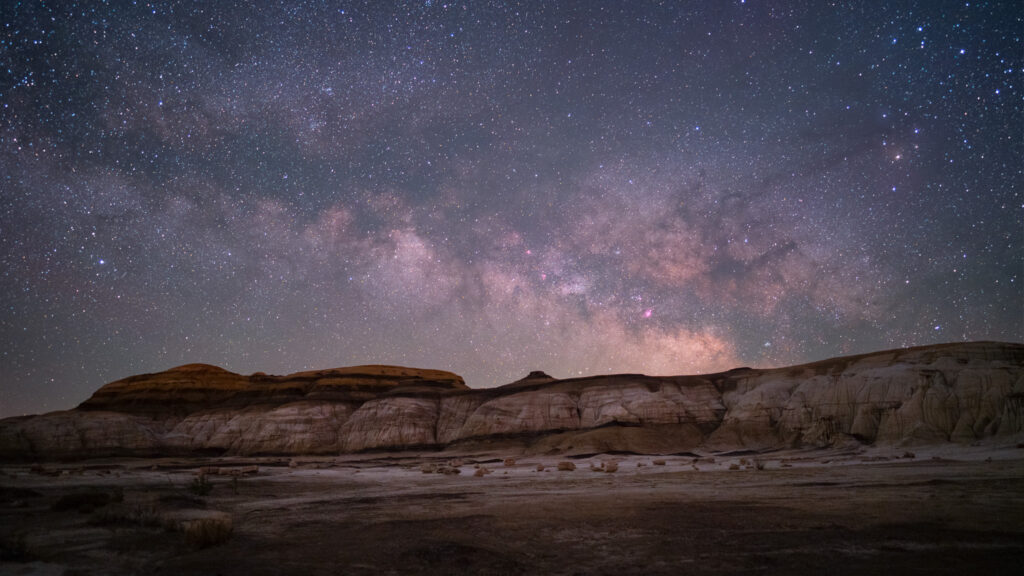
Find your perfect prime lens for astrophotography