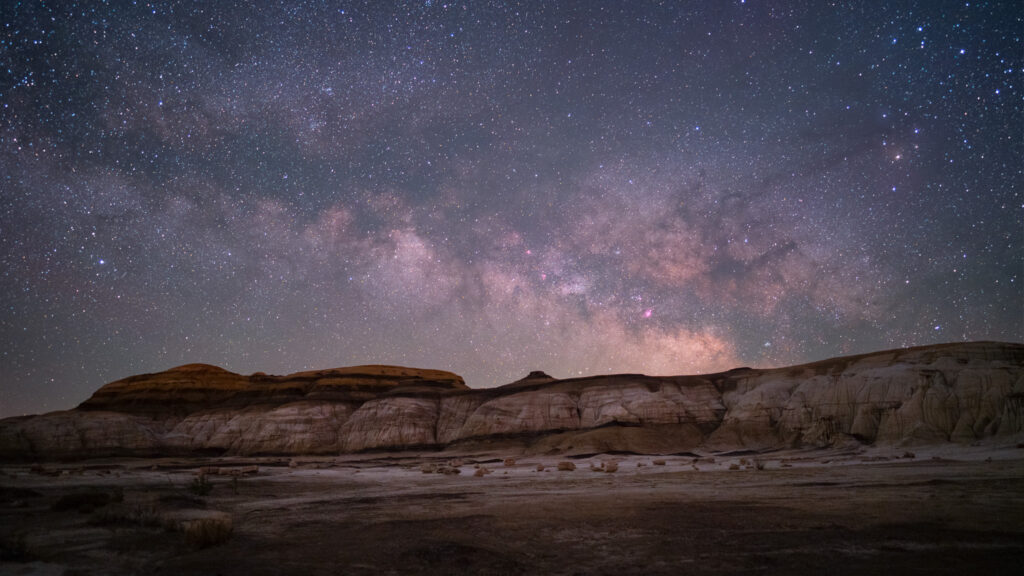
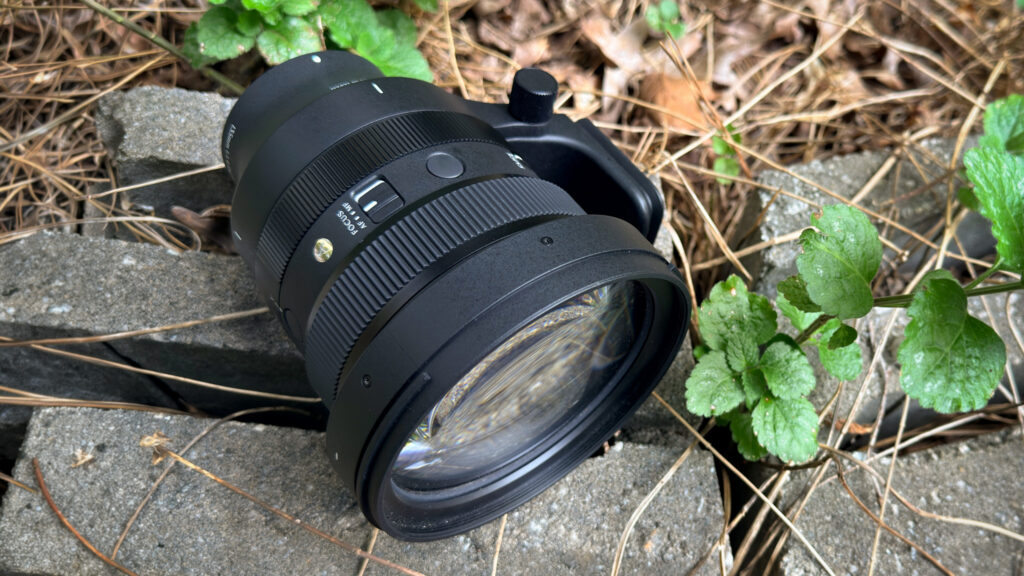
Over the course of several weeks, I’ve really enjoyed shooting with the Sigma 15mm 1.4 DG DN Diagonal Fisheye | Art lens. I first decided I wanted to shoot with it after spending some time at a location where I could get super close to some old trees. I was shooting with my Sigma 14-24mm F2.8 Art and asked myself if a fisheye lens would be better or allow me to get closer to shoot at night under the stars.
With the 15mm in my bag, I tried three times at the same location, but only one of those nights provided the clear skies I needed for images of the stars. So, I decided to plan some landscapes on some upcoming trips, just in case the weather didn’t cooperate. What I found was that this lens is fun and versatile in many settings where a regular wide-angle lens might normally be used.
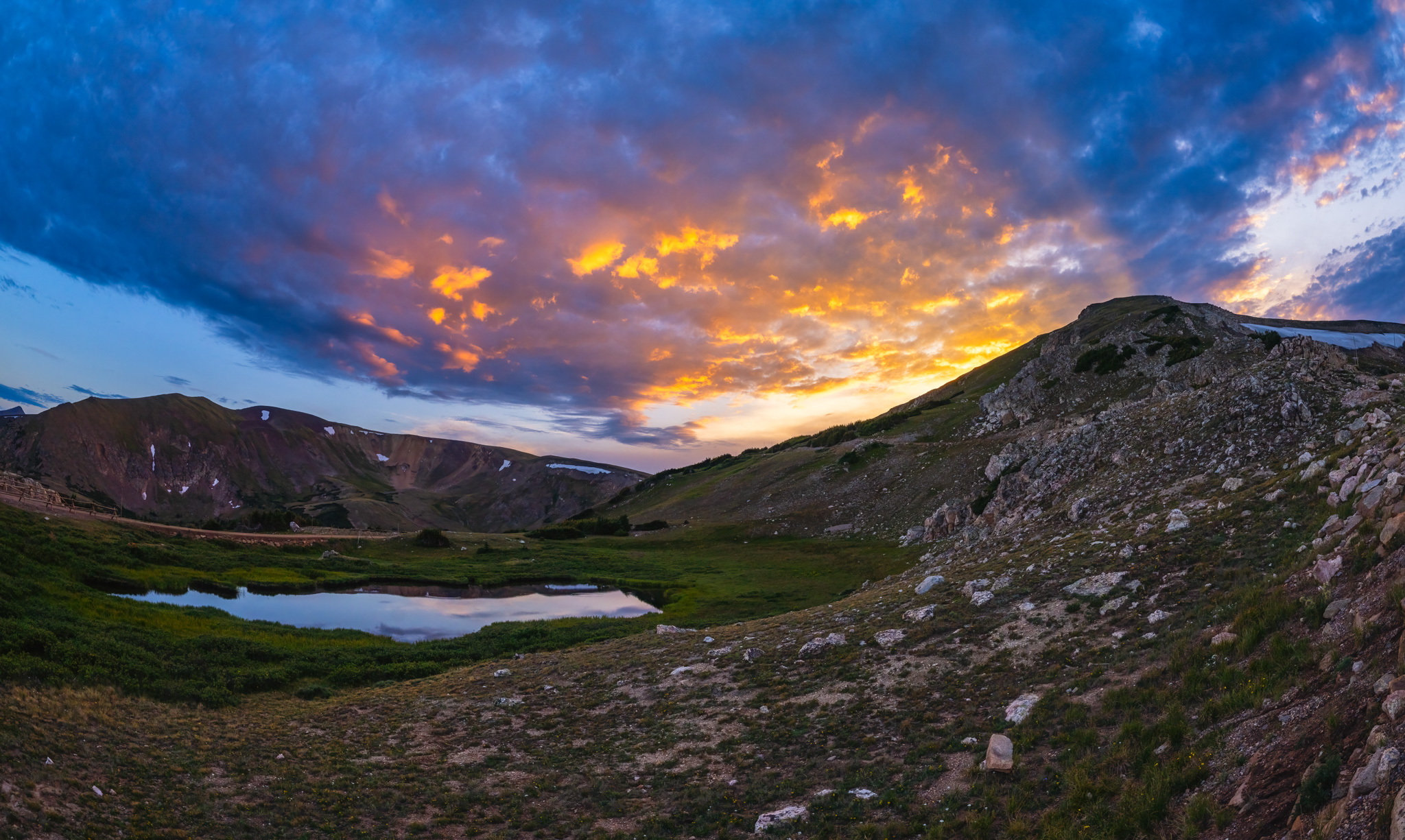
Sony A7R IV
F8, 1/80s, ISO 200
One thing I do want to mention is that even though the lens is heavy at 4 pounds, it’s built like a tank, and the image quality shows. Of course, most of the time this lens will be on a tripod – the removable rotating tripod foot keeps the camera perfectly secure and balanced.
Let’s take a look at some of the features of this lens:
- For full frame cameras
- Max aperture of F1.4
- Optimized for astrophotography
- High-Response Linear Actuator autofocus
- 4 FLD, 3 SLD & 2 aspherical elements
- Rounded 11-blade diaphragm
- Removable, rotating tripod foot
- Dust- and splash-resistant construction
- 180 degree angle of view
- 15.2″ minimum focusing distance
Rear Mounted ND Filters
Since the front element of this lens has an extreme curve and the field of view is so large, it is designed to use rear-mounted filters instead of traditional front filters. I experimented with a Haida Adapter Ring and Rear ND Filter Kit for shooting long-exposure landscapes such as moving water and clouds.
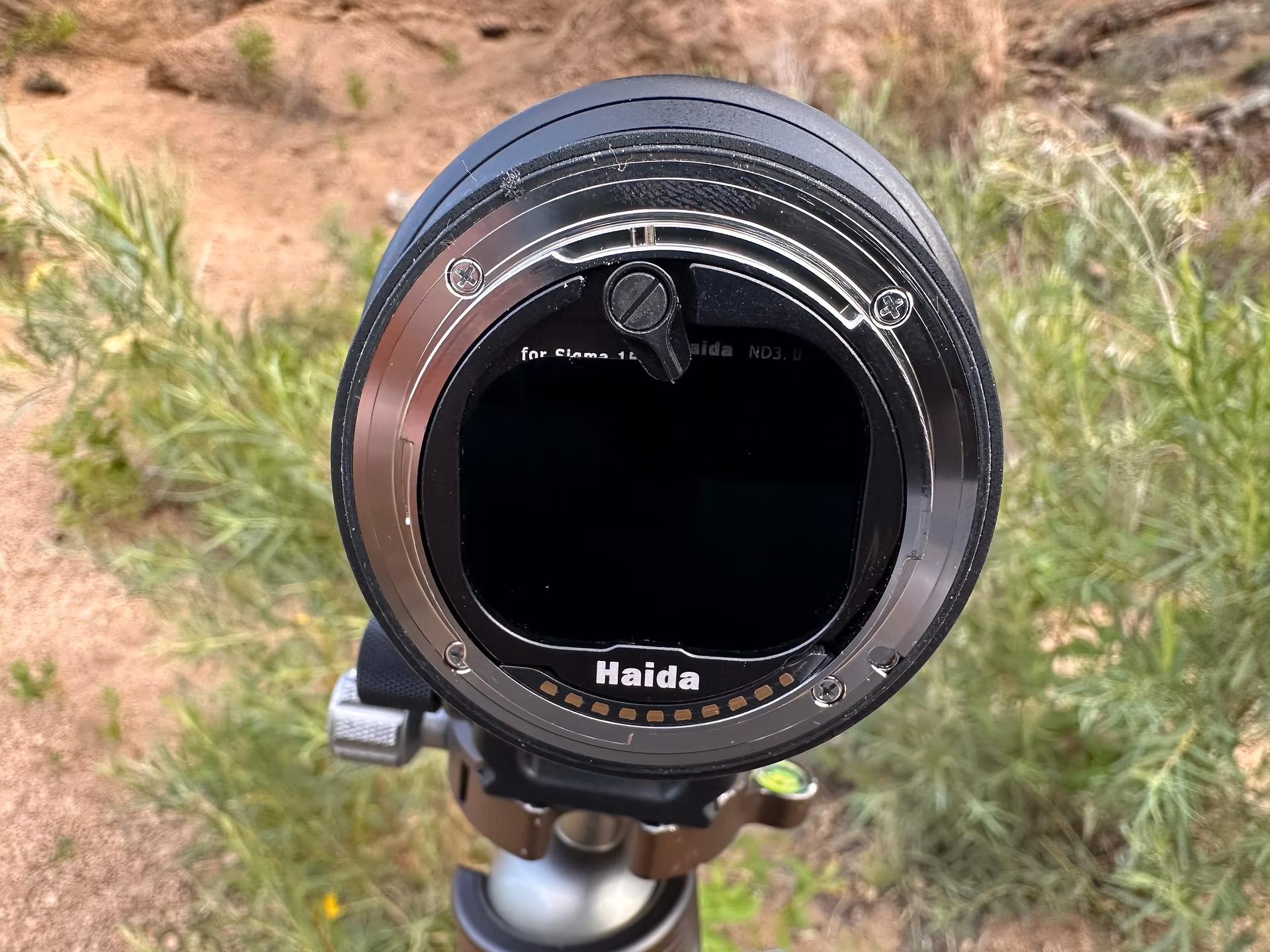
The adapter ring and the filter of your choice goes on the back of the lens where it attaches to your camera. I had never used one of these before and really enjoyed being able to use it without having to carry around a large front adapter for full size filters. You can just leave the filter holder in the lens and take out the filter when you’re done using it. Very simple and easy to use.
I really wanted to make sure that I took full advantage of the ND filters and shoot some long exposures to showcase how long exposures can work with the lens distortion. The first image was shot during an early morning hike just as the sun was coming up. The 25-second exposure allowed the water to smooth out and the clouds to circle around the sky.
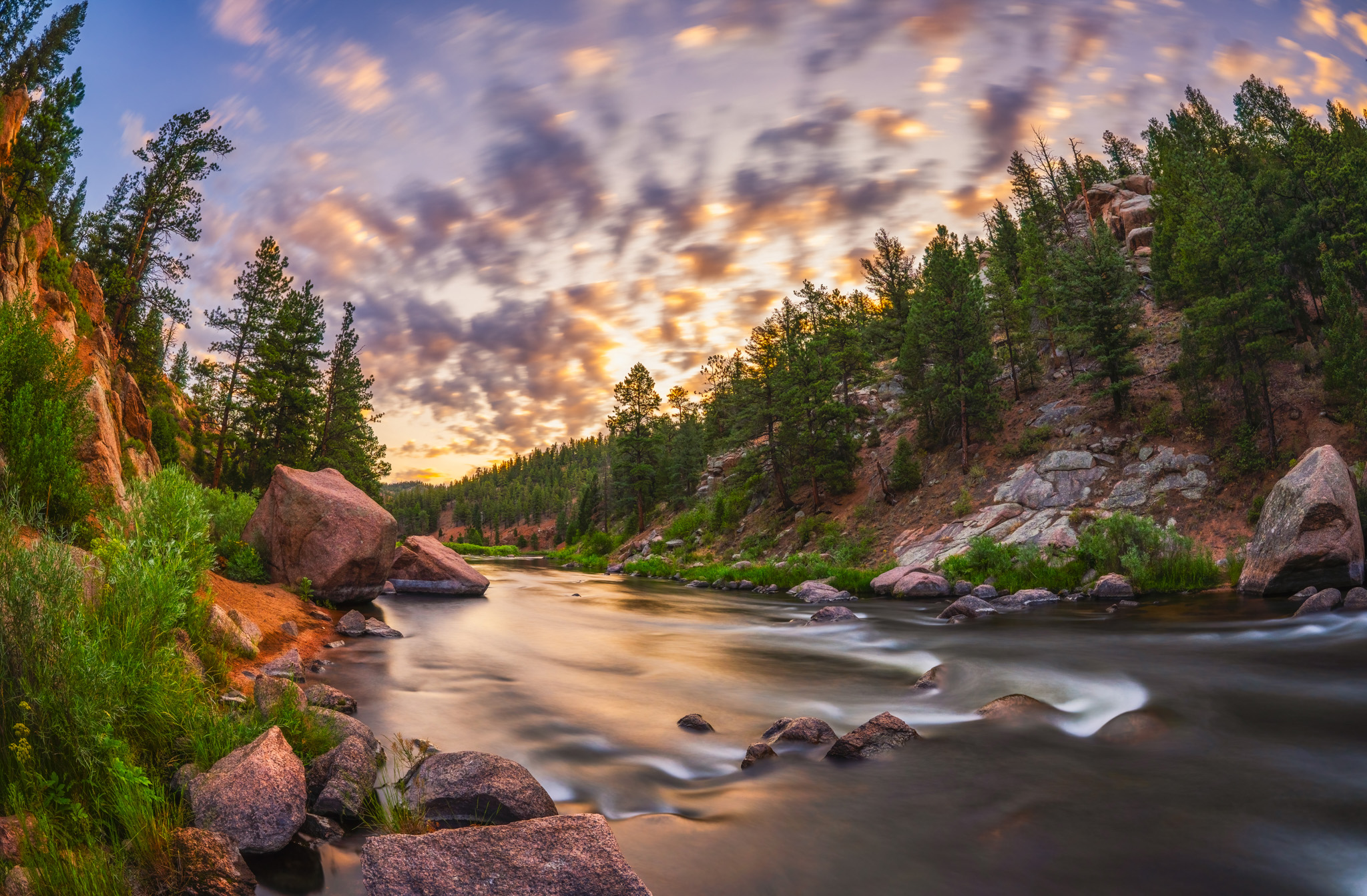
Sony A7R IV
F7.1, 25s, ISO 100
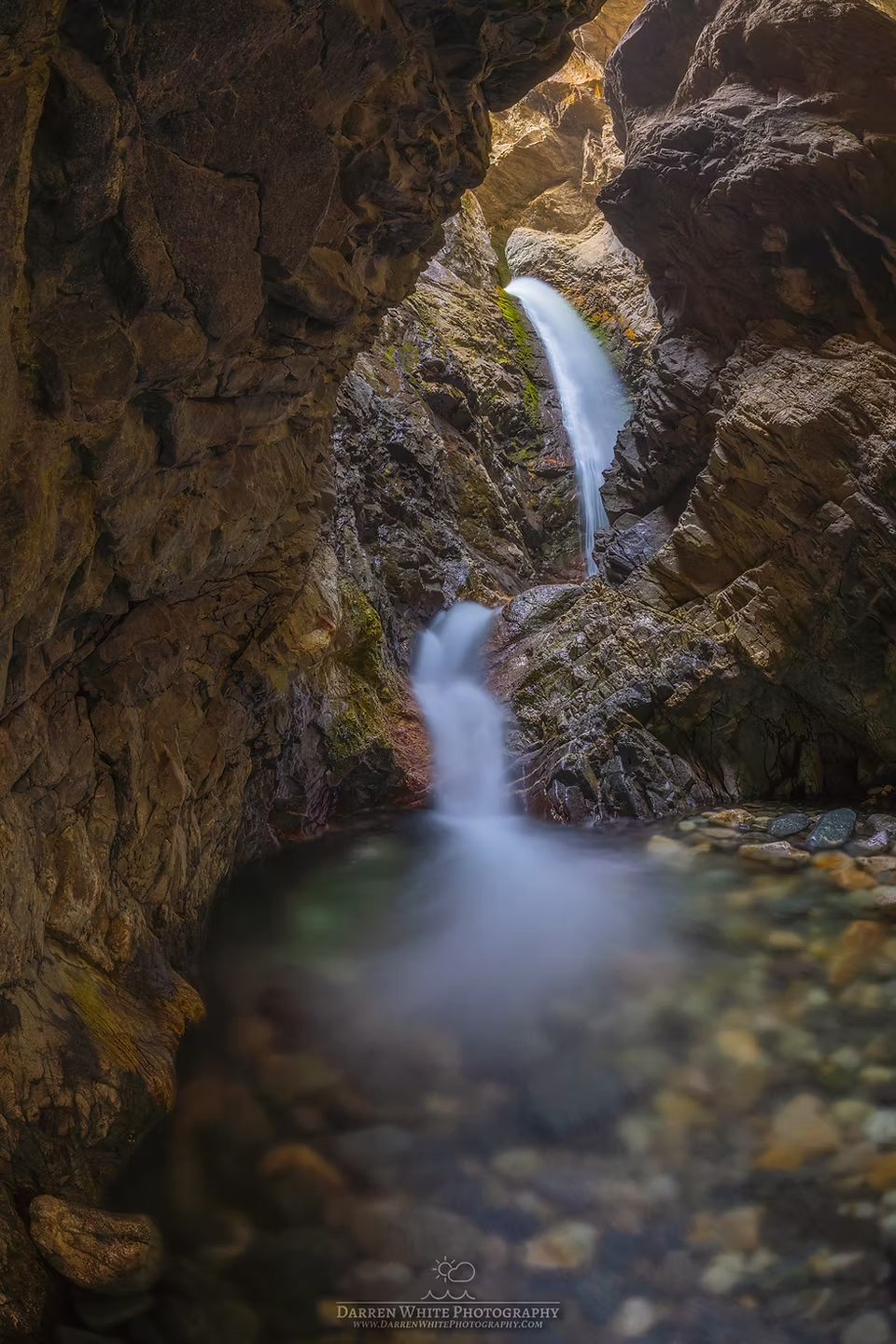
This is quite a large waterfall and with the Sigma 15mm 1.4 DG DN Diagonal Fisheye | Art it was pretty easy to get it all in the frame. I can honestly say that using the ND filters in the rear filter holder, I did not notice any loss of detail or sharpness.
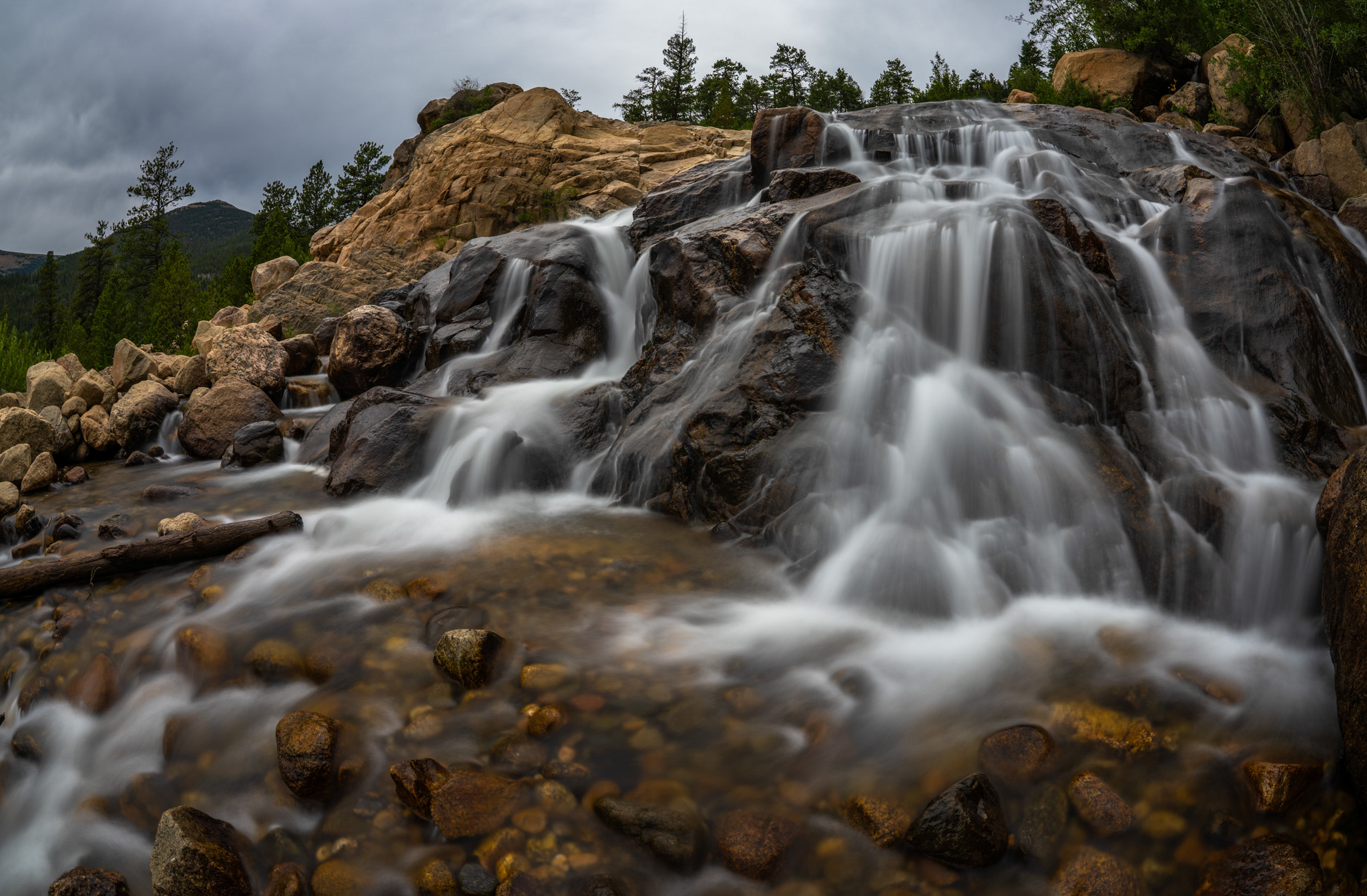
Sony A7R IV
F9, 5s, ISO 64
A huge field of view
The image below was shot at Garden of the Gods in Colorado, a beautiful location visited by many. This particular image is really only visible after it rains. The rain forms a small pool between two large rocks.
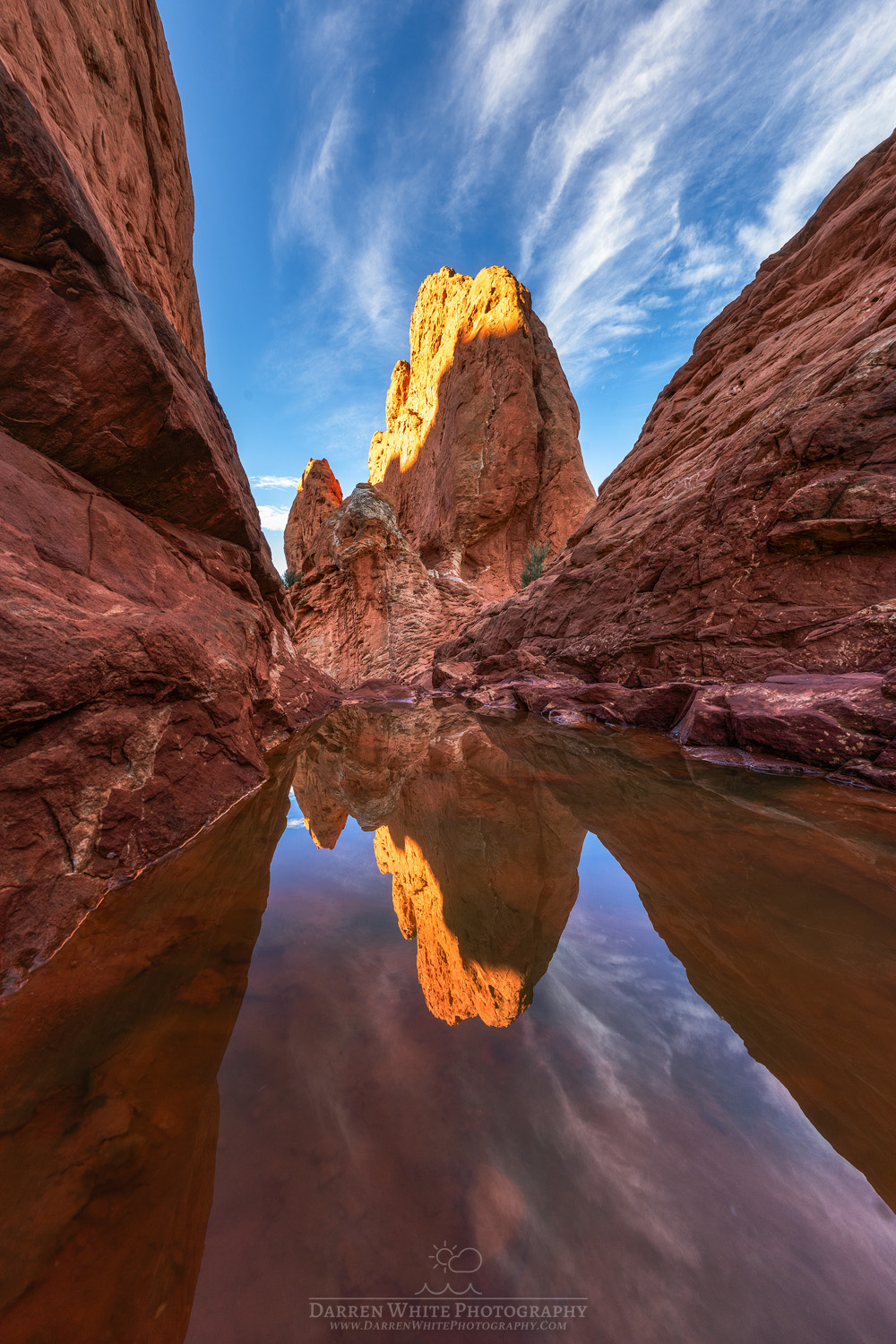
Sony A7R IV
F13, 1/13s, ISO 50
This video shows how low I was able to get in this small location and still get a very wide photo.
Super wide, super sharp and highly detailed is what you can expect when shooting with the 15mm 1.4 DG DN Diagonal Fisheye | Art. Because the lens is so wide and it tends to “push” the scene away from the camera, I found that I was able to get better depth of field and more in focus at mid-range f-stops than with typical wide-angle lenses. I loved how the low angle here helped create such a dramatic reflection. With the lens only being above the water about 4-6 inches, it’s a much different view than if I were standing upright with the camera at eye level.
Taking advantage of fisheye distortion
Distortion… Yes! there is some distortion and as you tilt the camera up or down the effect will be greater. Below, there are 2 images. These are the exact same shot. The only difference is that I applied digital lens correction in Adobe Camera RAW. Most of the images I shot with this lens had a curved horizon. It’s a super easy fix to straighten it out, if you prefer. You just need to be careful when you compose the image to make sure there is nothing near the edges that you aren’t afraid to lose. As you can see, the telephone pole on the right was eliminated when the correction was applied.
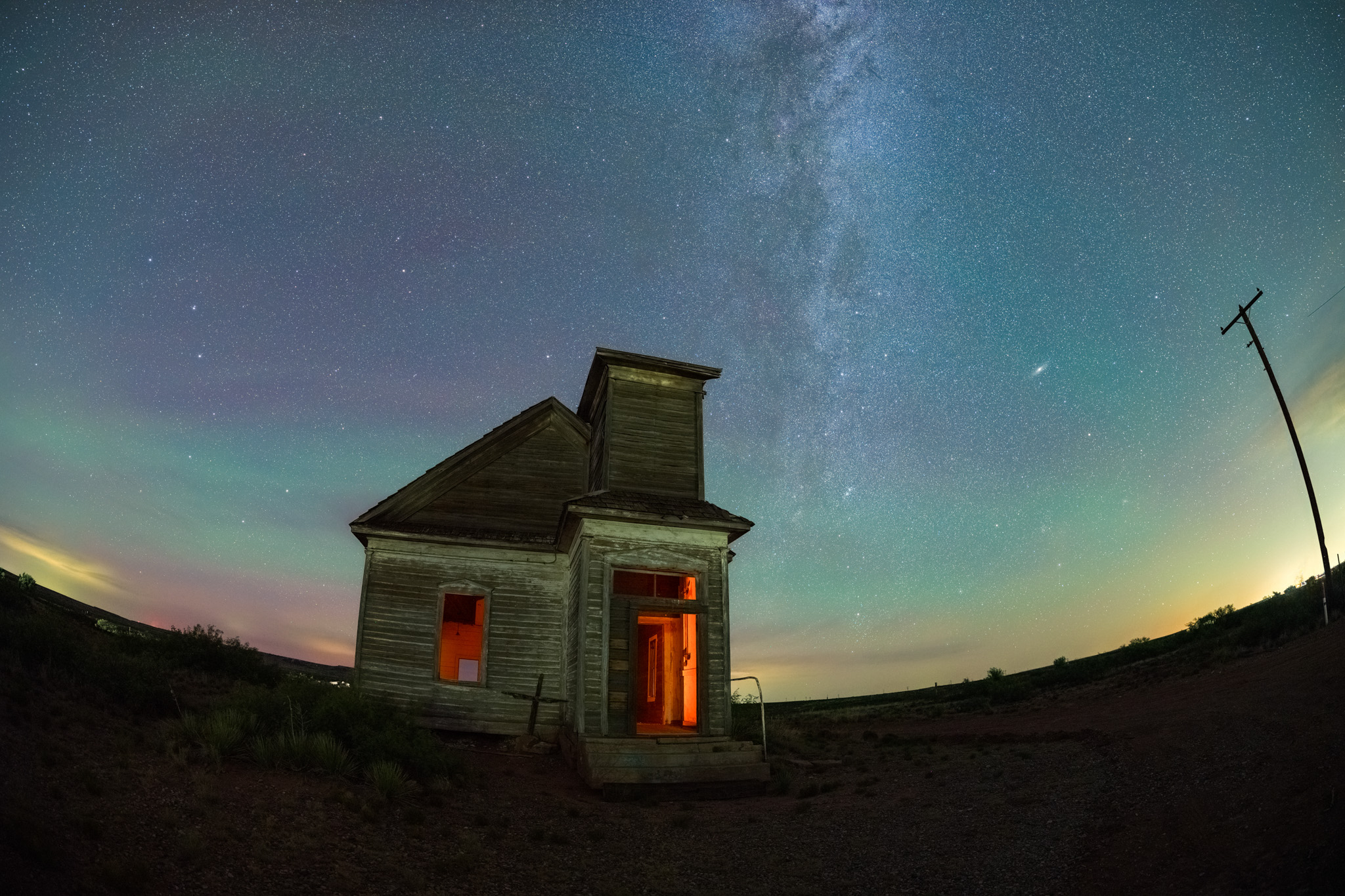
The lens and lens correction also have a different effect when you shoot vertically. The sides tend to curve in, as if you were to take the above photo and turn it 90 degrees.
All of these images are not digitally corrected. You can see the curvature in two of them, and the waterfall image is harder to see the distortion. So, depending on what you’re shooting and the angle of the camera, the distortion will be less or more visible.
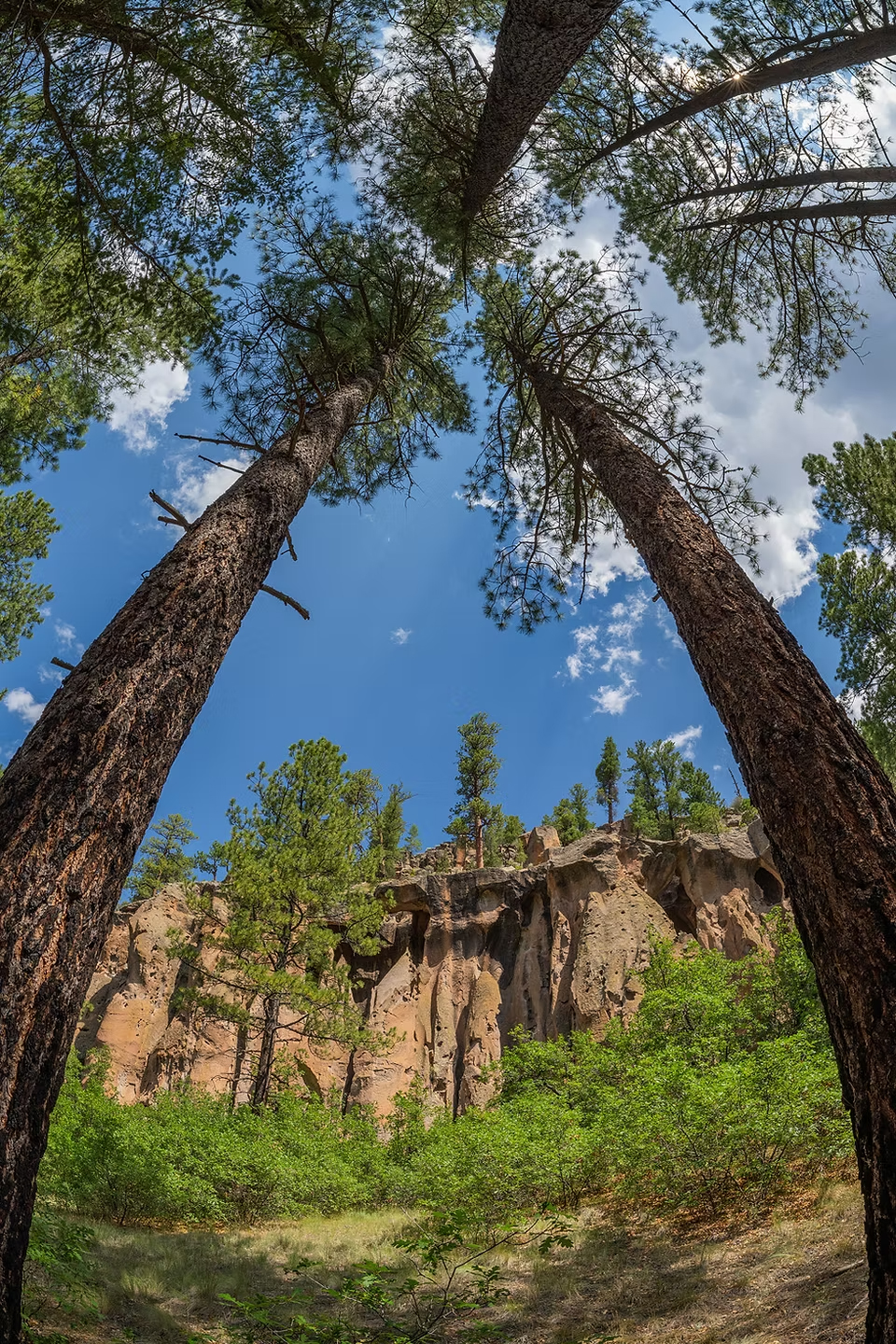
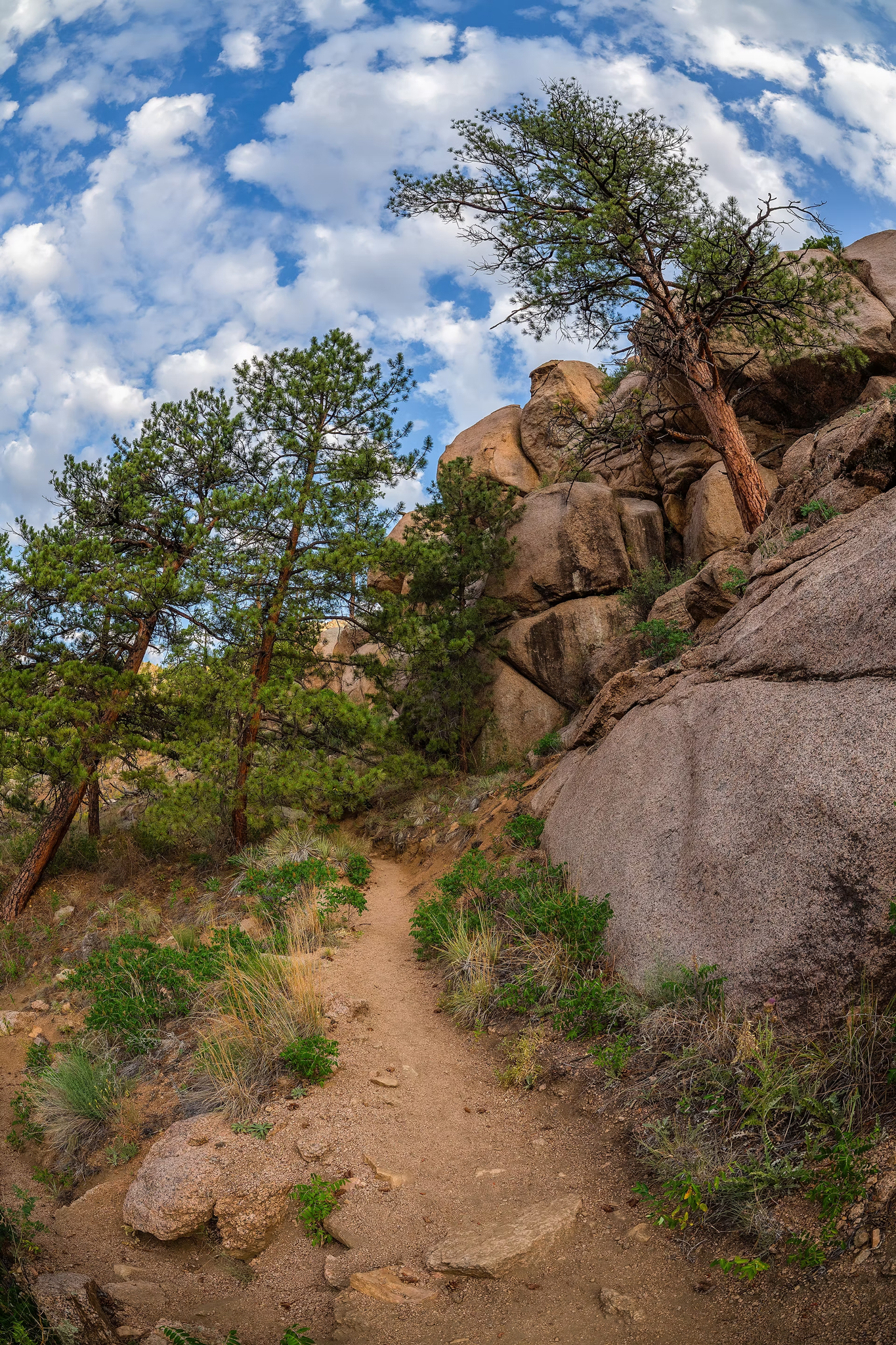
One of the things I really liked about the distortion is that with certain images it can add quite a dramatic effect to the clouds. While shooting with a fisheye is a learning curve both on the shooting end as well as the processing side, the results can be very nice when you understand how the lens works with the processing (lens correction). This can be really fun when you also use the long exposure with a ND filter. Here’s an example:
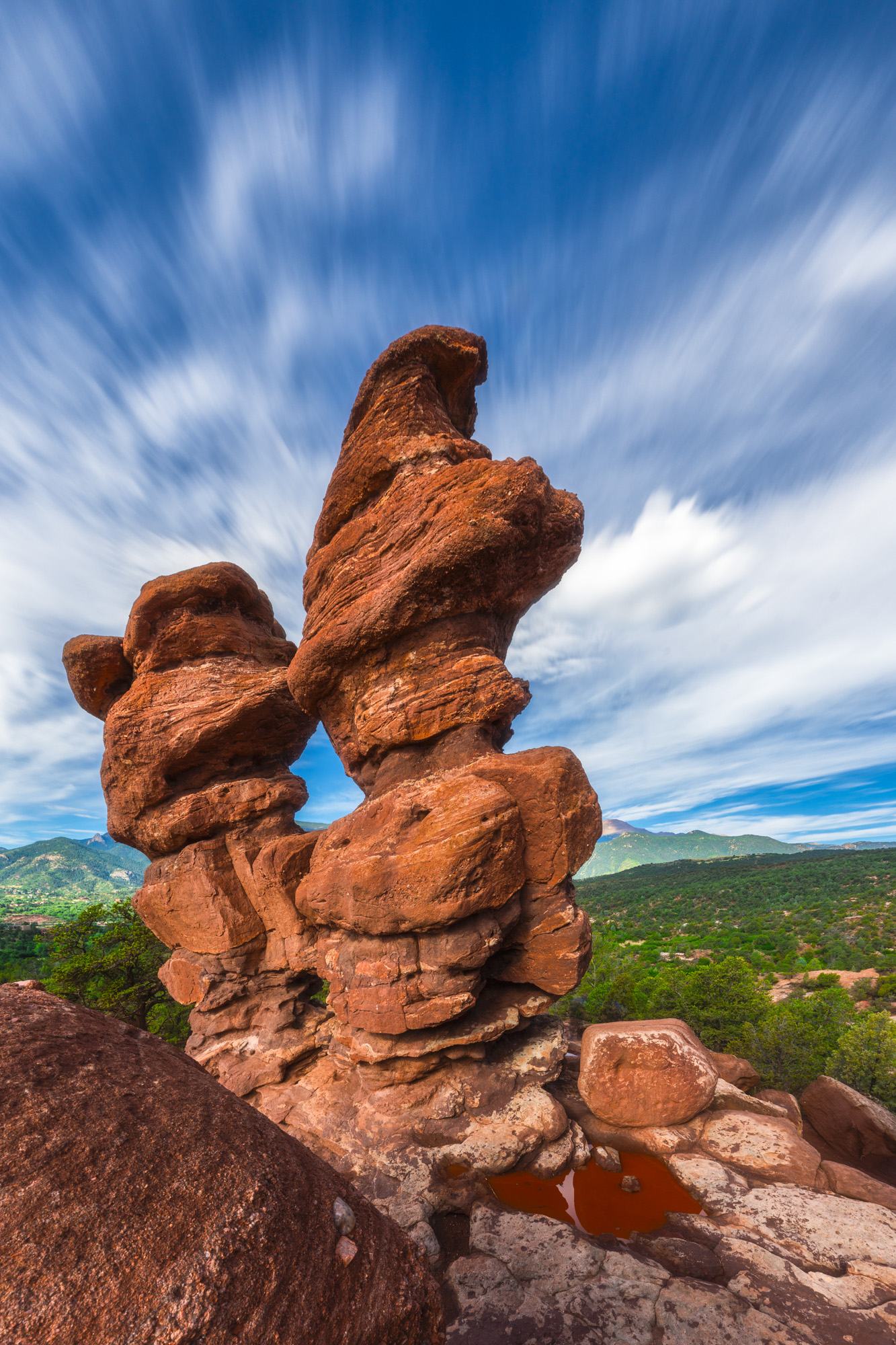
Sony A7R IV
F16, 30s, ISO 50
Sunstars and surprises
I’m always curious to see what kind of sunstars each lens makes. When I found the sun coming through the trees on one of my hikes, I had to give it a try. The 11 rounded aperture blades in the 15mm 1.4 DG DN Diagonal Fisheye | Art produces a very nice sunstar. This worked well along with the distortion to frame the trees and trail around the sun. In the following image, I’m standing right at the edge of the road. I was photographing this waterfall when a truck came along. This gave me the idea to do a long exposure with a vehicle as it drove by, and the effect was quite dramatic.
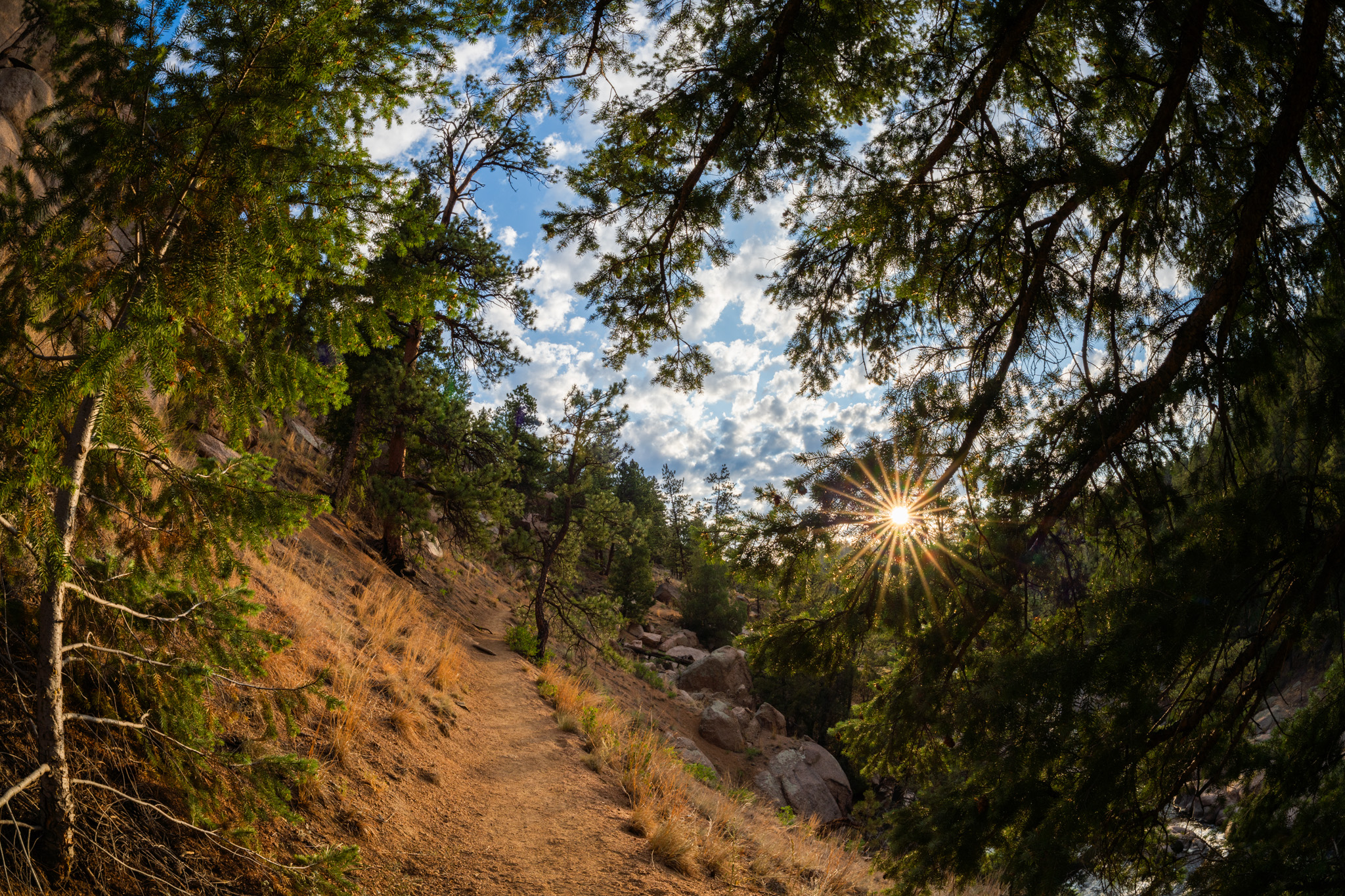
Sony A7R IV
F16, 1/60s, ISO 100
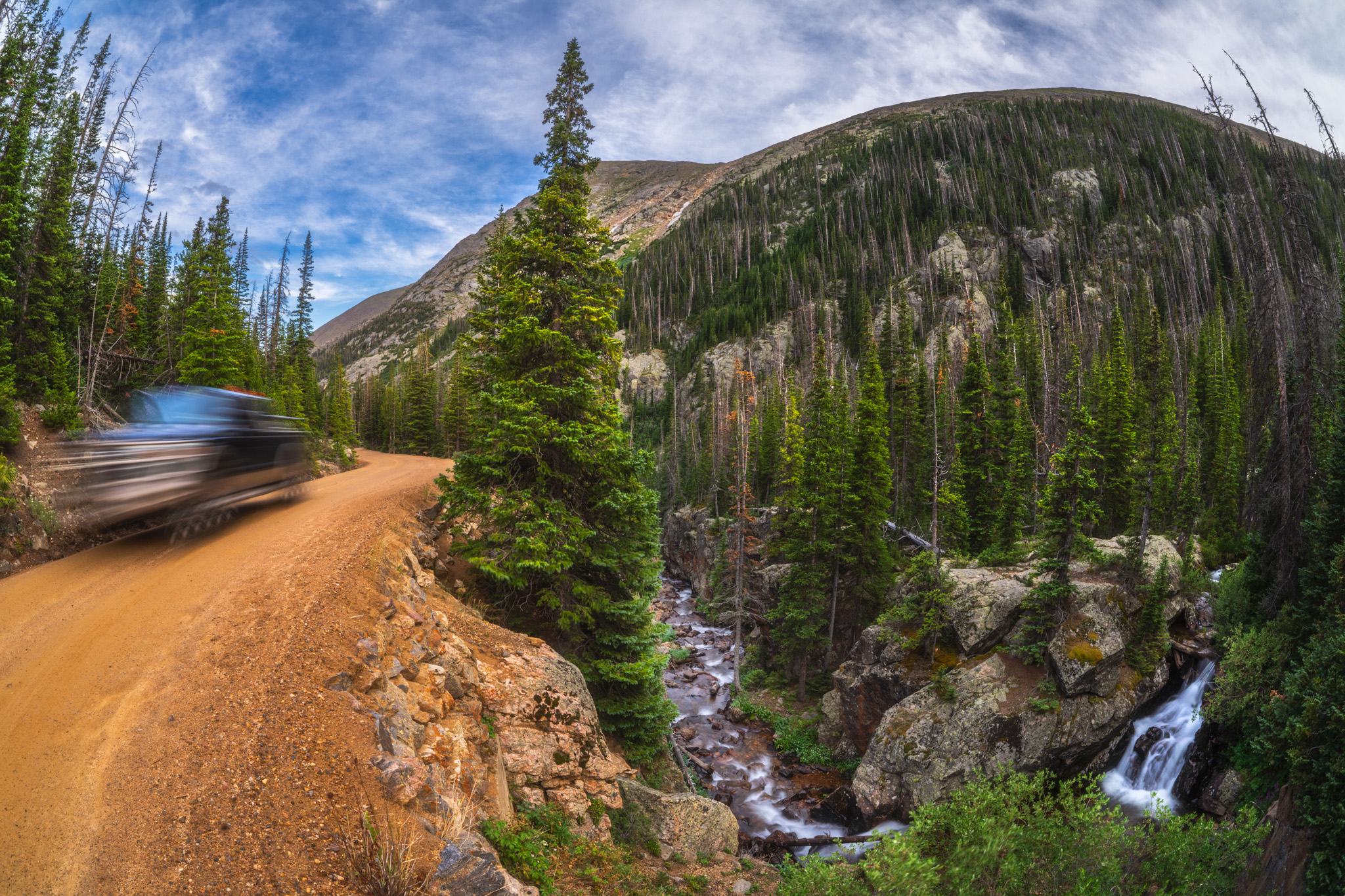
Sony A7R IV
F16, 1s, ISO 100
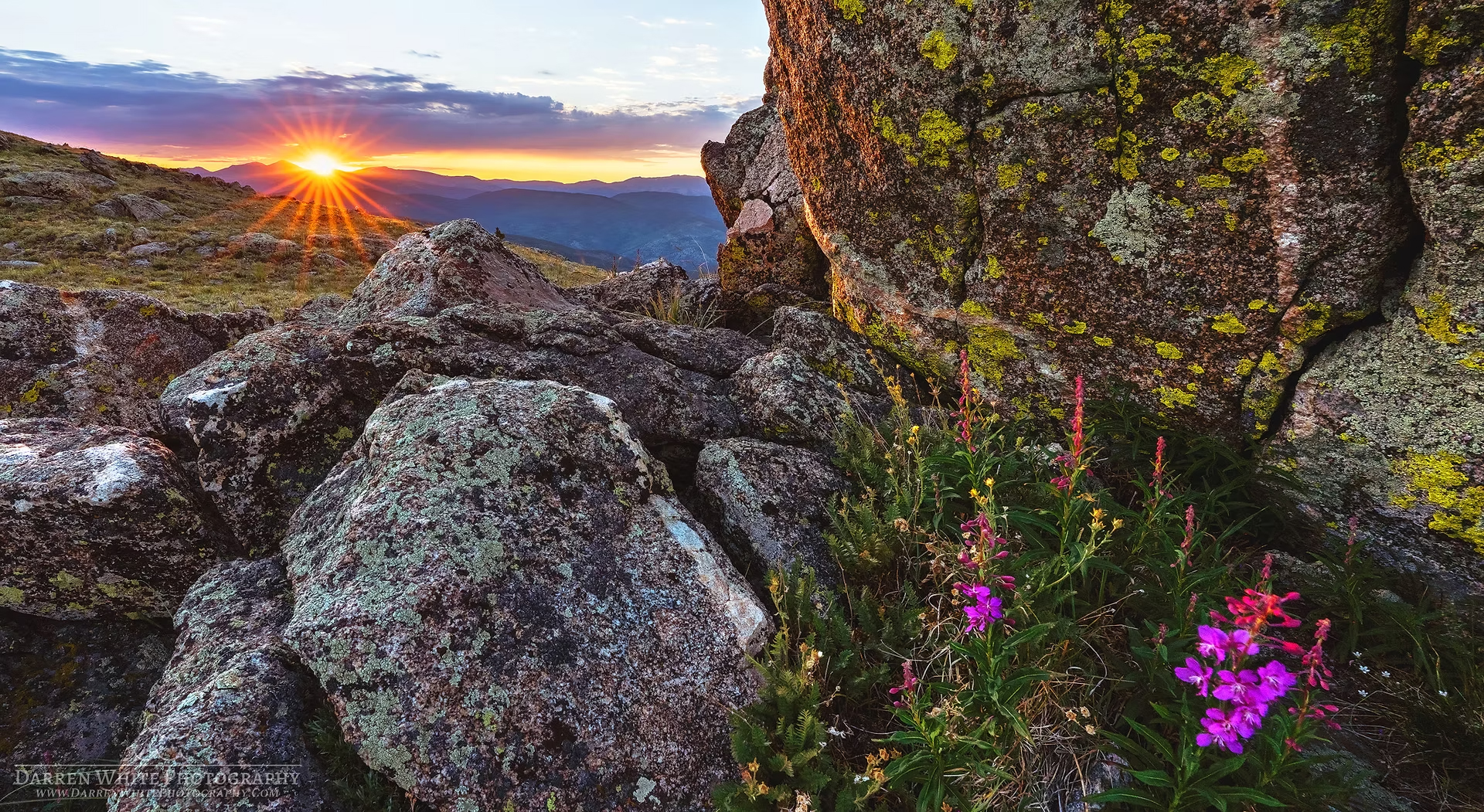
Here is another sunset from the mountains of Colorado. Stopping the lens down to F14 and doing a 30-second exposure produced pretty good results and the reason the sunstar isn’t as pronounced as the one above, which was shot at F14. There was a bit of wind which moved the flowers a bit during the exposure as well. Still a fun shot and the depth of field is incredible at F14.
Creative compositions
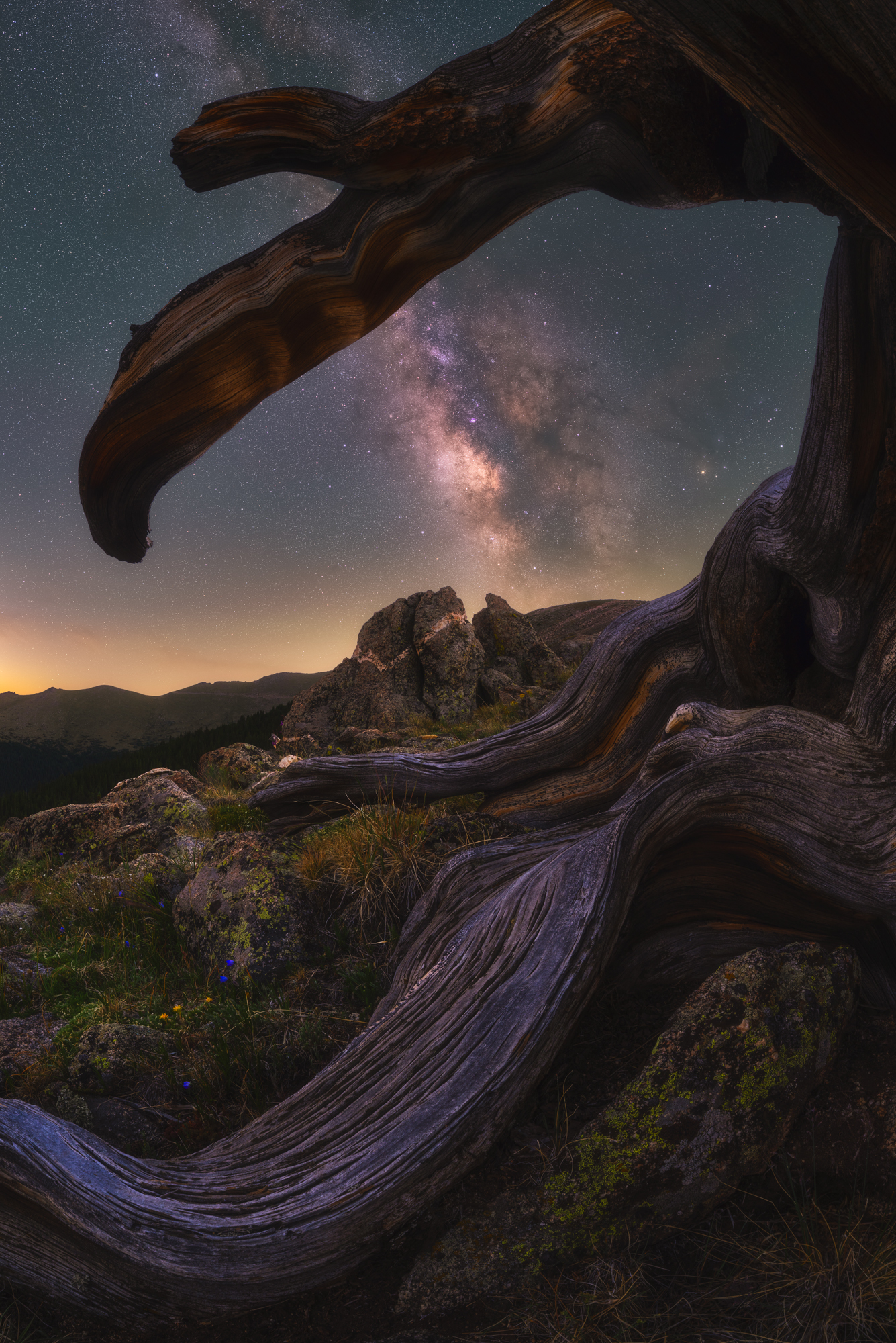
The video shows you just how close I was to this old tree. I was doing test shots and making sure I could get my composition how I wanted before the stars came out. While I did make a slight adjustment before taking the final image, you can see how my setup looked.
Sony A7R IV
F14, 0.8s, ISO 100
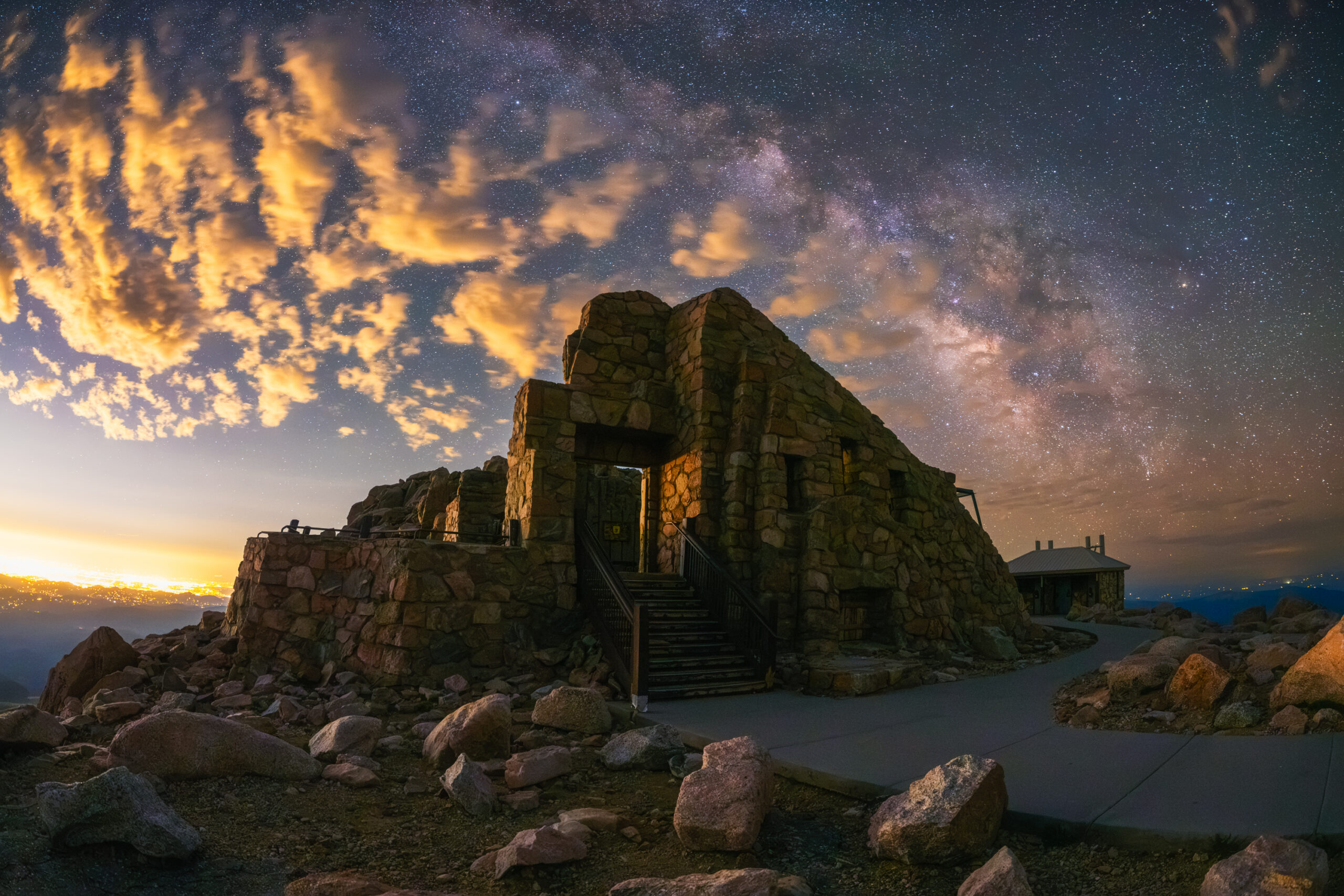
Shooting the stars was so fun with the 15mm 1.4 DG DN Diagonal Fisheye | Art and the edge-to-edge, corner-to-corner sharpness is incredible for a lens this wide, a true testament to the extremely high quality we have come to love from Sigma Art lenses.
Sony A7R IV
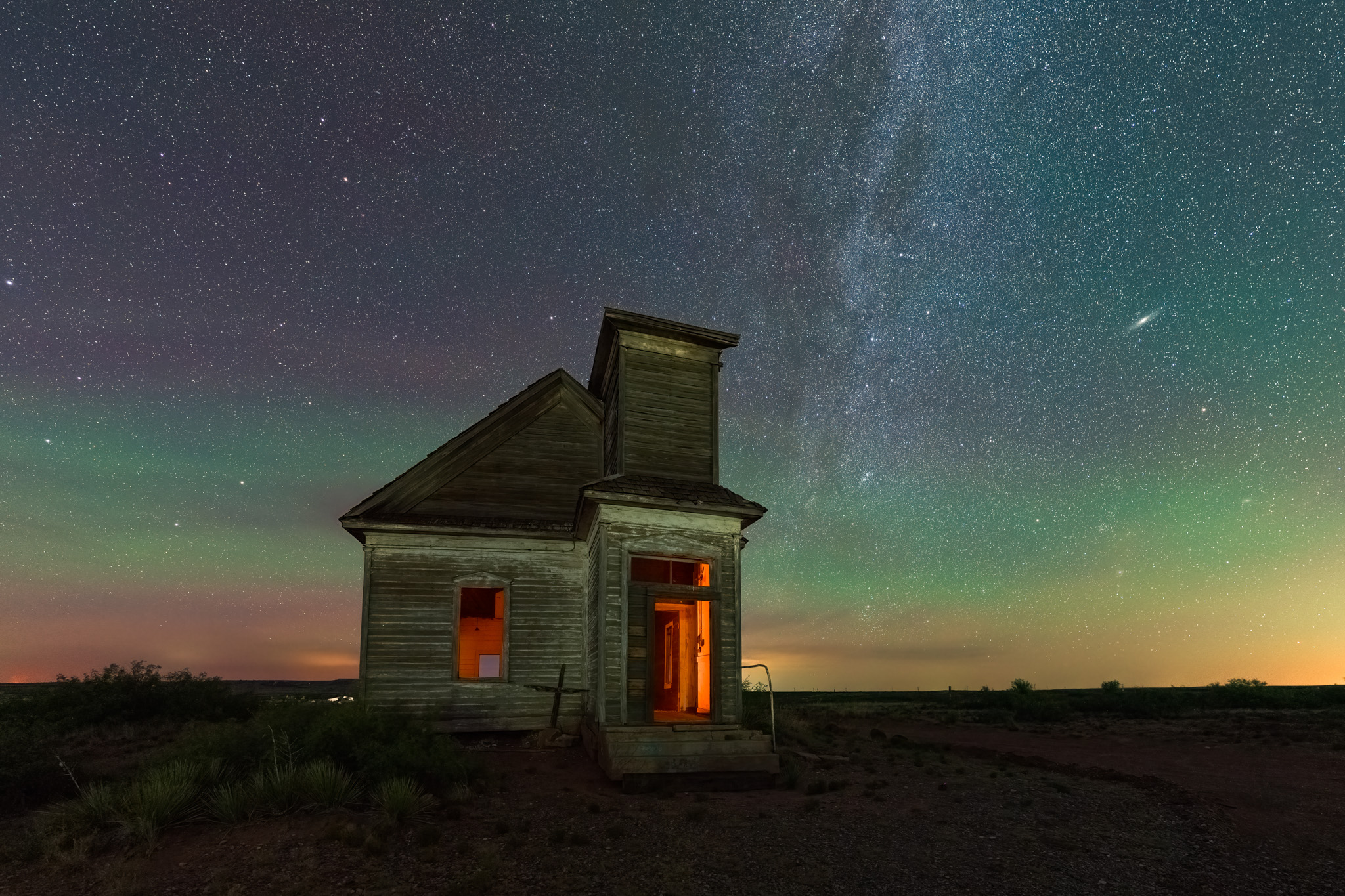
F2.5, 20s, ISO 3200
Even at 20 seconds there was little to no star trailing. The stars are pinpoint sharp from center to edges and corners. For these types of images I actually like how the Milky Way curves up around the old stone building. The distortion doesn’t bother me at all.
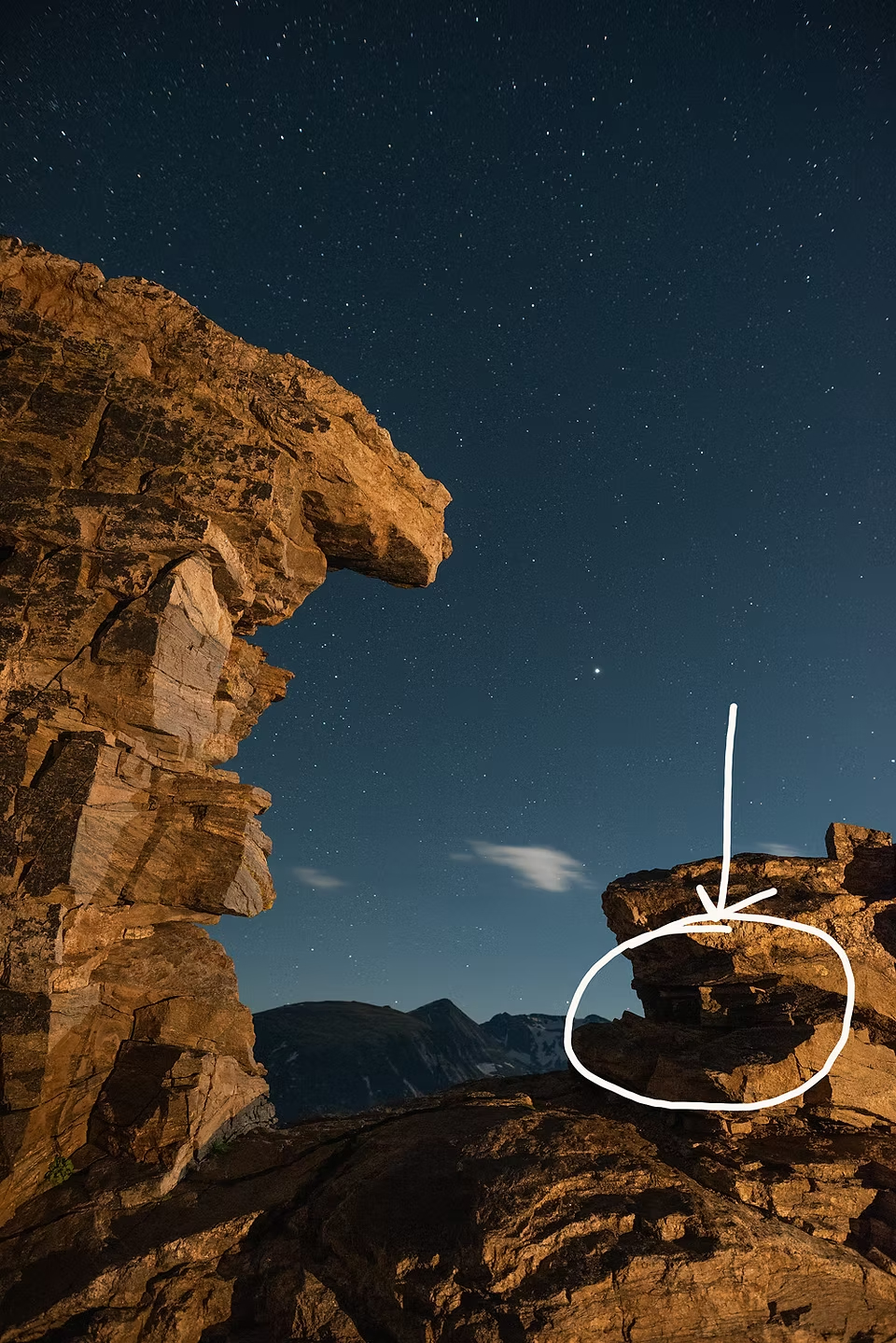
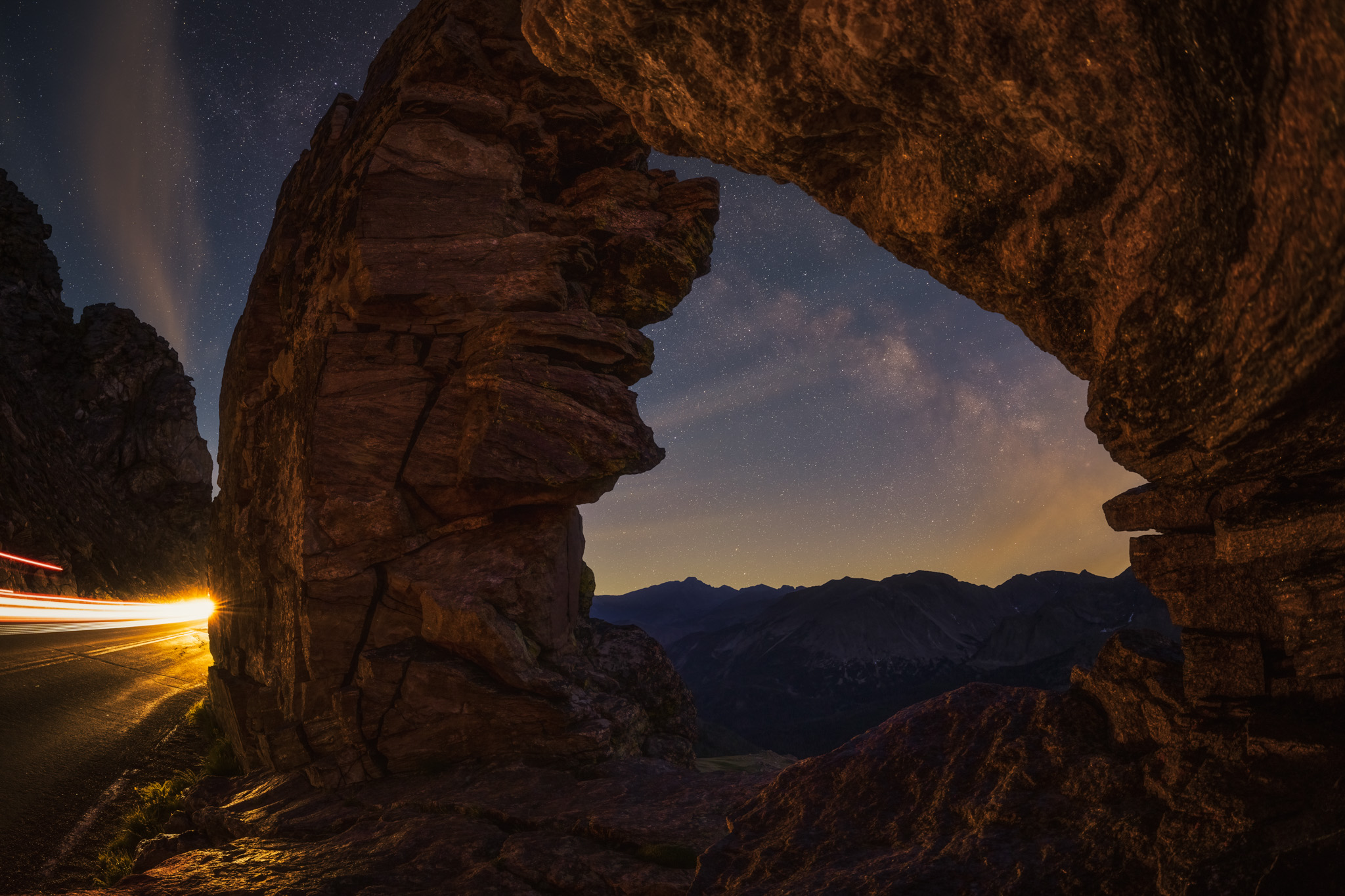
Now to give you an example of the extreme effect you can get with this lens… the first image below shows you the location and the placement of the camera and lens. It was not shot on the same night. It’s an image I shot years ago. I then had the idea to go back with the 15mm 1.4 DG DN Diagonal Fisheye | Art. Because of the wide angle and distortion I was able to create an “Arch” out of these two rock formations just by placing the camera and lens in the right spot. As I was shooting, there were several cars that came by during the exposures. When I first posted this image, no one believed me when I told them where it was. The illusion this lens creates is fascinating.
Sony A7R IV
F13, 30s, ISO 400
I also took a trip to New Mexico to shoot the Perseid meteor shower. The super wide-angle view really worked well with this arch and allowed the Milky Way to slightly bend over it. Excellent DOF, sharp stars, no coma and beautiful details are all attributes of this lens.
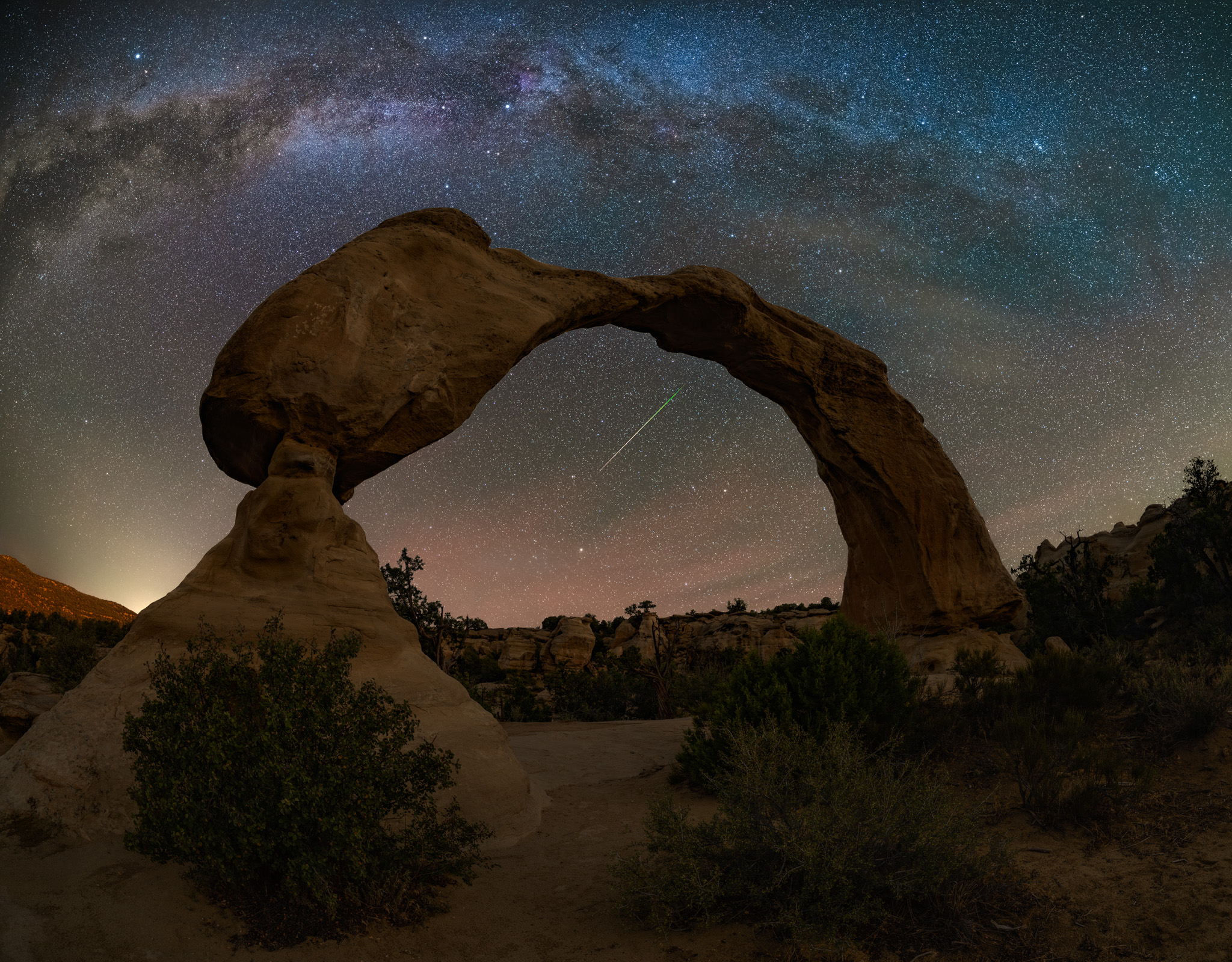
Sony A7R IV
F2.5, 10s, ISO 8000
A surprisingly versatile, fun lens for landscape and astro
From wanting to shoot the stars to ending up shooting a lot of landscapes, the Sigma 15mm 1.4 DG DN Diagonal Fisheye | Art performed at the highest level I could hope for. This image of the crags at Sky Pond at sunrise (sorry for the yellowish color, there was a lot of smoke in the east as the sun was coming up) shows some of the incredible detail just from a handheld snapshot. The lens was literally less than an inch above the water because I wanted to get the best reflection possible.
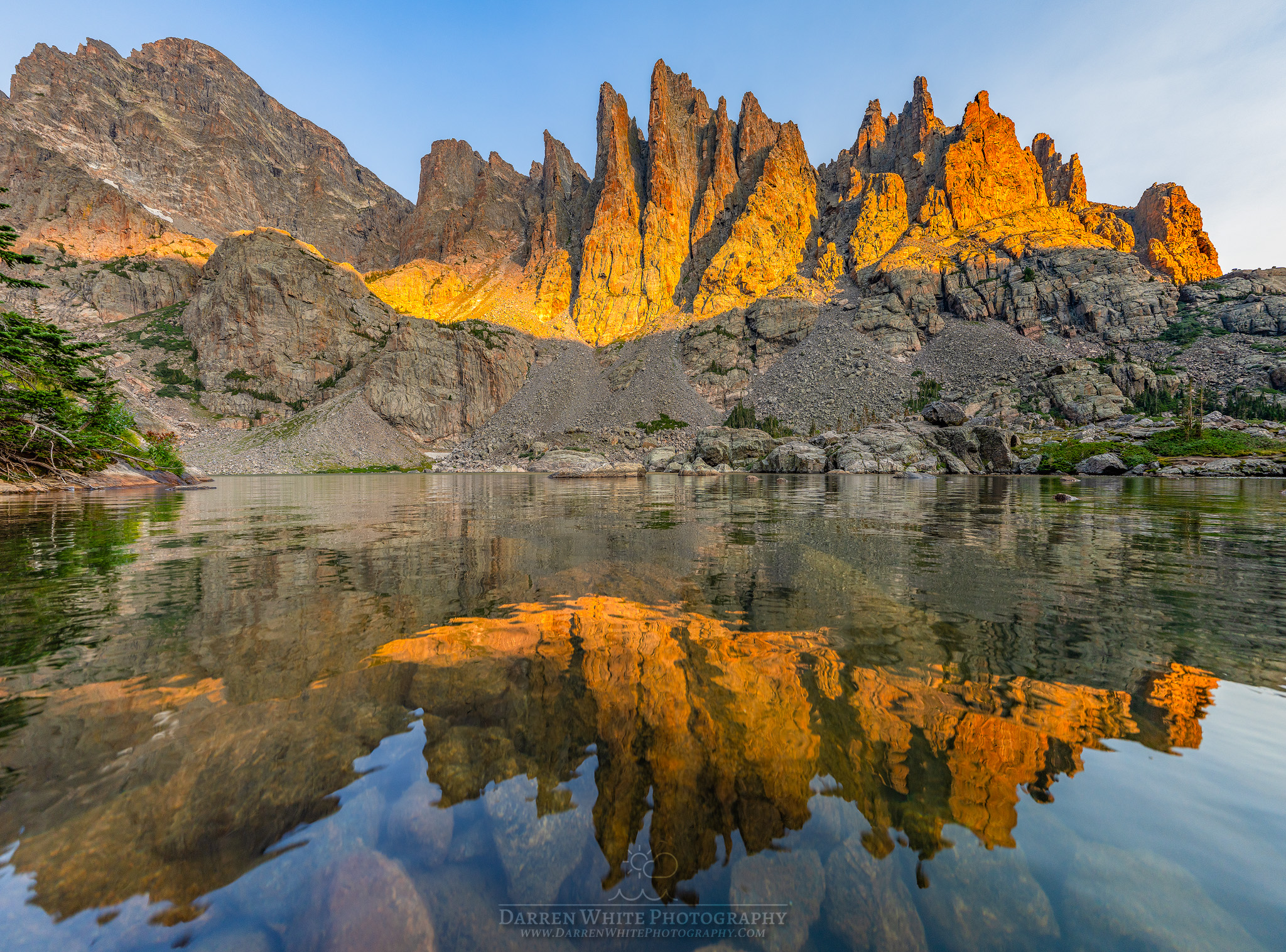
Sony A7R IV
F6.3, 1/100s, ISO 64
From stars to landscapes, or any creative photoshoot in between, this unique lens has potential for all genres of photography, and it’s clear that Sigma didn’t sacrifice anything when designing and building this lens. While it was designed and built for astrophotography, this lens delivers outstanding image quality for any project you have where wide-angle lenses are needed. Maybe the distortion is the creative flair your project needs.
Where can you see using this lens in your photography?
Find your unique perspective