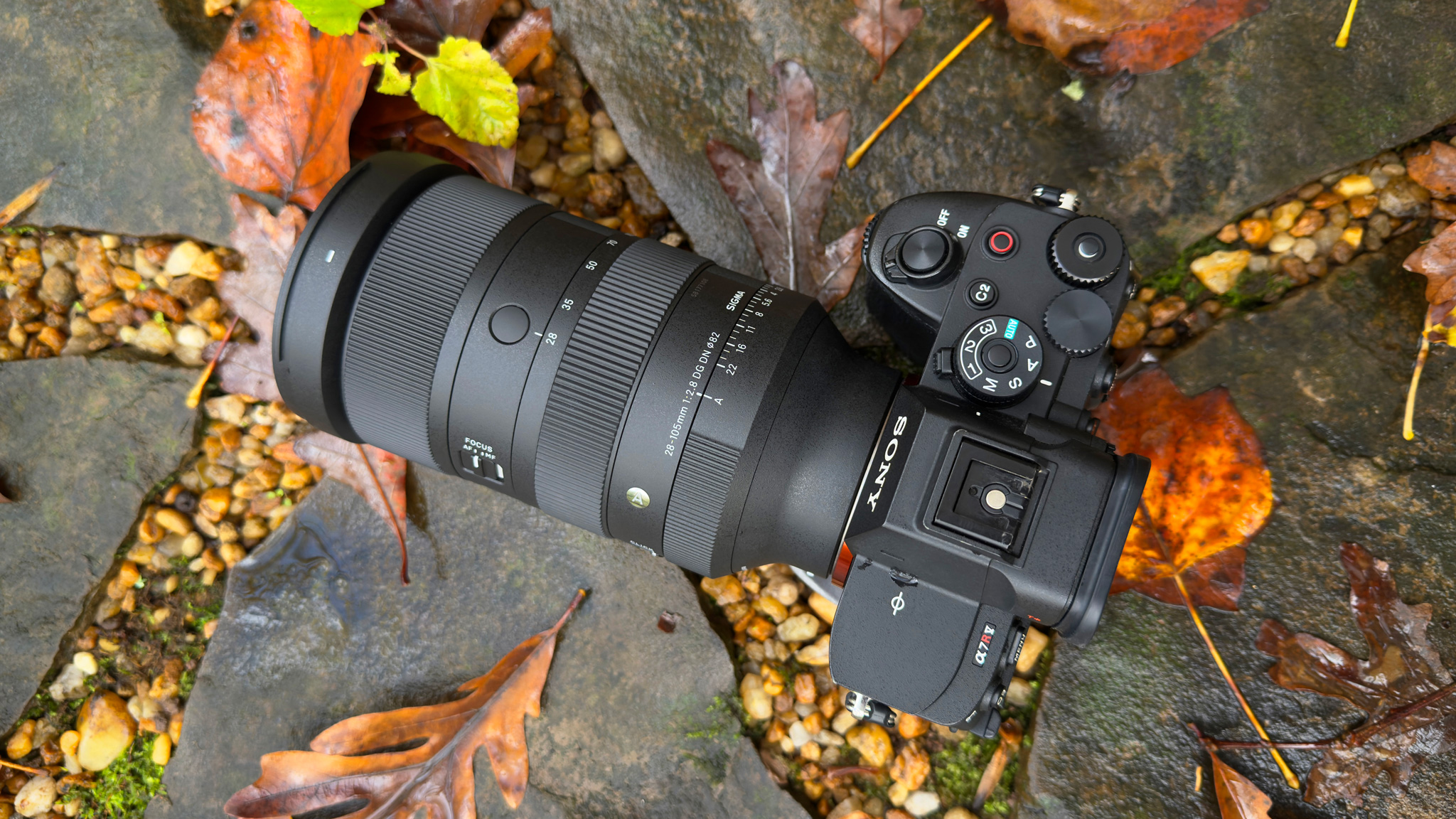
My name is Heather Larkin, and I am a professional photographer in Athens, Georgia. Since its release in 2024, I have used the Sigma 28-105mm F2.8 DG DN | Art lens for a wide variety of things, and it’s been an incredibly versatile addition to my camera bag. While I was using this lens for some of my portrait work, I noticed that it has a great close-up capability. Combine that with a really big zoom range and wide 28mm starting point, it seemed like the biggest test I could put it to would be garden photos. I would normally bring several lenses to photograph gardens: a wide or super-wide like the 14-24mm lens, a macro prime lens, and a middle-range lens like the 35mm F1.4 or 50mm F1.2. However, I don’t want to haul all that around outside on a hot day if I don’t have to. Could I do it all with just one lightweight option and leave my bag at home? Let’s find out!
I took this lens to several gardens to test across a few days. Locations were the State Botanical Gardens of Georgia, The Founder’s Memorial Garden at UGA, Washington Arboretum in Seattle, and the Bellevue Botanical Gardens.
Overall Impressions
If you’ve never tried this lens before, first impressions are a bit surprising. This lens is a lot lighter than I thought it was going to be. Sigma is definitely making lenses smaller and lighter these days, and I’m sure we can all appreciate that. However, I was still surprised that this lens is as short and light as it is with such a huge range. In the past, that would mean tons of glass and therefore a huge lens, but not anymore. The size and weight make it enjoyable to use and easy to handhold. I completely loathe using a tripod on location, so a lens I can handhold is really important for me. Of course, just being able to handhold a lens doesn’t make any difference if it’s not sharp in the resulting images, which this one definitely is!

Since the zoom range is so large at 28-105mm, it means that I could cover a whole lot of area without moving my feet. Not only is this fabulous when you are feeling lazy, but it’s also fabulous when you physically cannot go where you want. Especially important in garden photography, because you don’t want to trample all of the plants. A longer zoom reaches in to isolate what you want without having to squeeze your way through the shrubbery.
I love that this is a F2.8 aperture lens all the way through. I definitely like a very shallow depth of field, and I pay close attention to the bokeh in the background. F2.8 is not too shallow for large, scenic images, and still enough for lots of blur in the zoomed-in, close-up images.
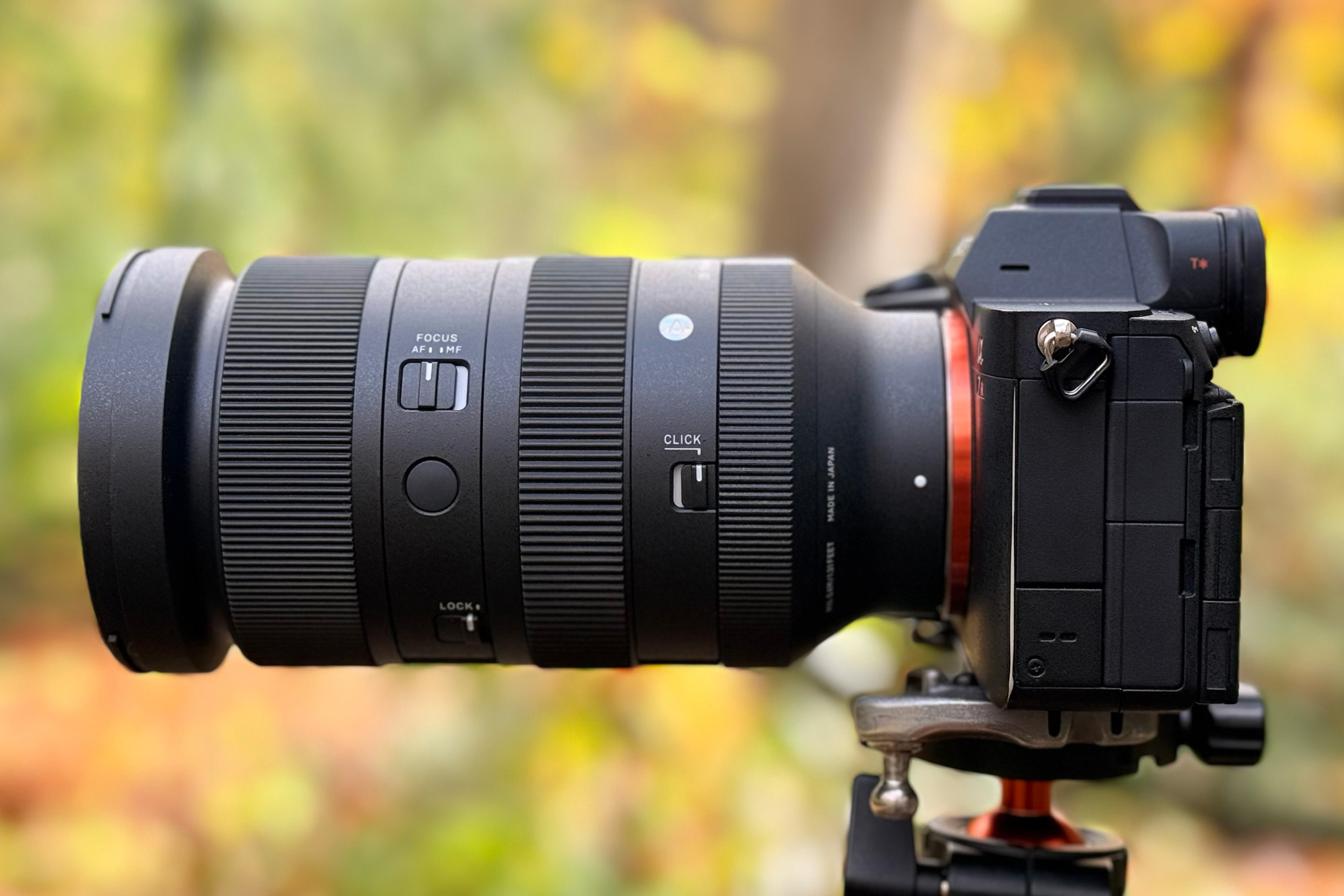
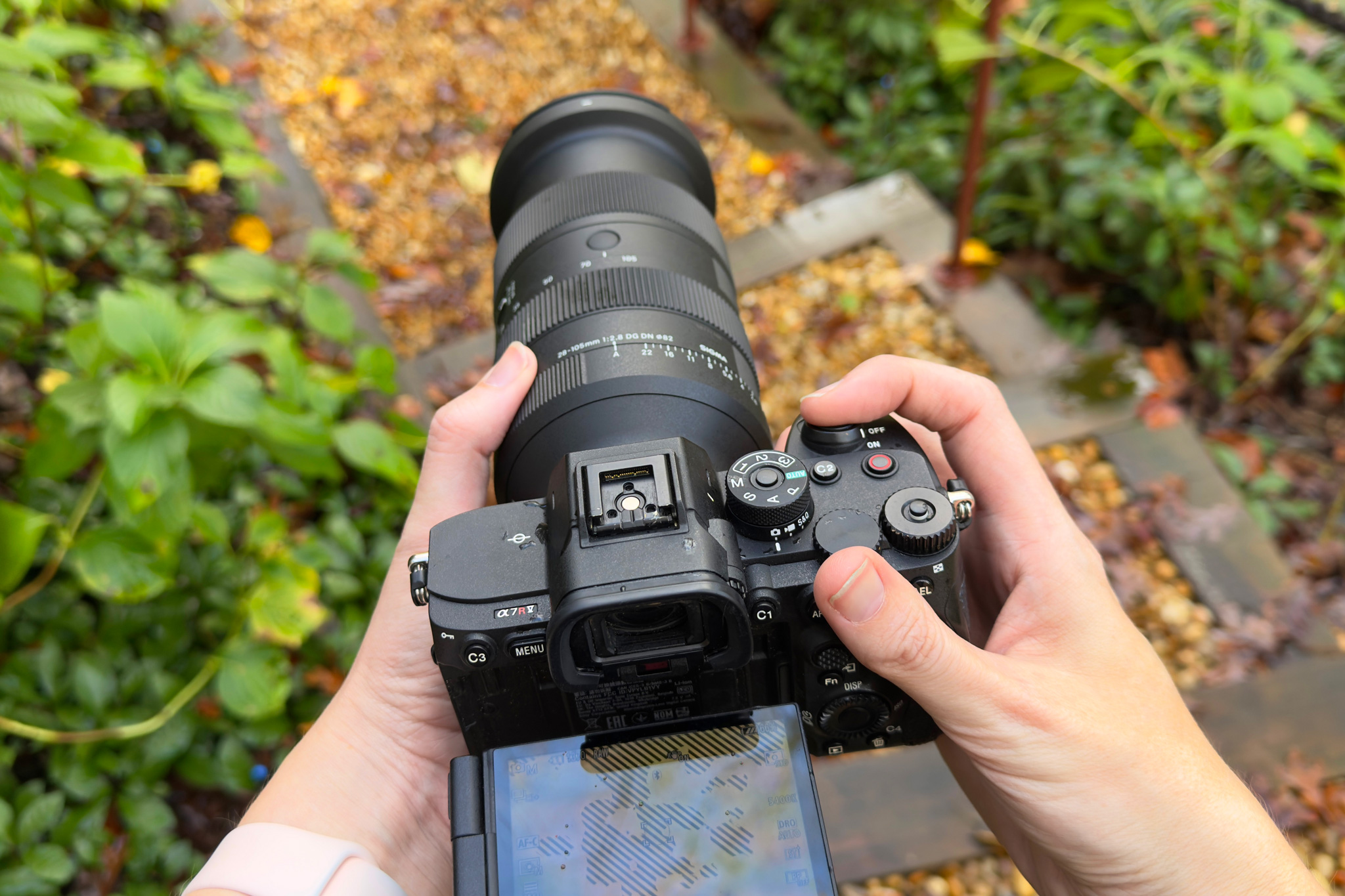
One of the other things I like about this lens is that you can use autofocus and manual focus together. You use the super-fast autofocus and then just slightly squeak the manual focus ring to adjust, particularly if you have manual focus peaking / highlighting set up in your camera. I found this incredibly useful for when I want to fine tune my focus. Making sure that the narrow slice of the scene I wanted in focus was actually in focus was easy to do.
I also love that it’s weather sealed for foggy days, or in my case, muddy hands. I never have to worry about my lens being affected by the elements.
Close Focusing Magic – 70mm to 105mm
This lens has a minimum focus distance of 40cm (approx. 16 inches) through its entire range. That’s 40cm measured from the camera sensor, not the front of the glass. That ends up making it 1:3.1 reproduction ratio, so not true macro, but pretty great! It close focuses very well at any zoom focal length, but I found it especially gorgeous at the longer range of this lens. The focusing doesn’t suffer for close-ups either! A lot of lenses will hunt all over when you are attempting to do closer images, but this one doesn’t tend to do that. Plus, you can use manual focusing with autofocus turned on and really dial in to exactly what you want.
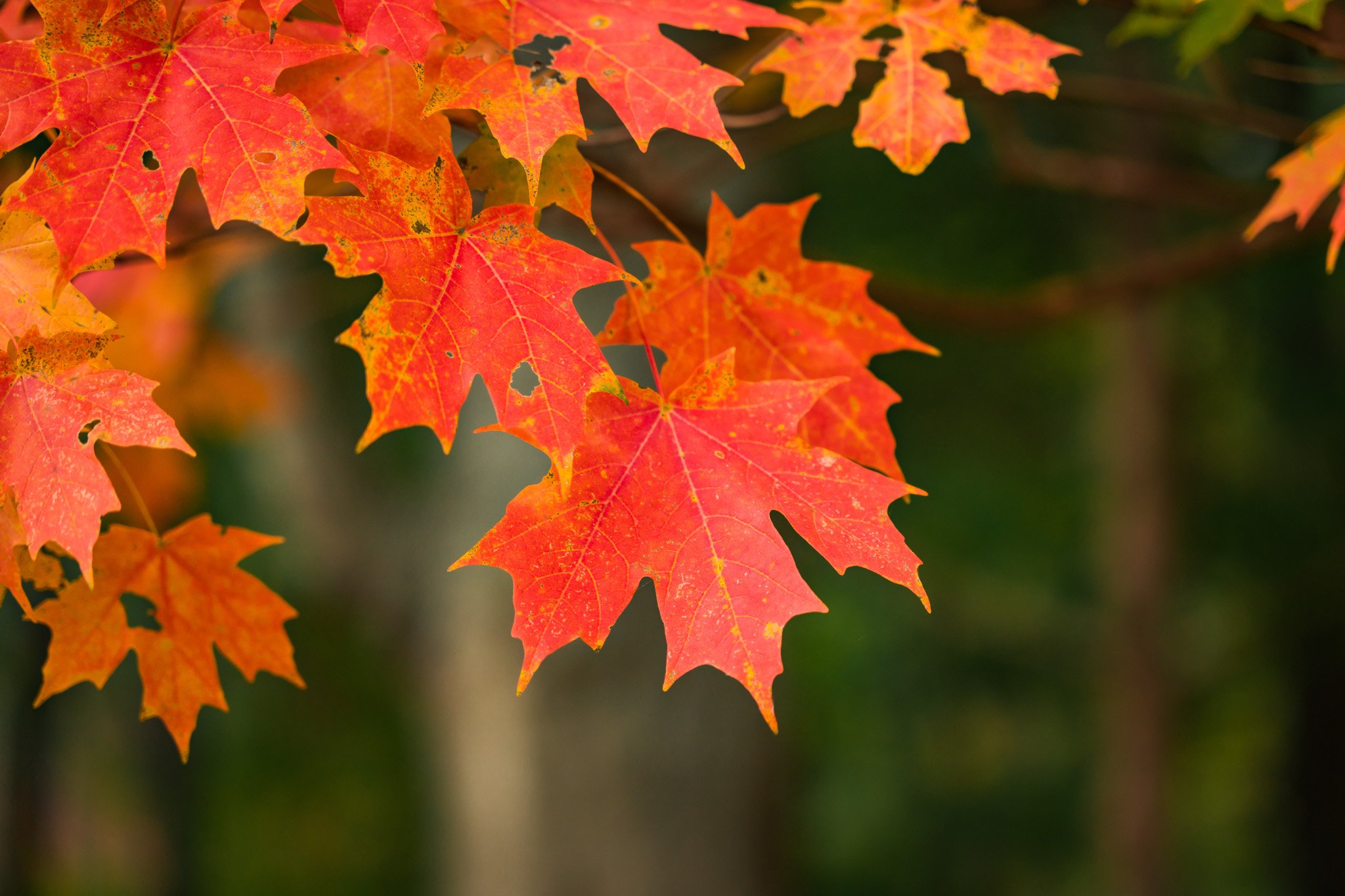
Sony a7R V
105mm, F2.8, 1/640s, ISO 250
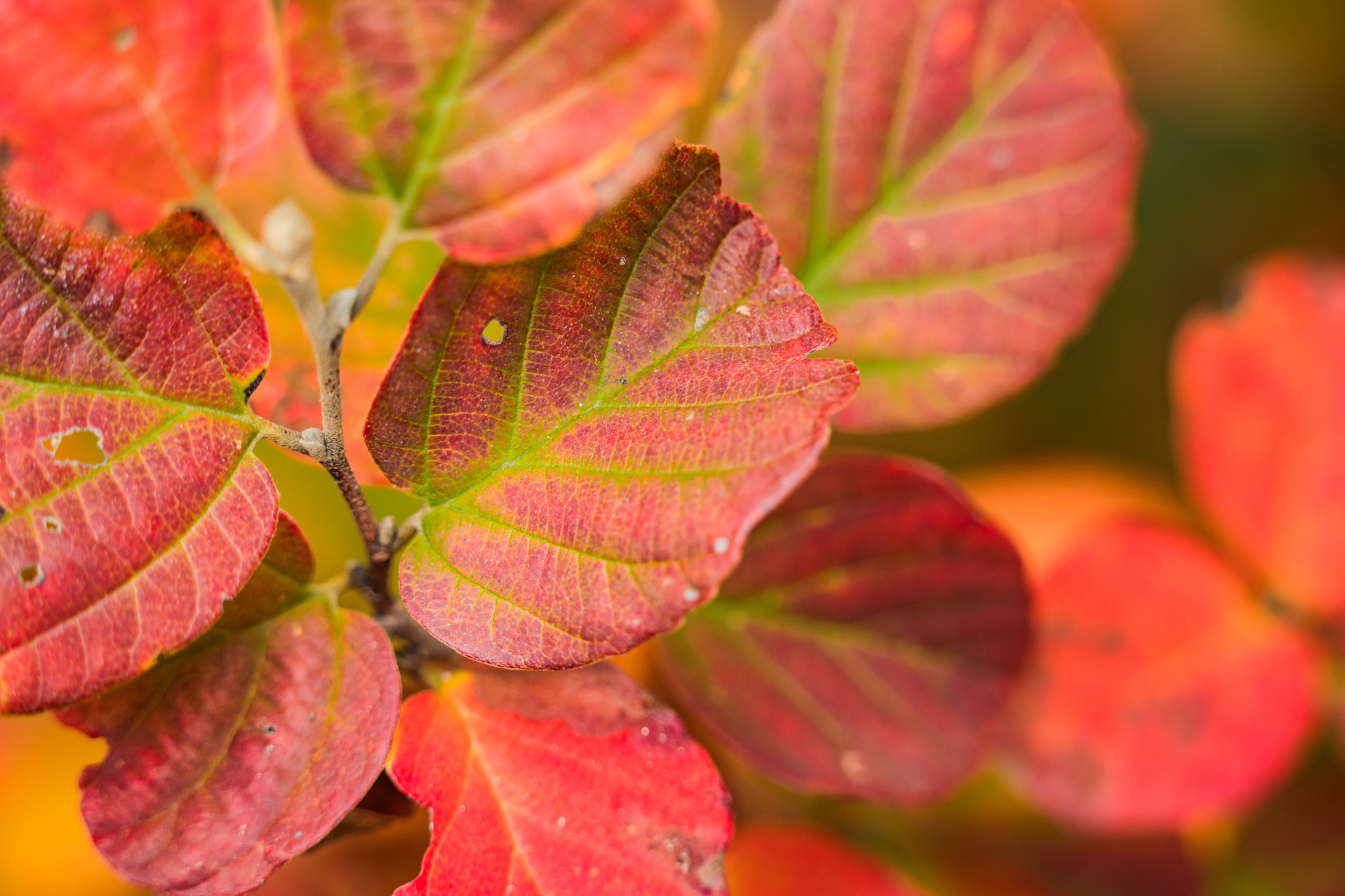
Sony a7R V
105mm, F5, 1/640s, ISO 500
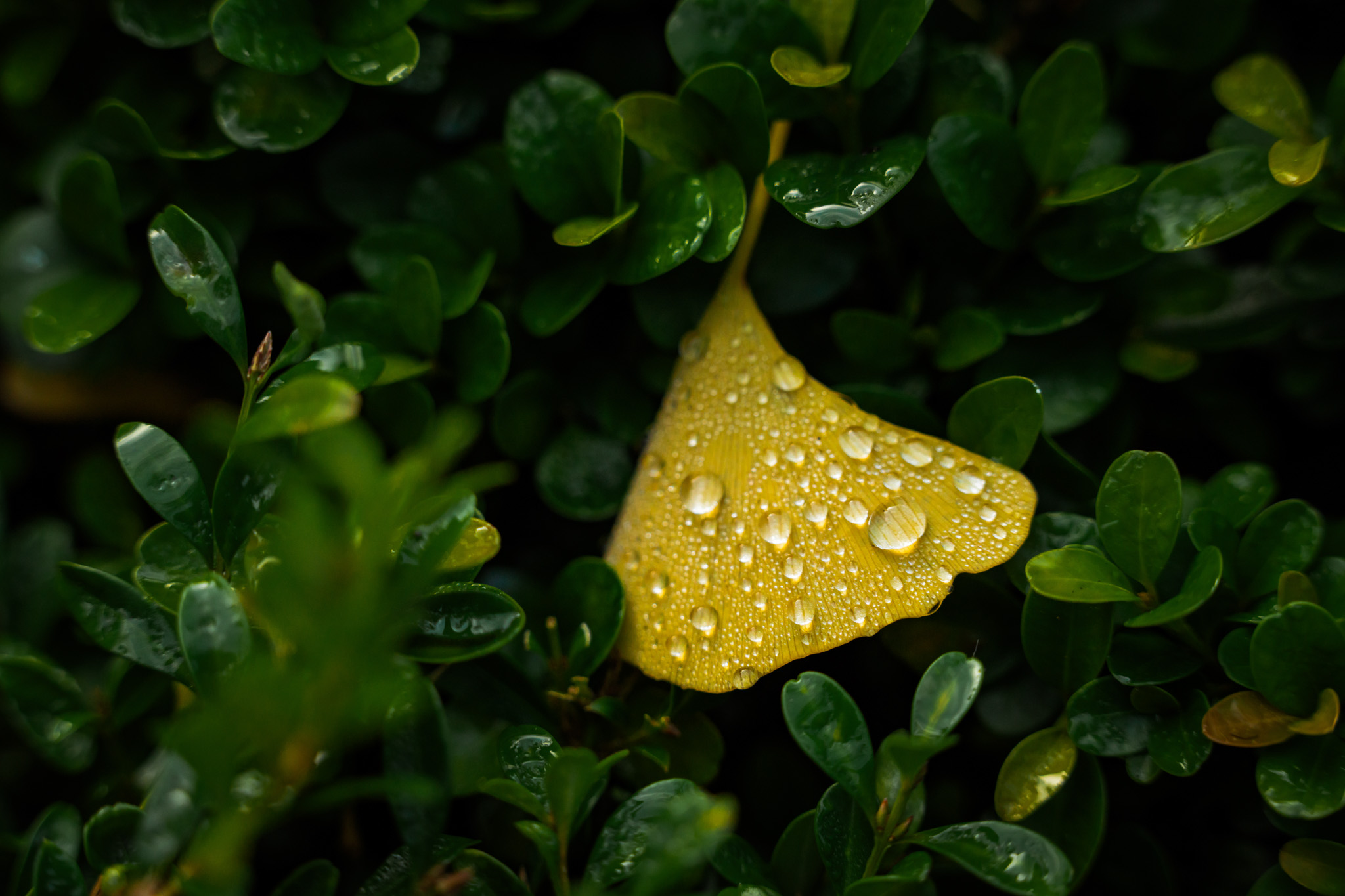
Sony a7R V
105mm, F5, 1/500s, ISO 800
I found that the details are completely sharp even at the longest focal length of 105mm and the widest aperture of F2.8. Many lenses can get soft at the edges of the range, but I did not see that problem with this lens! All of the details that I wanted to photograph are perfectly sharp, and because I can use F2.8, they are also beautifully separated with lovely blur in the background.
Sony a7R V
105mm, F2.8, 1/640s, ISO 250
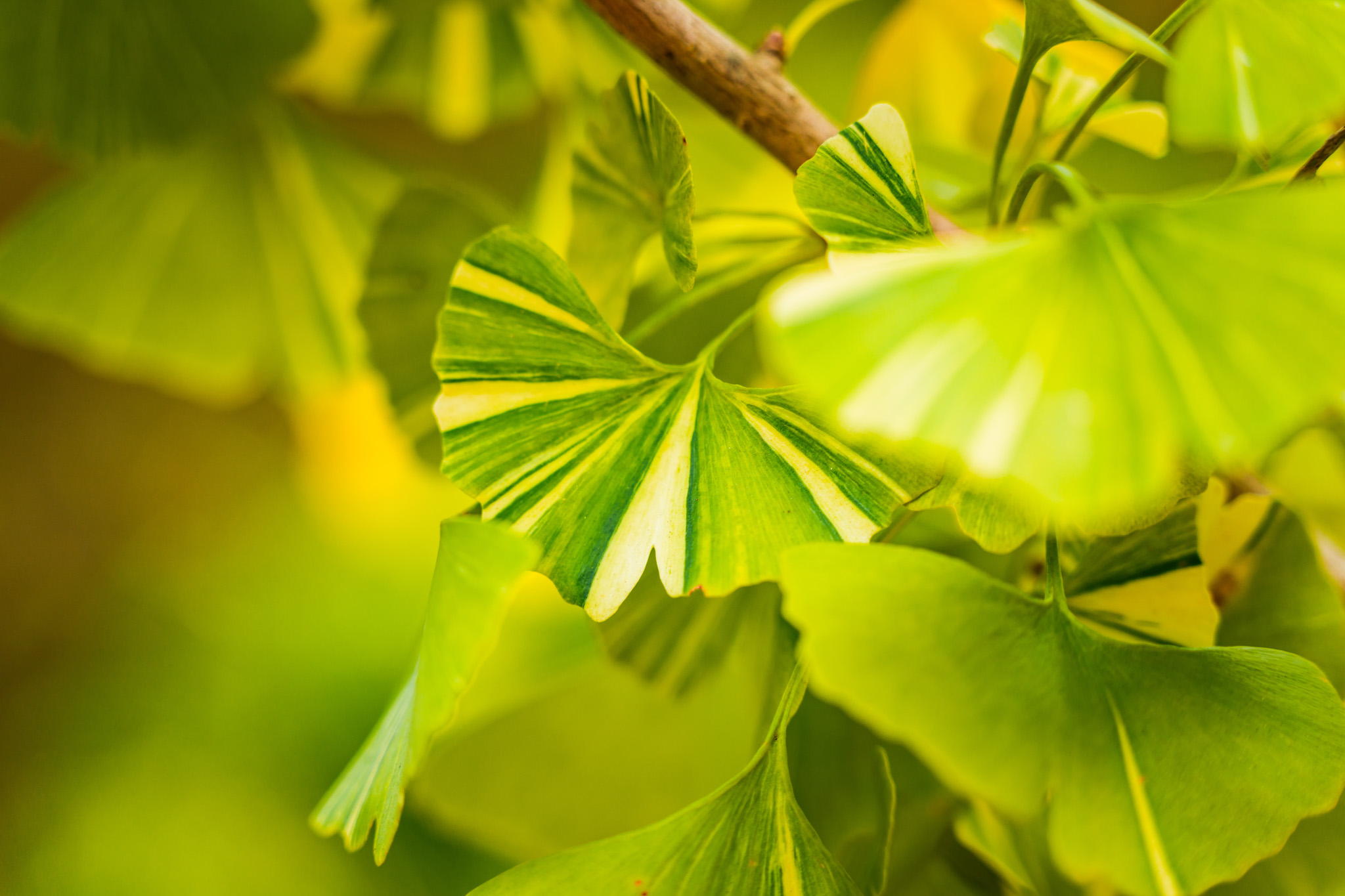
Sony a7R V
105mm, F2.8, 1/800s, ISO 200
Even when you’re not close focusing, that longer zoom range works in your favor for scenic images if you are standing too far back from what you want to photograph. At one of the gardens, I found myself across the lake from a pretty composition on the opposite shoreline and couldn’t get any closer without tossing myself in the water. The extra zoom range definitely helped here. 70mm wouldn’t have been long enough — I ended up needing 90mm for that photo.
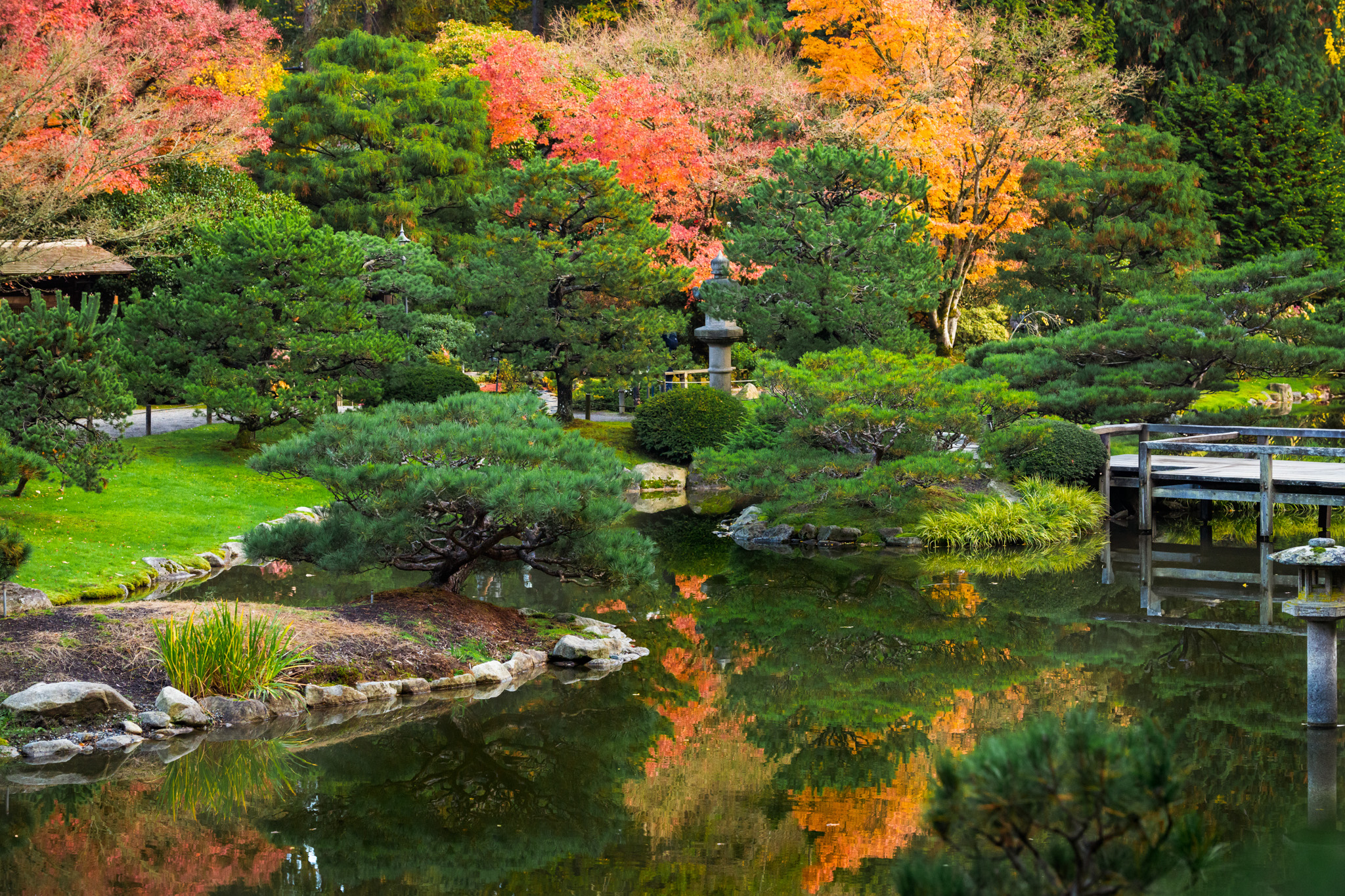
Sony a7R V
89mm, F5, 1/500s, ISO 4000
My 24-70mm lens is a staple for garden photography because I can get wide photos as well as close-ups without having to trample the flowers, but the 28-105mm has the added advantage of more zoom for those harder-to-reach plants? Yes, please.
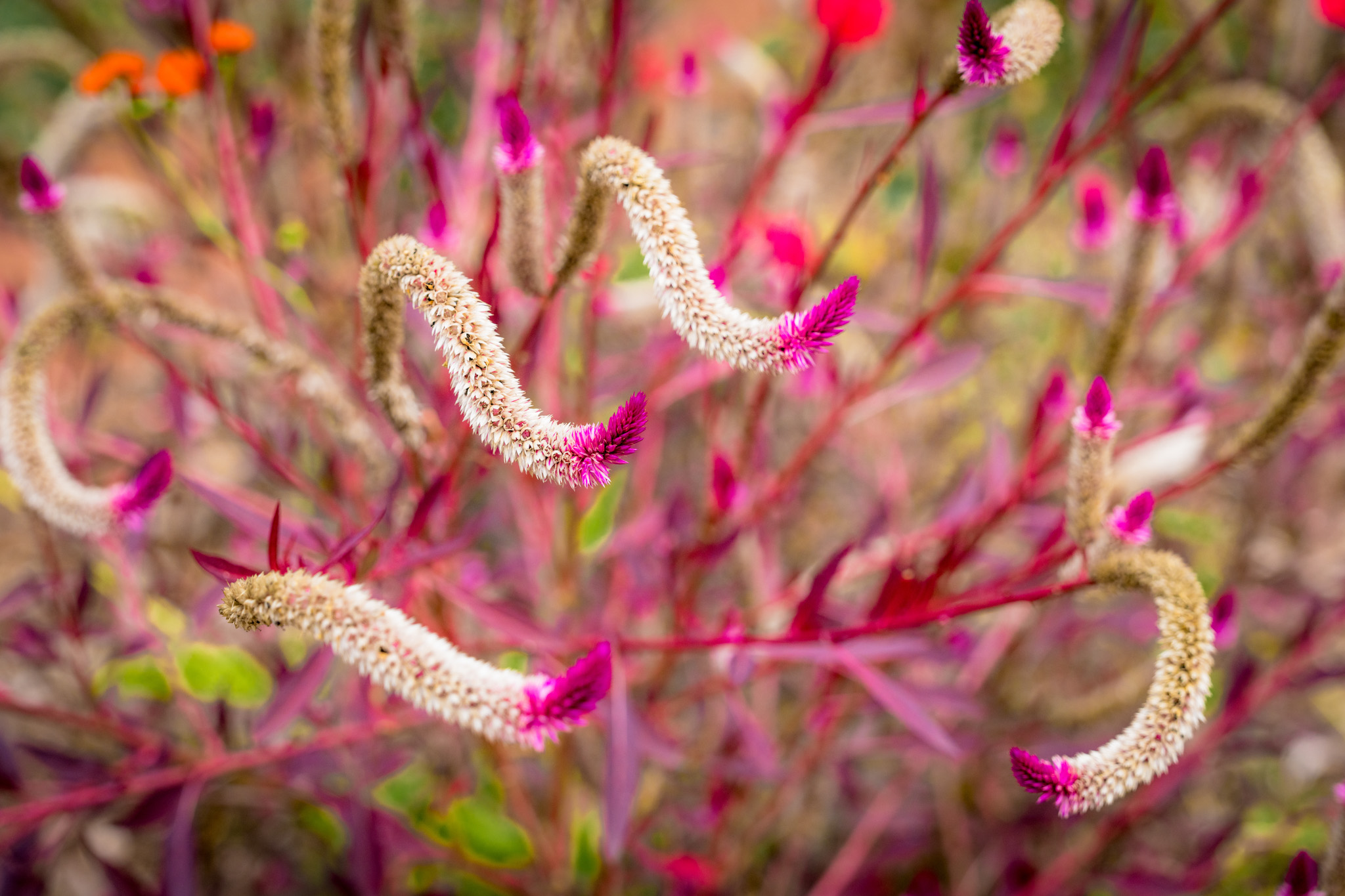
Sony a7R V
81mm, F5.6, 1/1000s, ISO 400
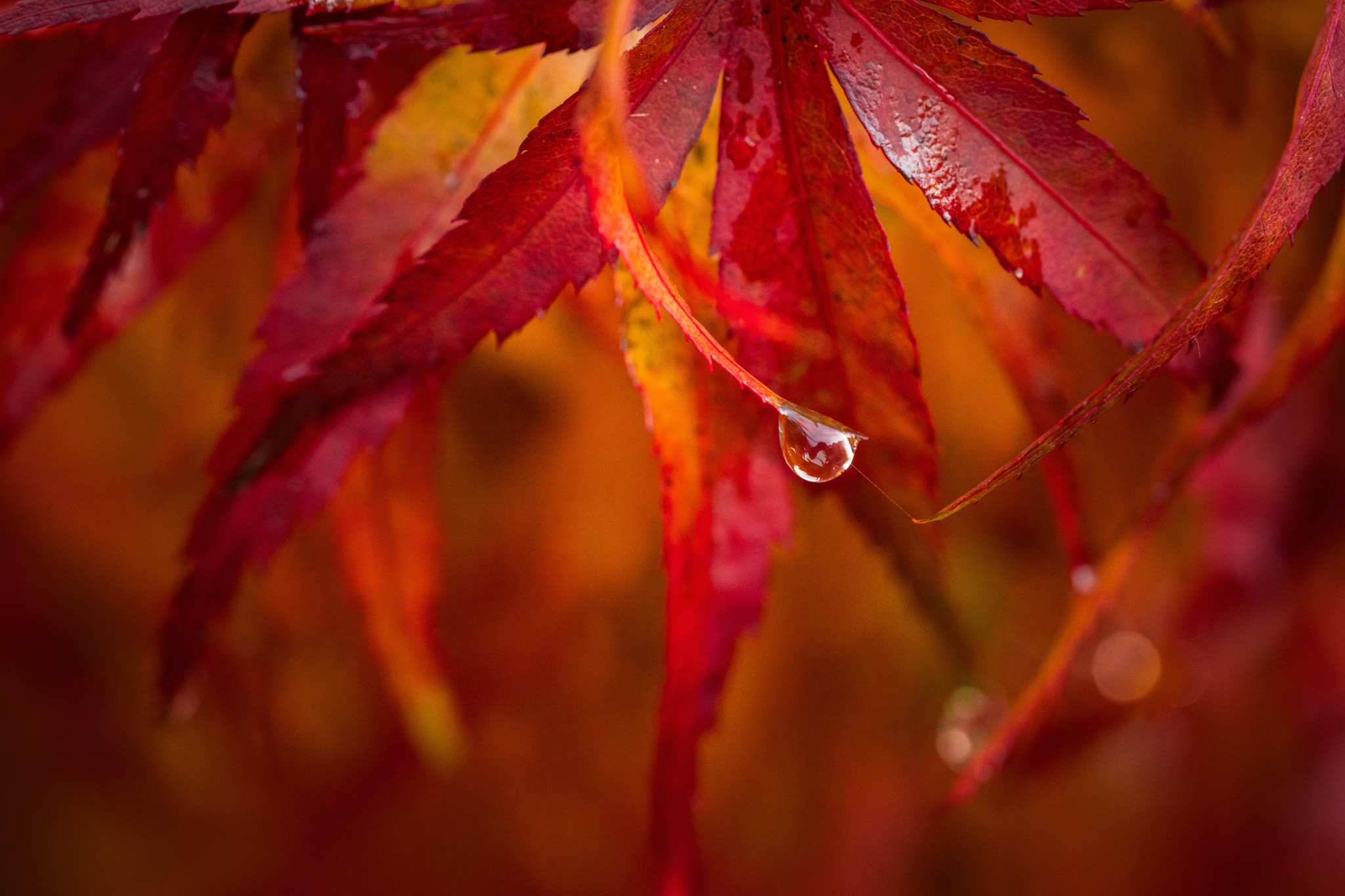
Sony a7R V
105mm, F3.5, 1/500s, ISO 6400
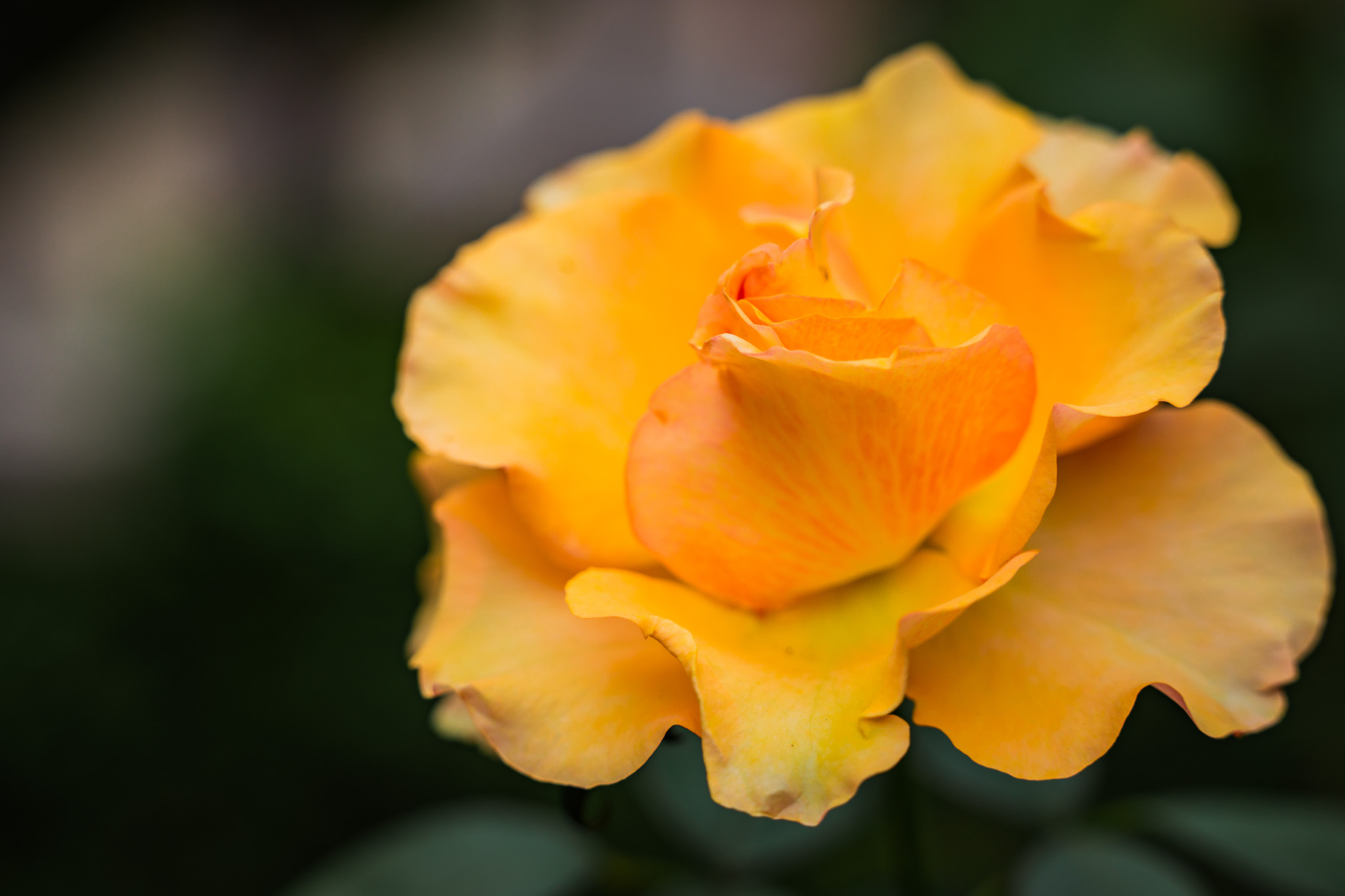
Sony a7R V
105mm, F5, 1/500s, ISO 200
The extra range is especially helpful for a garden in the fall. Lots of bulbs are being planted this time of year, and if you step into the flowerbeds you run the risk of squishing next year’s blooms before they are even established. Also, because I am 6 feet tall and have pretty long arms, I’m used to leaning over and reaching into things, and the number of times I have fallen or tripped over something doing exactly that is not insubstantial. Having a longer range allows me not only to get images I would normally miss, but to do so with a smaller risk of personal injury.
Mid-Range Zoom Power – 40mm to 69mm
I think there are only a few lenses that cover a range of 40 to 60mm, primes included. There is the lovely 24-70mm, a 50mm, but that’s about it. If you want a 45mm focal length, there’s just not that much out there. I found that for this project, I didn’t really miss the larger aperture of my 50mm F1.2 and was fully content with F2.8.
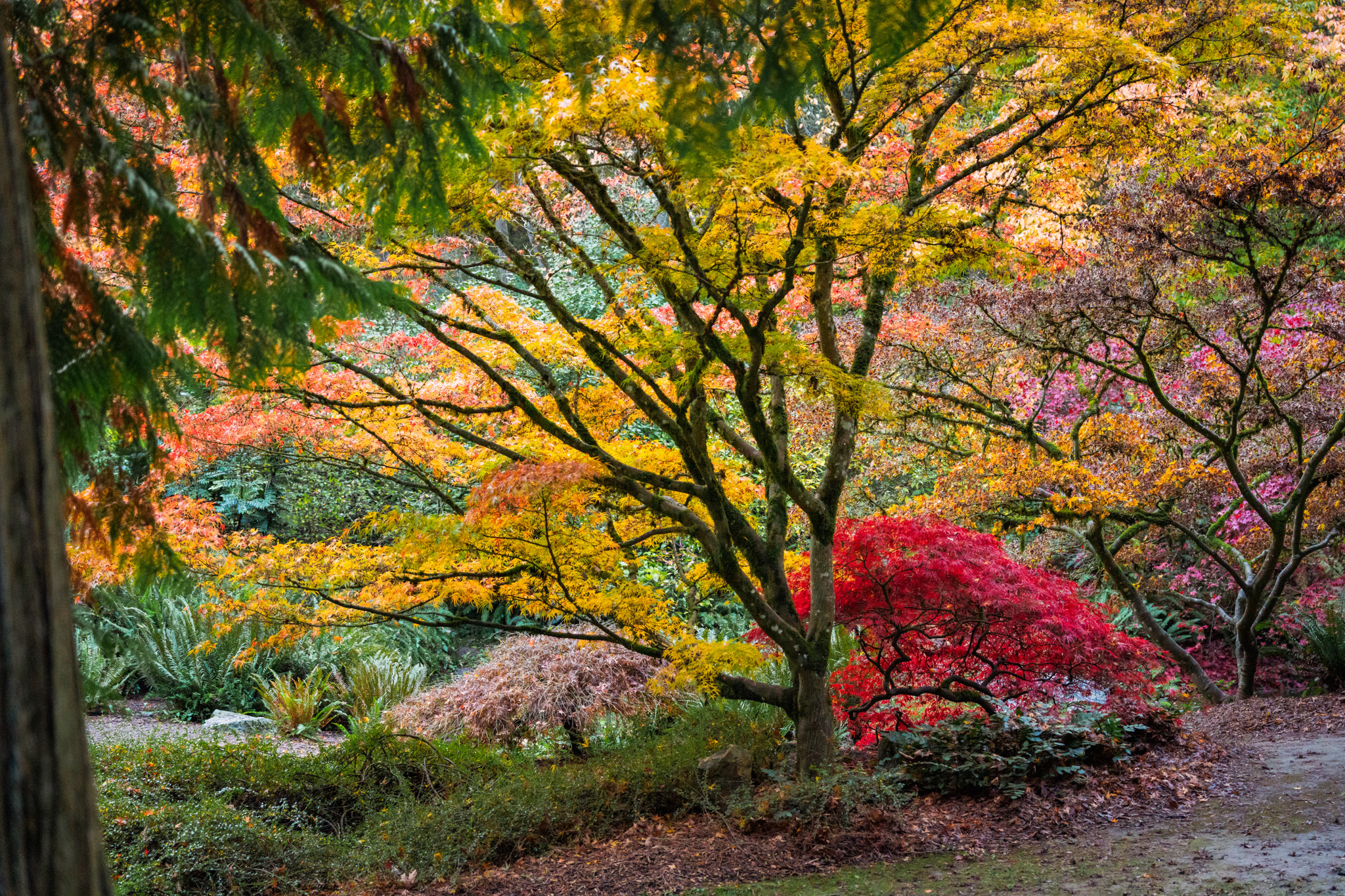
Sony a7R V
62mm, F3.5, 1/500s, ISO 6400
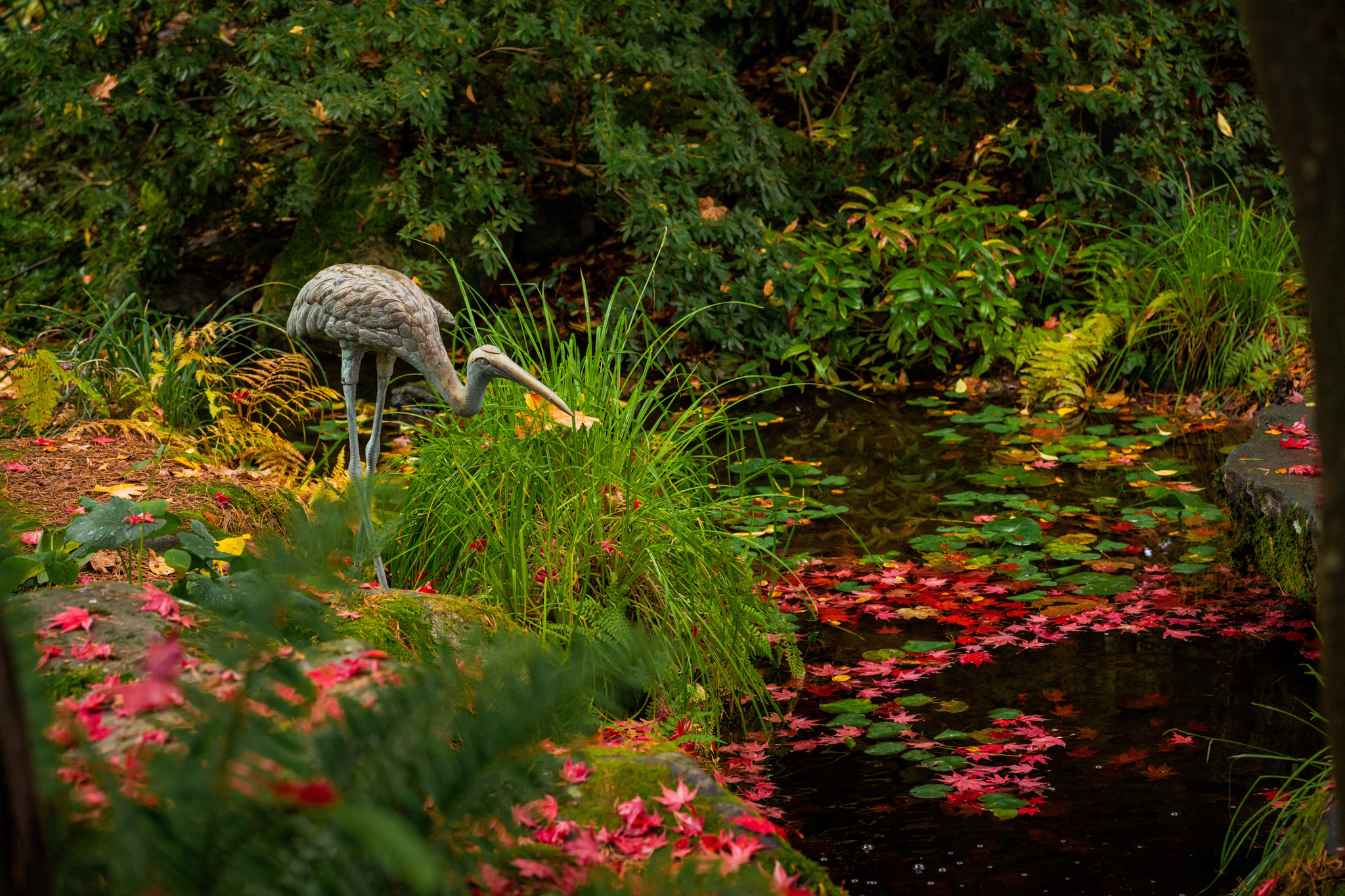
Sony a7R V
46mm, F3.5, 1/500s, ISO 6400
The middle range is exactly what I needed to show parts of the gardens that are meant to be smaller, room-like areas, or to convey a sense of coziness with framing plants. In garden design, you want to create a sense of warmth and serenity by evoking our human nature of wishing for safe areas of enclosure. Balancing elements on both sides of the frame in the image helps convey that sense of calm and snuggly comfort.
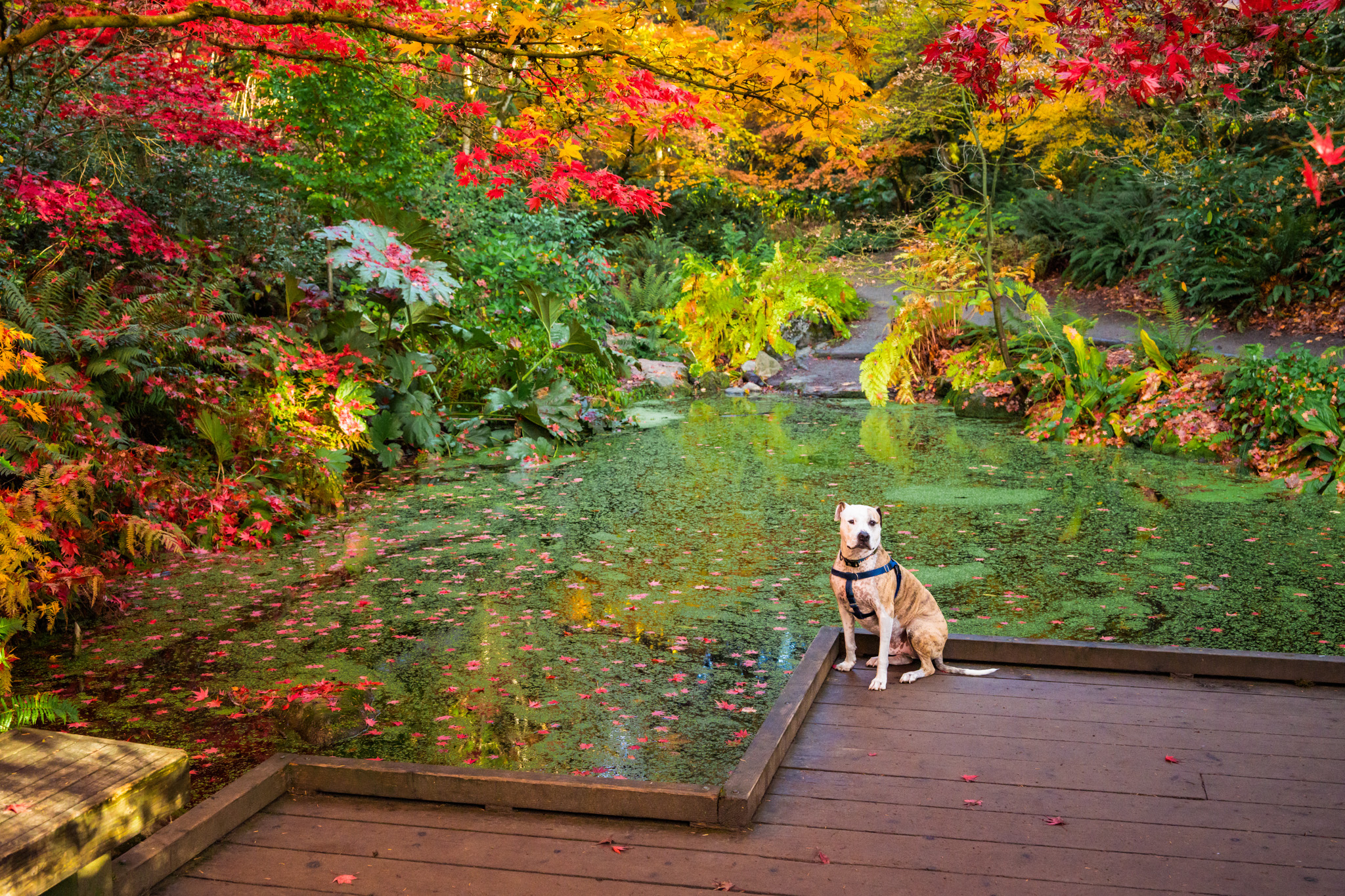
Sony a7R V
40mm, F5, 1/800s, ISO 4000
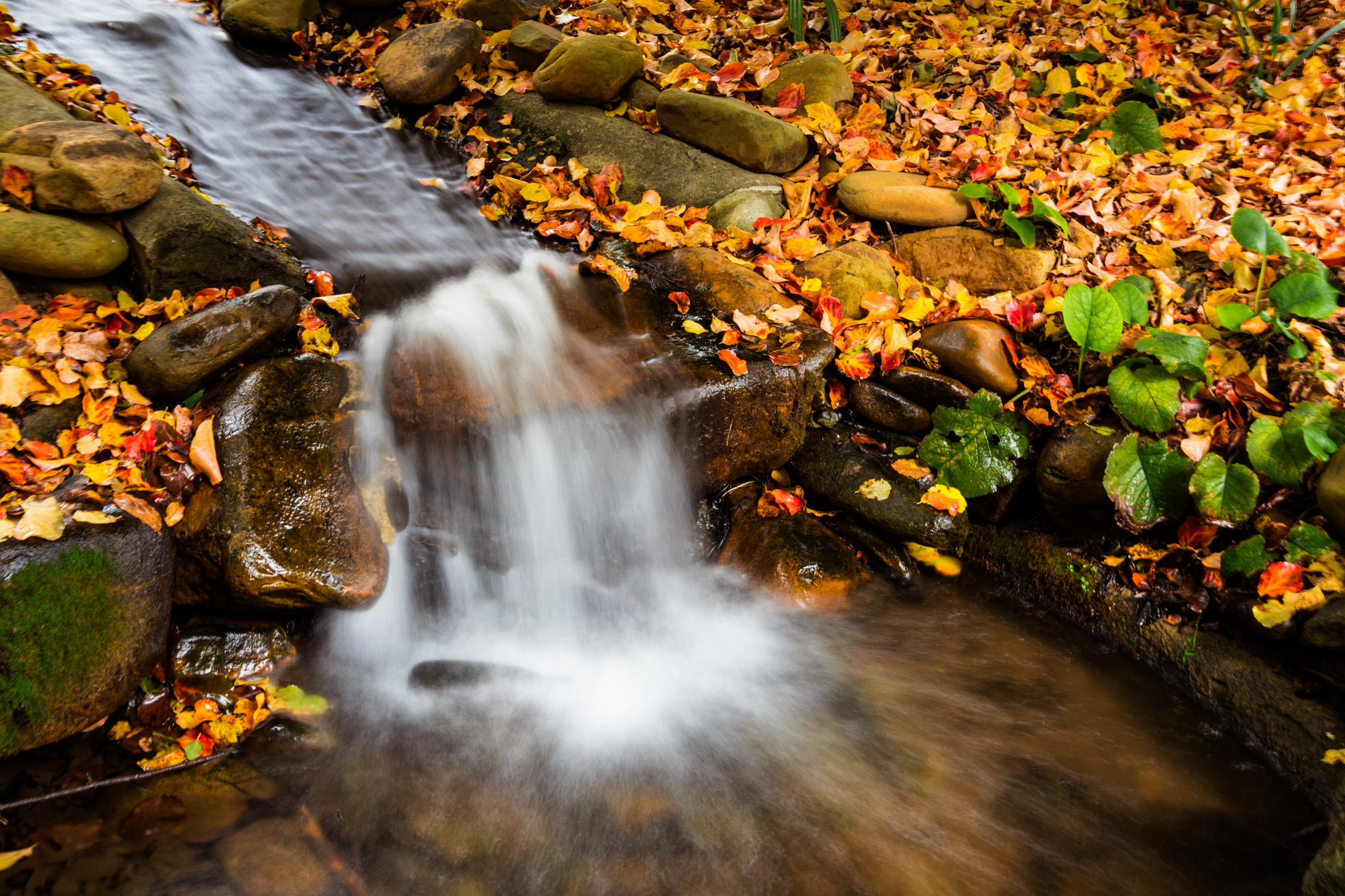
Sony a7R V
41mm, F22, 2s, ISO 50
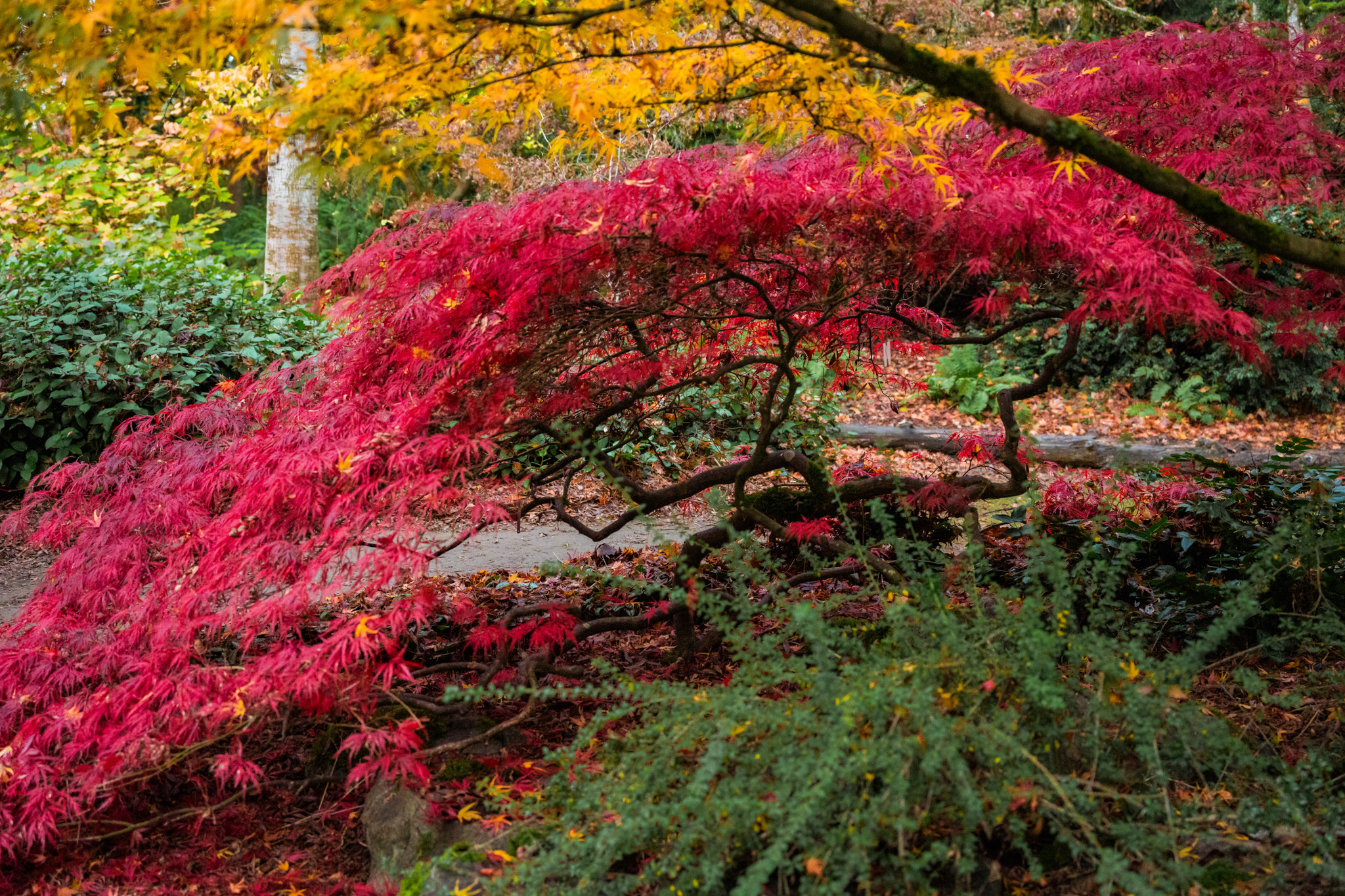
Sony a7R V
45mm, F3.5, 1/500s, ISO 6400
I think one of my favorite images from this garden tour is a picture of a partially submerged rock in a pond covered in green algae and red maple leaves. Getting this image with a prime lens would have been nearly impossible. To get it with my 50mm, I would’ve had to lean way over the water, and to get it with my 85mm, I would’ve had to back entirely off the boardwalk I was standing on.
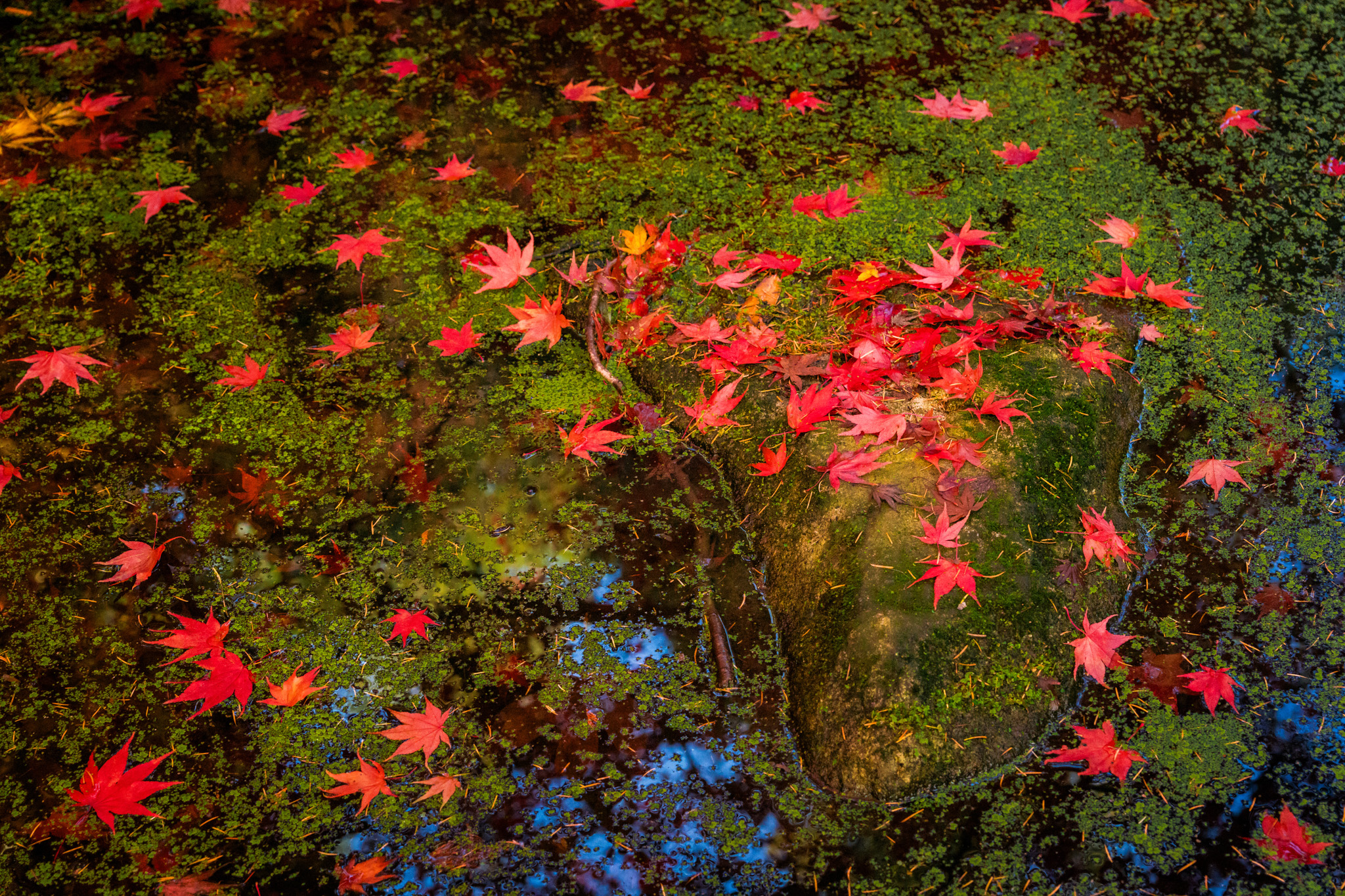
Sony a7R V
62mm, F5, 1/800s, ISO 6400
A few of my other favorite images are where I tried to photograph things that are both close to the camera and a little further away, like a grouping of leaves on a bush. Too wide, and it would have just been a mass of leaves all vying for attention. Too long, and you wouldn’t be able to see the background leaves. The midrange area was the perfect choice!
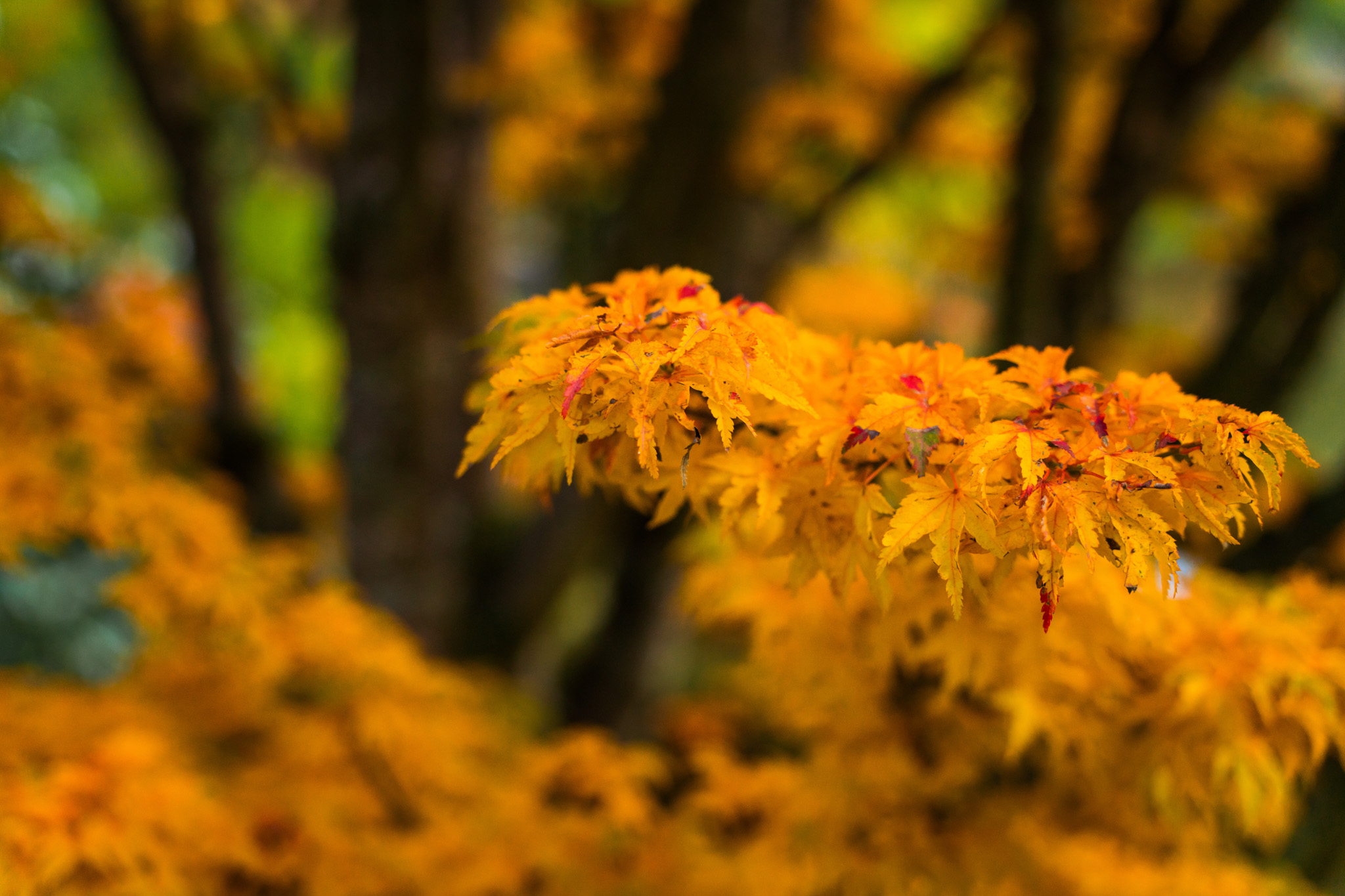
Sony a7R V
57mm, F2.8, 1/500s, ISO 1600
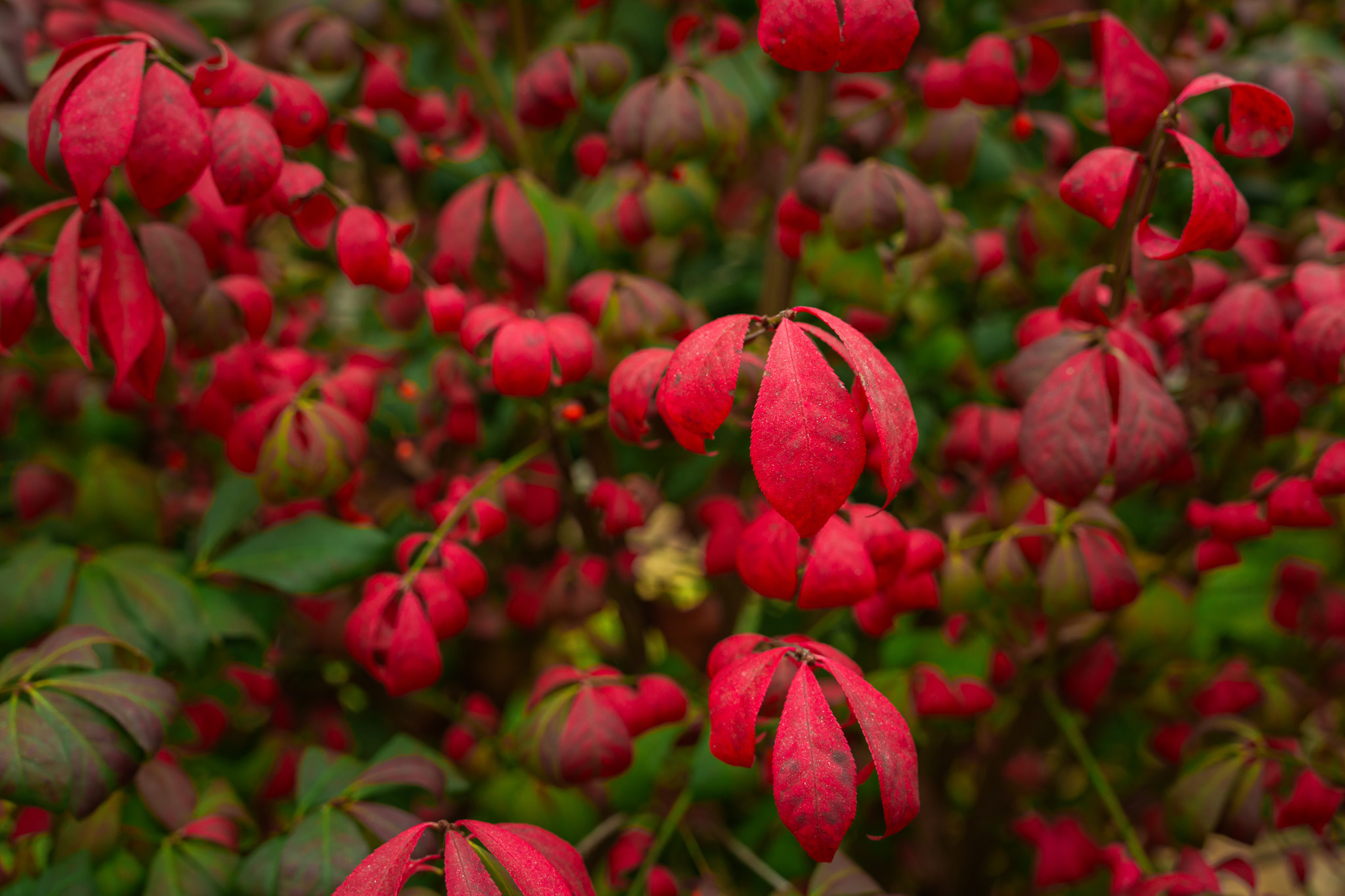
Sony a7R V
59mm, F5, 1/500s, ISO 500
Going All Out Wide – 28mm to 39mm
I wondered if I would miss the extra 4mm from 24 to 28, but I found that unless you physically cannot back up, there isn’t really much of a difference. 28mm was certainly wide enough for everything that I wanted to shoot.
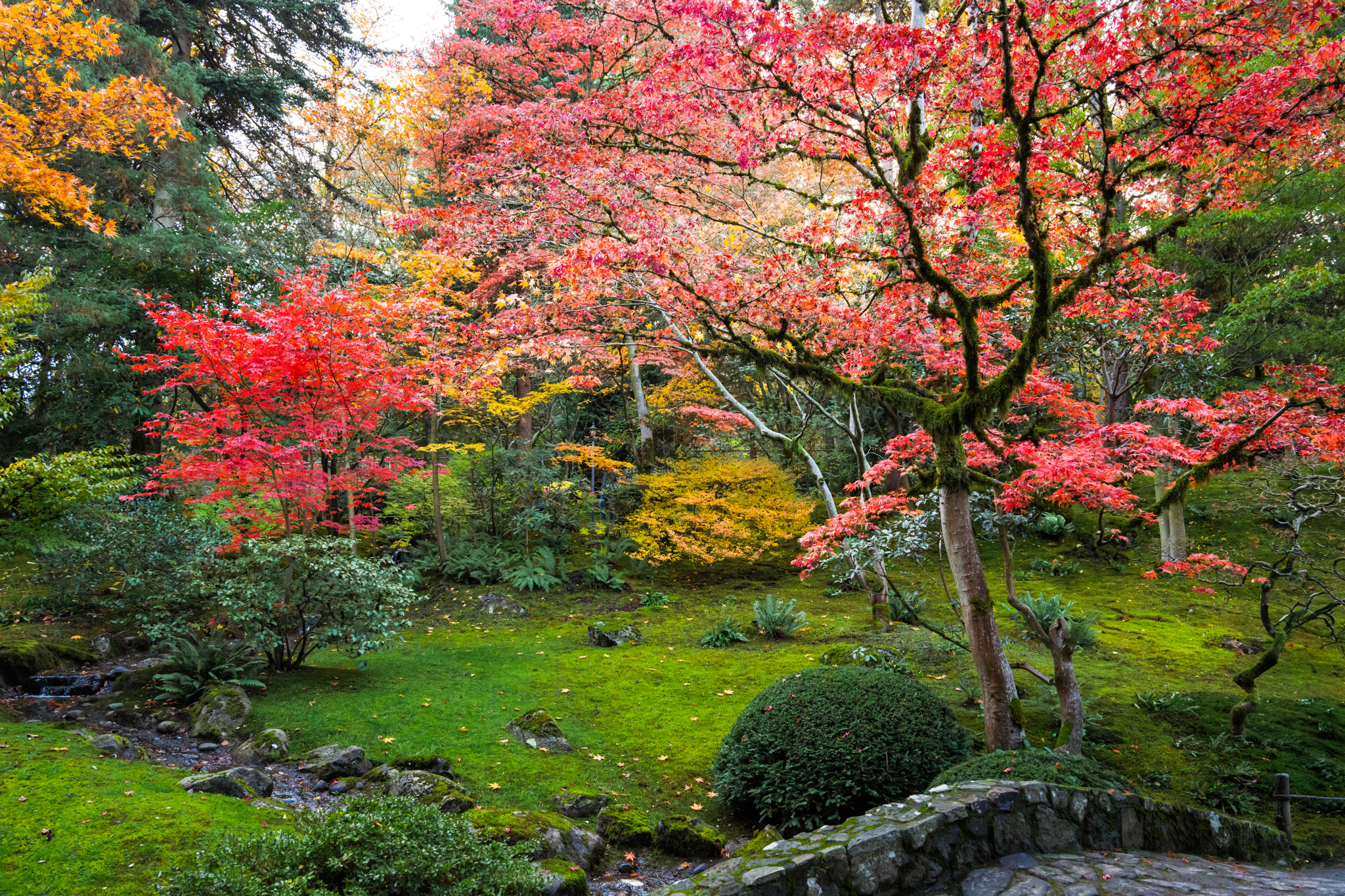
Sony a7R V
28mm, F5, 1/500s, ISO 6400
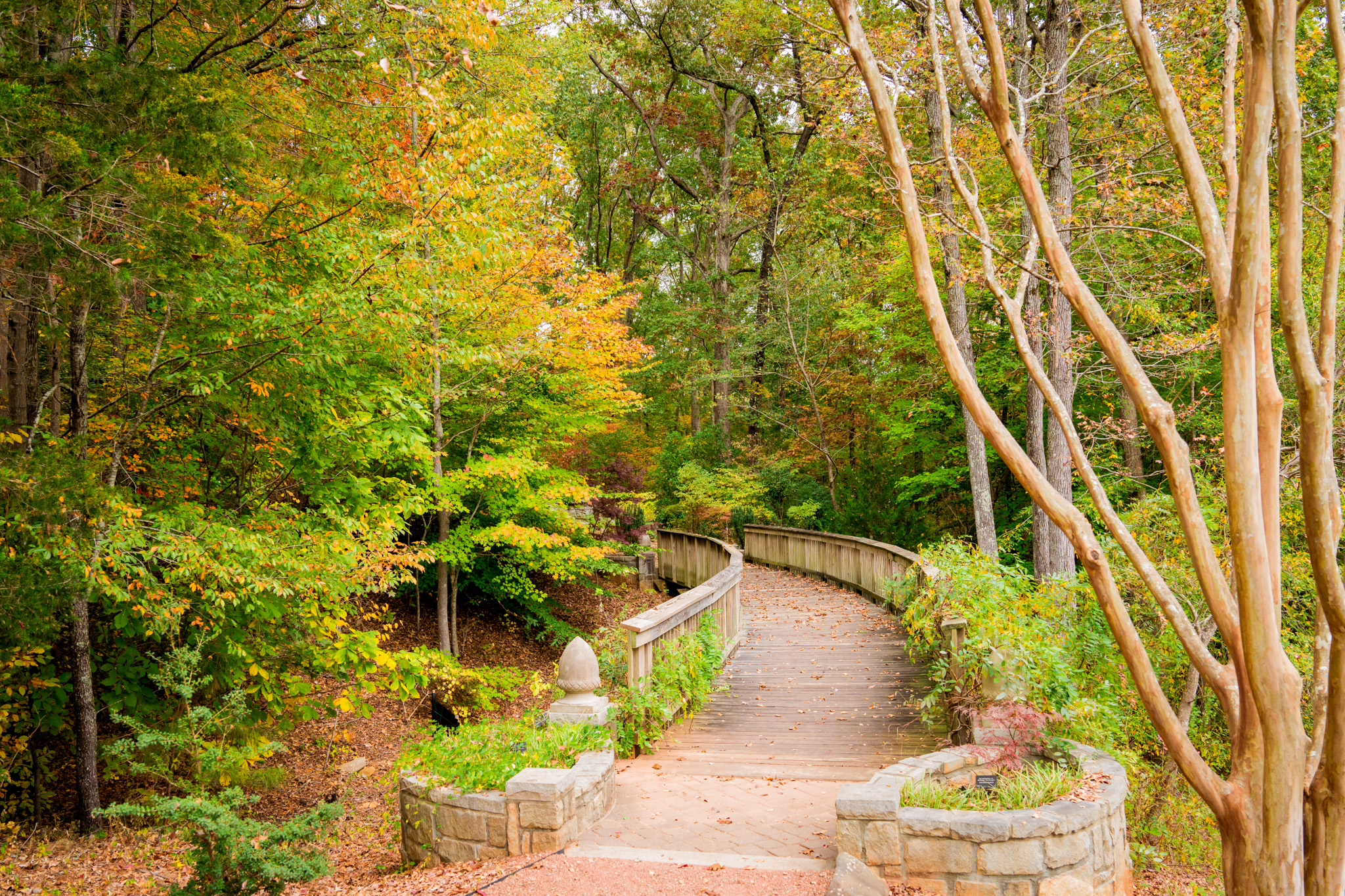
Sony a7R V
28mm, F5.6, 1/800s, ISO 1000
I found myself using the wide end to emphasize foreground and background elements together, such as the rocks in front of some Japanese maples or the pathway through several plantings. This also works in much larger areas to convey a sense of height and majesty. Some of the trees that I photographed were humongously tall, and getting them in frame with a mid-range prime would have been quite the adventure.
In short, this lens was perfect for full scenic images where I wanted to get a sense of the garden as a whole. It lends itself beautifully to conveying how large some of the garden areas were without losing the elements of the gardens themselves.
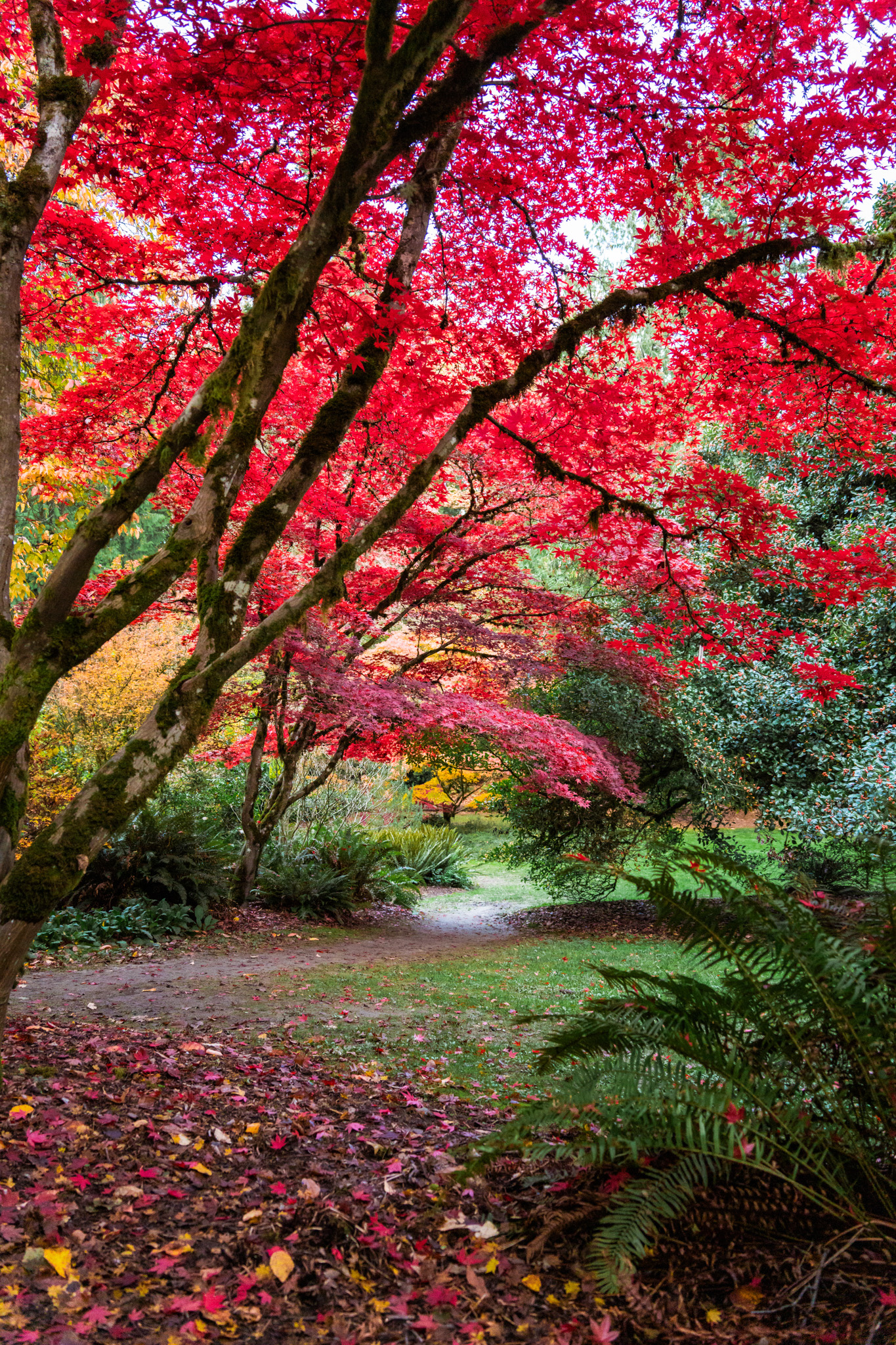
Sony a7R V
28mm, F3.5, 1/500s, ISO 5000

Sony a7R V
28mm, F3.5, 1/500s, ISO 6400
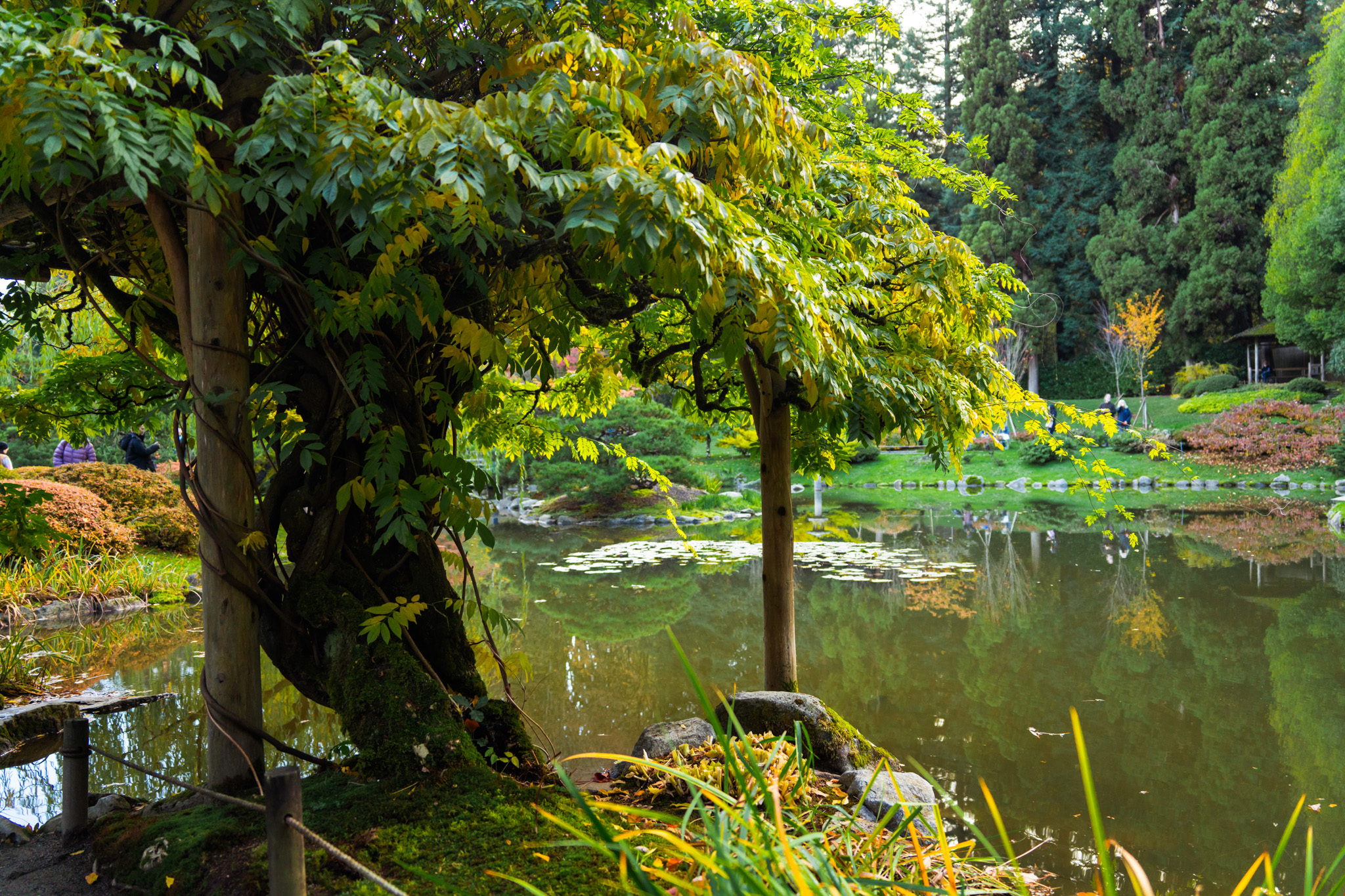
Sony a7R V
28mm, F2.8, 1/500s, ISO 1600
Garden photos with just one lens?
Unequivocally, yes! I absolutely can photograph gardens with just one lens and be thrilled with my results, and now I’m looking forward to next summer so I don’t have to carry multiple lenses in the hot weather. This lens handles everything so well that I’m positive not only will I use it for gardens, but that I will use it in my portrait work as well.

I really think the Sigma 28-105mm F2.8 DG DN | Art is an essential lens. It’s perfect for gardens, but it would also be an amazing all-around travel lens, and it can handle all sorts of professional work, too. Pack this lens with your camera bag and camping gear, for sure. I definitely wish I had this lens years ago when I was looking at waterfalls in the Pacific Northwest. What will you use this all-around perfect lens for?
Get your do-it-all zoom lens