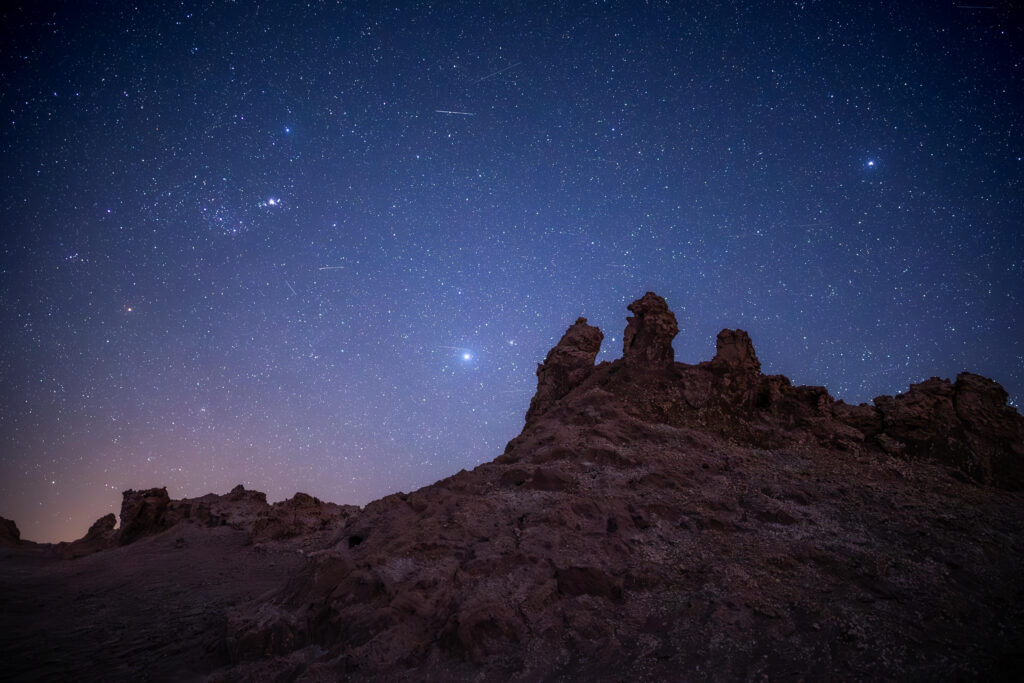
Sigma 14mm F1.4 DG | Art
Sony A7 IV
20s, F1.4, ISO 1000
As a professional nightscape photographer, I believe capturing the night sky is among the most creatively satisfying photography experiences. I’ve traveled the world to spend nights under the stars, weaving art from light that in many cases is older than human civilization. Chasing ancient and distant sources of light can be a humbling challenge, and to succeed at it, nightscapers need every advantage we can get. Stars and planets are pinpoints of light that easily become distorted or slip out of focus, finding a decent composition in the dark can be frustrating, and capturing enough light to create a noise-free image can be impossible without the right equipment for the job.
Enter Sigma’s line of wide-angle F1.4 Art primes: the first lenses I’ve used that feel like they were truly designed for the challenges of nightscape photography. They are packed with quality-of-life upgrades that help me capture sharp, well-resolved nightscapes even in challenging conditions. After using this range of lenses for over a year of traveling and photographing night skies around the world, here’s why I feel confident they are the best tools currently available for nightscape photography at any price point.
The Challenges of Nightscape Photography Settings
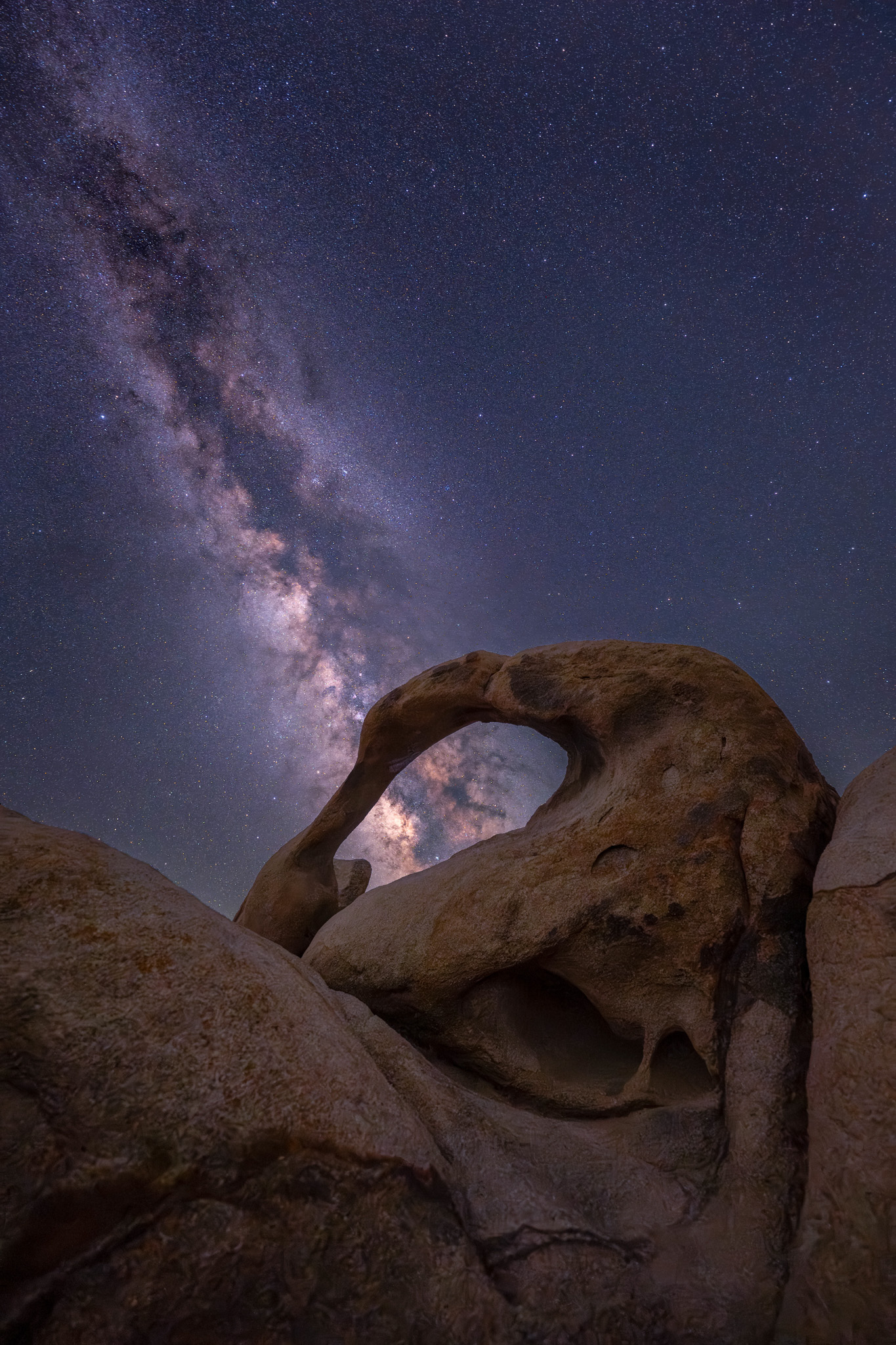
Sony A7 IV
20s, F1.4, ISO 2000
Even with the best equipment, much of nightscape photography involves finding a compromise between gathering enough light and keeping your ISO values under control to prevent grainy images. Exposure times are limited by the rotation of the Earth: if you shoot for too long you will blur the stars until they become streaks across the sky, showing their apparent motion as the Earth turns.
The wider angle the lens, the longer we can expose before we see the stars trail in our images, but even with an ultrawide lens like the Sigma 14mm F1.4 DG | Art, most photographers will agree that star trailing becomes apparent somewhere between 20-30 seconds of exposure time. (Note: your threshold for star trails in your exposures will vary. The megapixel count of your camera, what part of the night sky you are photographing, and how large you plan to print or display the image will all factor into when star trailing becomes too apparent in your images.)
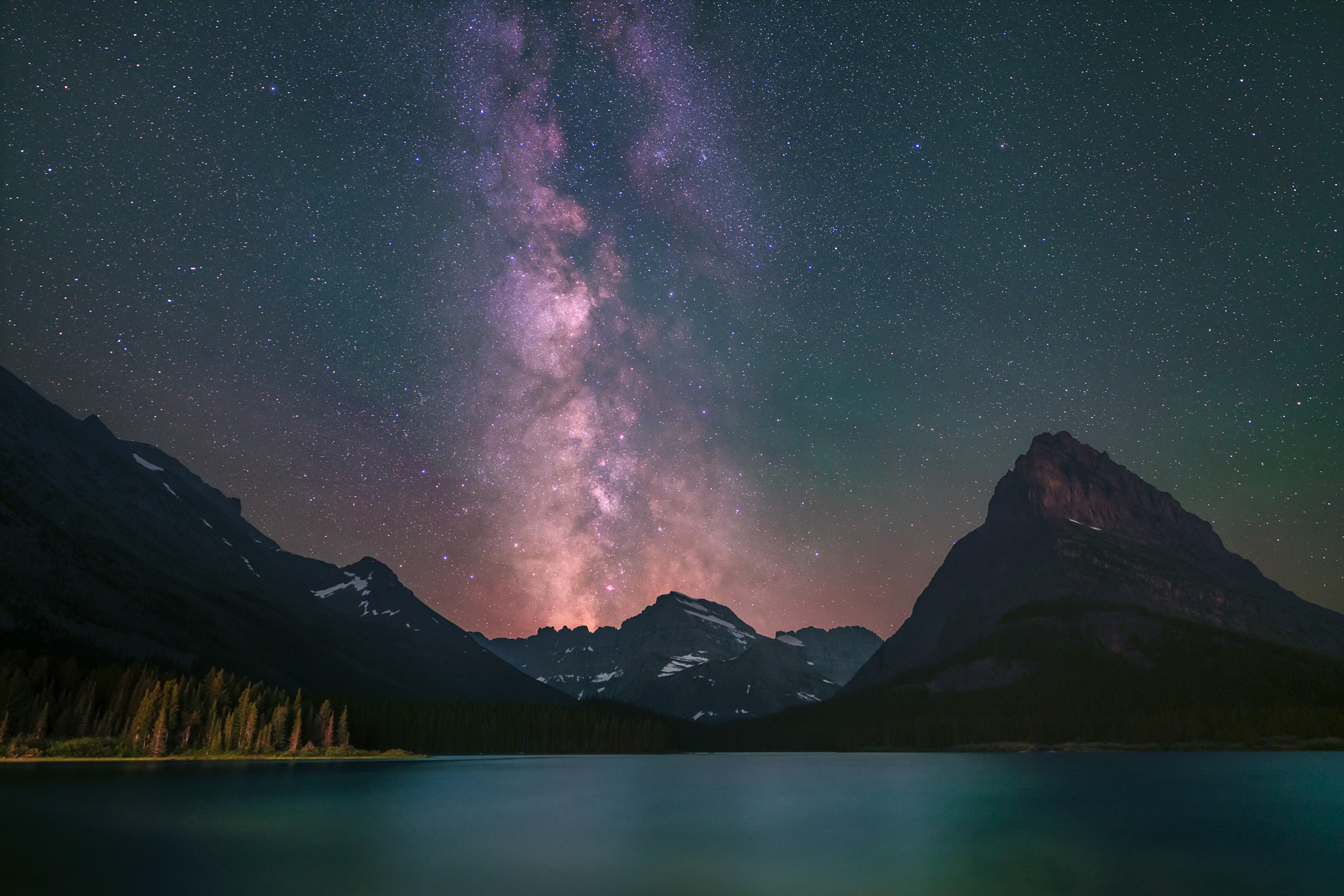
Sony A7 IV
13s, F1.4, ISO 2500
This is why a fast aperture is such an important factor in night photography. The only way to add more real light to your images is with a wider aperture or a longer exposure, and these lenses allow for both. While modern camera sensors are getting increasingly good at controlling noise at higher ISO levels, there is simply no replacement for capturing real light. And the longer our exposure time, the greater the difference a faster aperture makes.
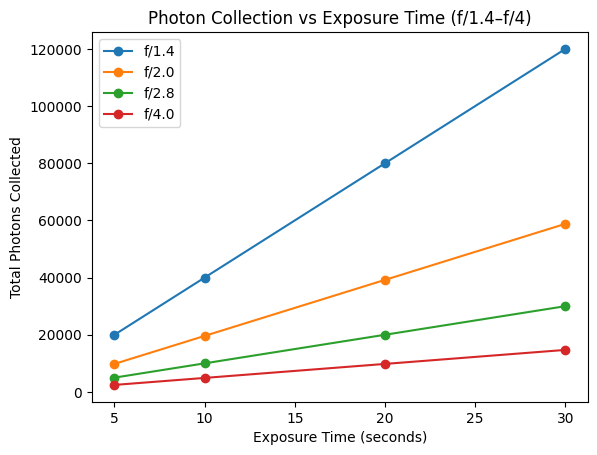
This is sometimes lost in how we measure light in cameras. We use “stops” to express the difference in exposure when we change our settings, but stops are exponential in nature, so the difference in total light gathered is compounded over a longer exposure time. The graph below shows the difference in absolute light captured at different exposure times at different apertures. As you can see, having an F1.4 lens is a huge advantage even over the generally accepted professional standard of F2.8 when creating long exposure images.
Designed for the Task
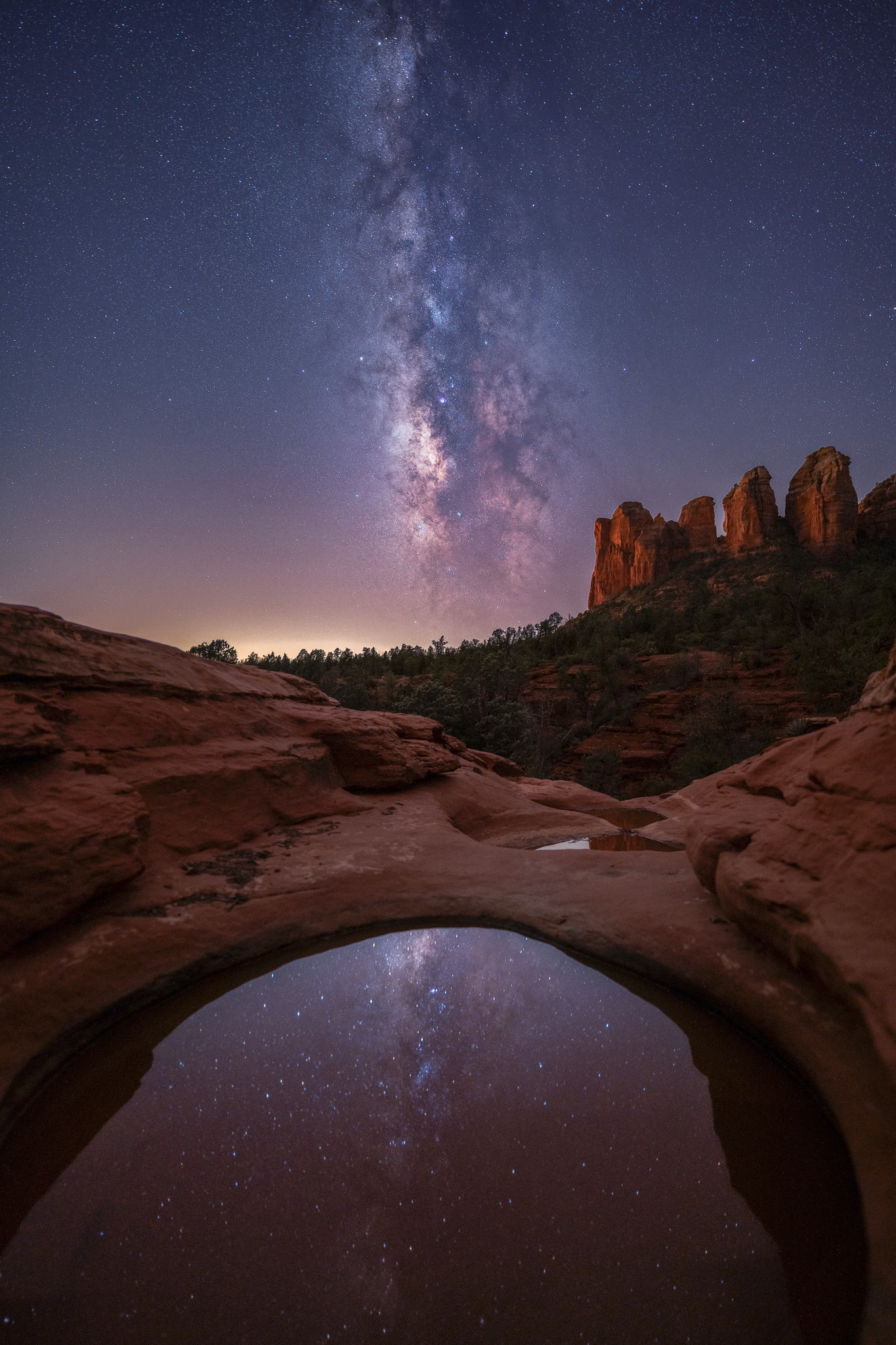
Sigma 14mm F1.4 DG | Art
Sony A7 IV
15s, F1.4, ISO 800
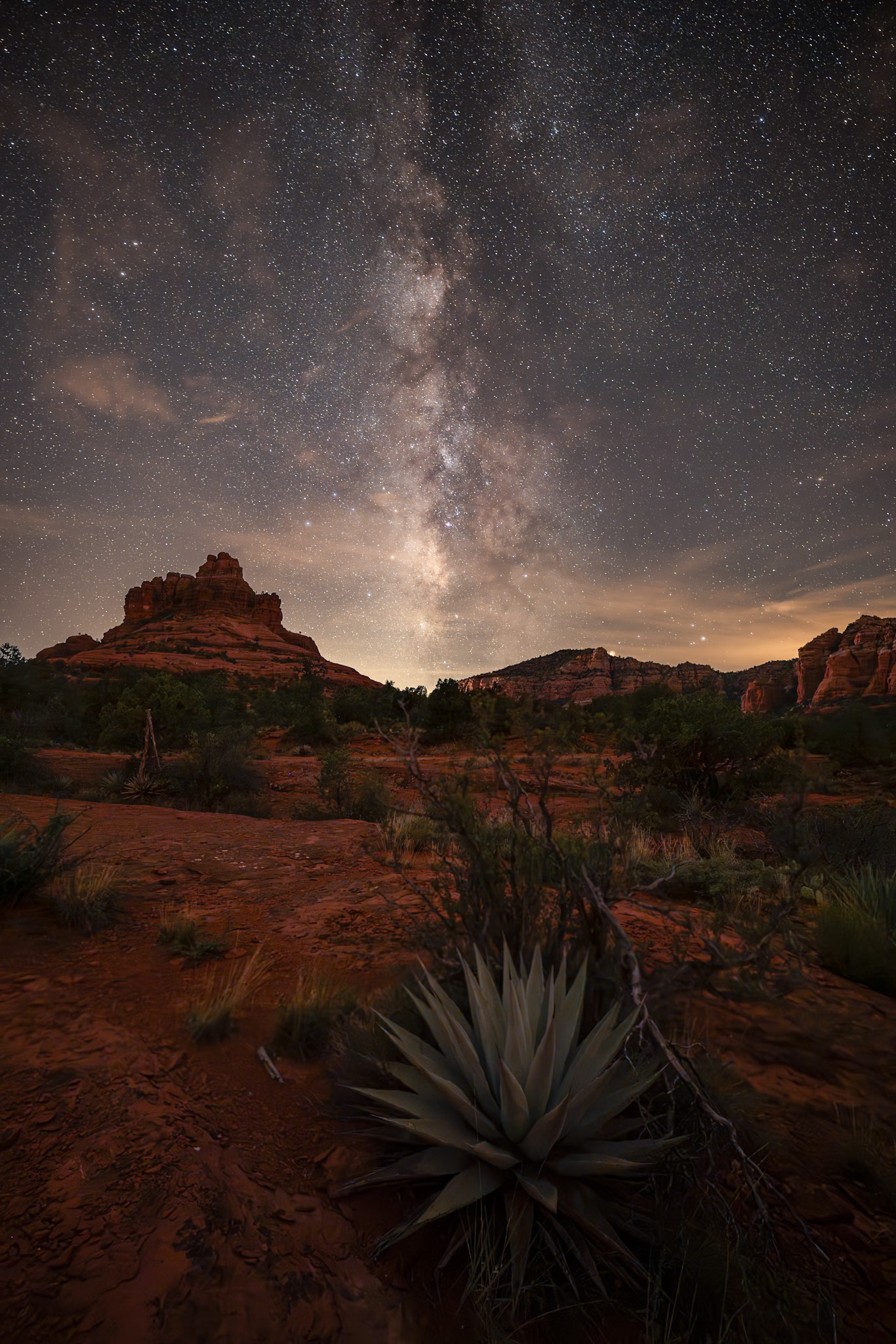
Sigma 20mm F1.4 DG DN | Art
Sony A7 IV
10s, F1.4, ISO 1600
While other fast prime lenses I’ve used in the past have struggled to resolve details in the corners when shooting at wider apertures, Sigma clearly designed these lenses to be shot wide open. Coma and chromatic aberrations are sometimes visible, but overall are well-controlled, and vignetting, while present, is addressed impressively with lens profile corrections available in Lightroom. Having a set of fast wide-angle lenses that resolve stars well even in the corners when wide open allows for stunning night sky images without resorting to more complex techniques like stacking multiple exposures or countering the movement of the night sky by using a star tracker.
Of course, when combined with these techniques, the results are even more impressive. I’ve found that by stacking images captured with my F1.4 Art primes I am able to capture enough light on my foregrounds at F1.4 to make them usable in my final images, in many cases eliminating the need to capture blue hour foregrounds and composite images. This stack of ten 8-second exposures (below) shot at 35mm, F1.4 and ISO 5000 revealed incredible detail in the foreground rocks at White Pocket in Arizona on a night with no moonlight in a very dark area. Details also remained sharp across the frame, allowing me to capture the entire scene in one moment.
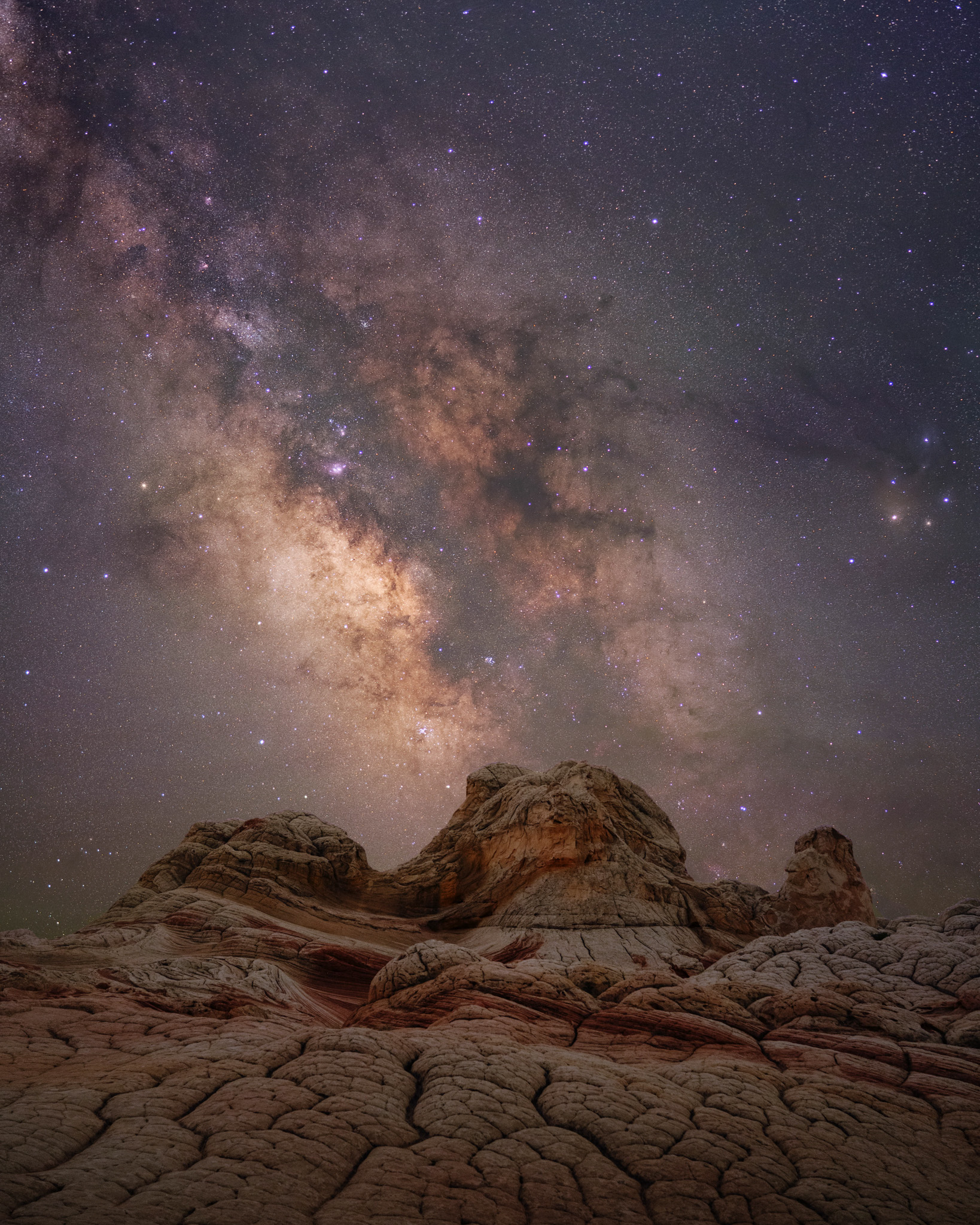
Sony A7 IV
8s, F1.4, ISO 5000, 10 images stacked
In another nod to night sky shooters, Sigma also decided to add one of my favorite features of all time to the 14mm, 20mm, and 24mm Art primes: a manual focus lock. Any photographer who has experienced the struggle of finding the perfect focal point for the stars only to have it ruined when they reposition for a different composition can appreciate what an enormous quality of life upgrade this represents for astrophotography. Rather than wrestling with your focal point all night, you can acquire focus once, set the lock, and forget it. This has reduced one of the most frustrating aspects of night photography to a once-per-shoot task, and in my opinion is worth the price of admission all by itself.
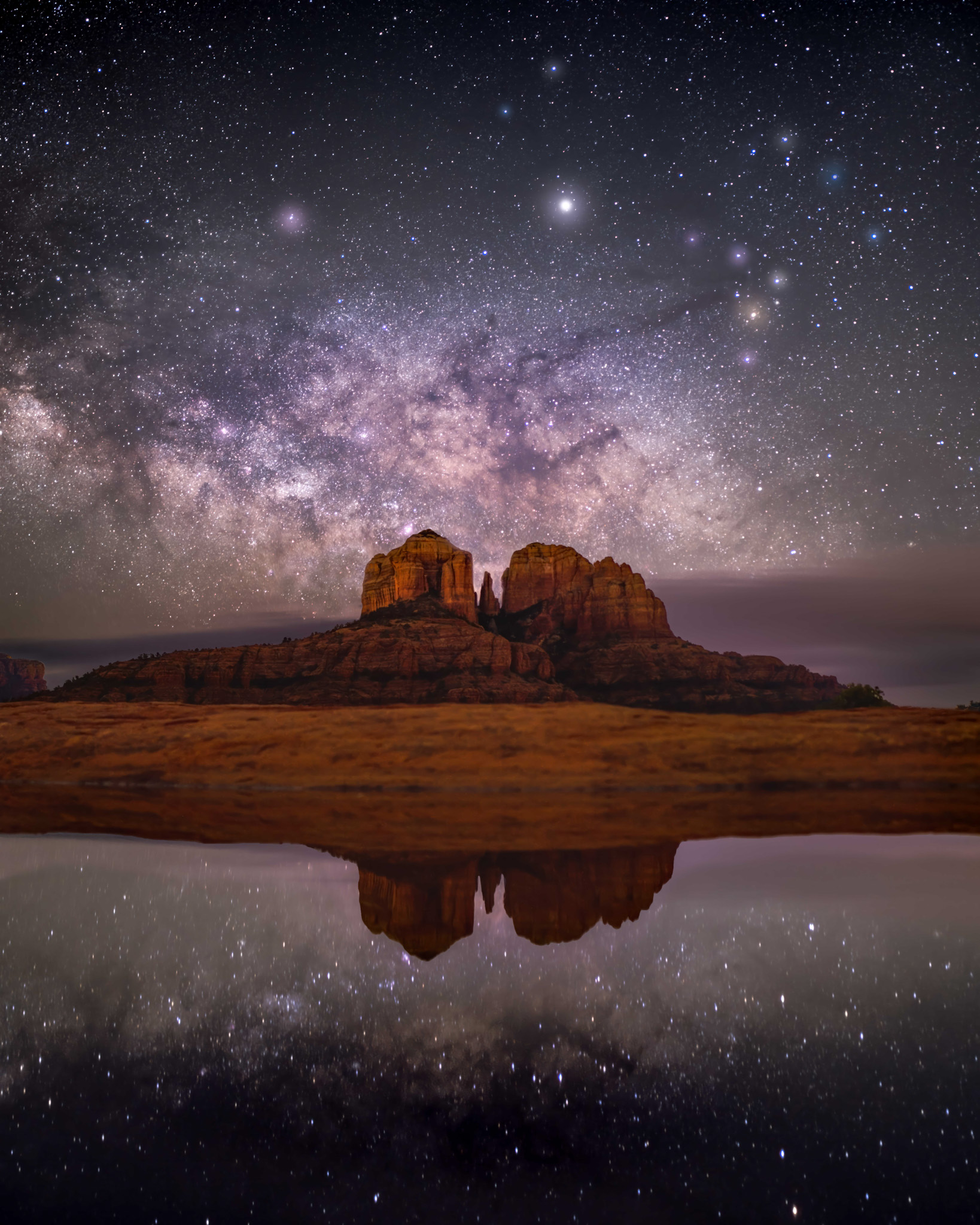
Sigma 20mm F1.4 DG | Art
Sony A7 III
10s, F1.4, ISO 1600
When Movement Matters
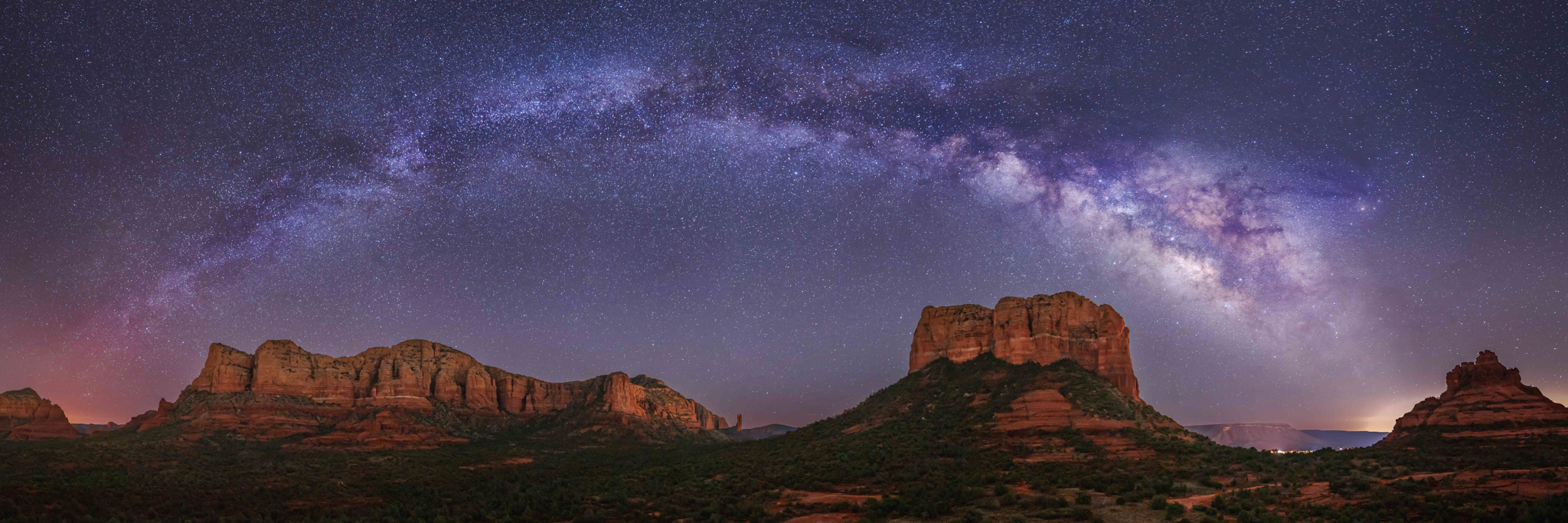
In addition to pinpoint sharp stars, another benefit of shorter night sky exposures is that we capture more frames per minute. This is especially important when creating time lapse sequences that show the motion of the night sky. Time lapses are videos made up of hundreds of individual images. To appear smooth, these clips need to have at least 24 individual frames per second of video, which means the longer our exposure times, the longer it takes to create a sequence that meaningfully shows movement. The following clip of the Milky Way core rising over Sedona was created using a series of 13 second exposures at F1.4. That shorter exposure time allows the video to be smoother, cleaner, and longer than would have been possible when shooting longer exposures at a higher aperture.
13 seconds
F1.4
ISO 2500
240 frames
That advantage is even more apparent when photographing perhaps the most challenging of all night sky photography subjects: the Northern Lights. The aurora borealis is a breathtaking sight to behold, but it is notoriously difficult to photograph. The aurora is a moving target, it changes both its position and its luminosity from moment to moment. This makes having a fast aperture lens invaluable, as you can capture shorter exposures even when the aurora is faint, and be ready to adapt if it goes wild. Shorter exposures also isolate the impressive structure of the aurora, where longer exposures would blur those details. Shooting at F1.4, I was able to create the above time lapse sequence of the aurora dancing over Fairbanks Alaska with a series of 2 second exposures at ISO 800. The result is a mesmerizing sequence showing how dynamically the aurora moves when it is highly active.
2 seconds
F1.4
ISO 800
500 frames
Made for the Moment
While the challenges of shooting in the dark are part of the allure of nightscape photography, the Sigma Art prime lineup is a reminder that it doesn’t have to be frustrating. Nightscape photography is still a relatively young artform, and until now we’ve largely had to make do with lenses that were primarily made for other purposes. Sigma’s Art primes change that with a robust line of F1.4 lenses covering a variety of focal lengths.
Now we have lenses that are made for the night, allowing us to think less about settings and gear, and more about the magic of spending nights under the stars.

Browse wide, fast primes for night sky photography
Learn more about the author’s workshops and client work in the Sedona, Arizona area: